
The trap gets pumped to the floor and the paperwork lands in your file
Grease trap cleaning and FOG compliance for commercial kitchens and municipal accounts across South Florida, plus the hydro excavation side of the house. Our own trucks, our own CDL drivers, and the permits to haul what we take out.
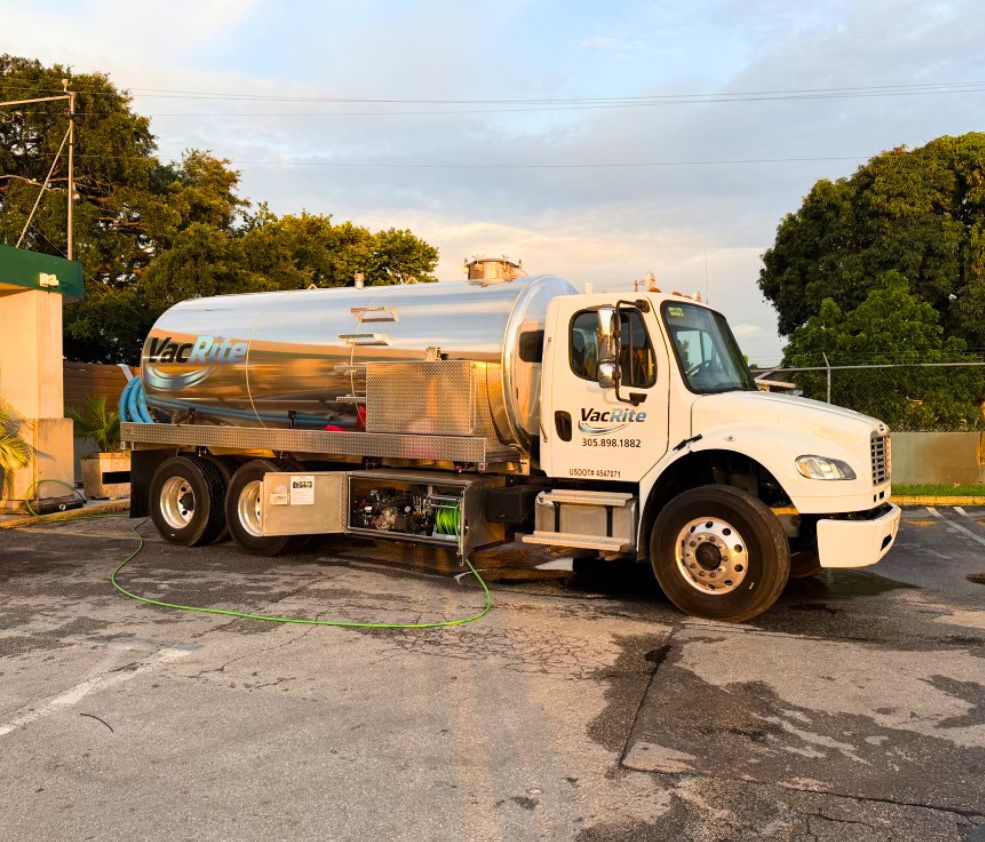
Grease and compliance
Traps pumped to the floor and scraped rather than skimmed, interceptors sized, set and repaired, standing intervals built from what your trap actually does, and a manifest in the file every service. Restaurants, hotels, supermarkets, schools, hospitals and municipal kitchens.
Hydro excavation
Daylighting, potholing, utility exposure, slot trenching and pipeline work. Pressurized water opens the ground and the vacuum lifts it away, so the gas main, the duct bank or the fiber conduit comes out of the ground exactly as it went in.
Two sides of one company
Most operators pick one of these and subcontract the other. We run both off the same yard, which means a restaurant group with traps on eleven properties and a contractor who needs a gas service daylighted are calling the same number and getting our own trucks either way.
Grease Trap Cleaning
Traps pumped to the floor, scraped, and documented with the manifest an inspector asks for.
All 9 in Grease →Grease Trap Installation and Repair
Sizing, setting, repairing and replacing the trap itself, not just servicing what is there.
All 5 in Installation →FOG Compliance and Programs
Standing intervals, county FOG programs, manifests and the kitchens each one is built around.
All 11 in Compliance →Drainage and Storm Water
Catch basins and drain lines kept clear, before the rainy season rather than during it.
All 7 in Drainage →Hydro Excavation
Digging with water and vacuum so what is already buried comes out of the ground the way it went in.
All 17 in Excavation →Utility-Specific Exposure
Gas, electric, fiber, telecom, water and sewer, each uncovered the way that particular line demands.
All 11 in Utilities →Pipeline Work
Right of way excavation where the coating matters as much as the steel.
All 7 in Pipeline →Who We Work For
Utilities, contractors, telecom, pipeline operators, municipalities and industrial sites, each with its own rules.
All 13 in Industries →The trucks are ours
When the owner was asked what sets this company apart, the answer was one word: capability. It is the right word. We are not brokering your job to whoever has a truck free. The tanker that shows up is ours, the driver holds a CDL, there is a master plumber on staff, and the company holds the haulers permit and the dumping permit that make the back half of the job legal.
That back half is the part people forget to ask about. Anyone can pump a trap or rent a vac trailer. What comes out is a regulated waste stream, and it has to go somewhere approved, with paperwork. Ask any contractor where it goes. It is a fair question and the answer tells you a lot.
VacRite Environmental Services is family owned and first responder owned. Those are not slogans on a truck door. They are why somebody picks up at two in the morning.

Why anybody digs with water in the first place
A backhoe tooth does not know the difference between fill and a live gas service. Water does. Pressurized water breaks soil apart but flows around a pipe, a duct bank or a fiber conduit instead of cutting through it, and a vacuum lifts the spoil straight up the hose into the tank. That is the whole idea, and on a congested South Florida corridor it is a strong one.
The reason it matters here specifically is the ground. Around Miami you hit oolitic limestone shallower than crews from other states expect, and you hit water not far below that. A hole wants to refill while somebody is still working in it, and the loose fill above the rock moves easily. A vac truck pulls water and spoil together, so a wet hole is an ordinary Tuesday instead of a problem to solve. Go west into Broward or Palm Beach and the ground turns into drained wetland that still drains through district canals. Head up the coast and it turns sandy. Same method, different settings.
The half of the job people forget to ask about
Anyone can rent a vacuum trailer. The part that separates operators is what happens to what comes out of the hole. Slurry, grease, catch basin sediment and used cooking oil are all regulated waste streams. They have to go to an approved facility, and there has to be paperwork saying they went there.
We hold the haulers permit and the dumping permit that make that legal, and every service generates a manifest, photographs and disposal records. Ask any contractor you are considering where their waste actually goes. It is a fair question, it takes ten seconds, and the answer tells you most of what you need to know.
What we will tell you not to do
Sometimes the honest answer is that a job is not ours. A parking lot that has held water in the same spot for fifteen years has a design problem, and cleaning the nearest basin will not fix it. A kitchen line that blocks at the same point every time may have a break or a belly rather than a grease problem. Genuinely hard rock is not what a hydrovac is for.
We would rather say that on the phone than take the work and have you call back annoyed in six weeks. Everything we run lists what we do well, and describing the problem is the fastest way to find out whether it belongs on that list.

How a job actually runs
You tell us the job
What is happening, where it is, and what access looks like. Access is the detail people skip and the one that decides whether a truck can reach the work.
We say what it takes
Straight answer about what the job needs and when we can be there. If it is not work we should be doing, we say that instead.
Our truck rolls
Our unit, our driver. Scheduled window or an emergency call at an inconvenient hour, it works the same way.
You get the paperwork
Manifests, disposal records and photos. The file that matters when an inspector asks, or when the design has to change because of what we found.
Something failed tonight. Somebody answers.
Struck line, blocked kitchen drain, a basin backing up in the middle of a storm. We run every day of the year, and the phone reaches a person rather than a queue. This company is first responder owned, and the emergency side of it works the way that suggests.
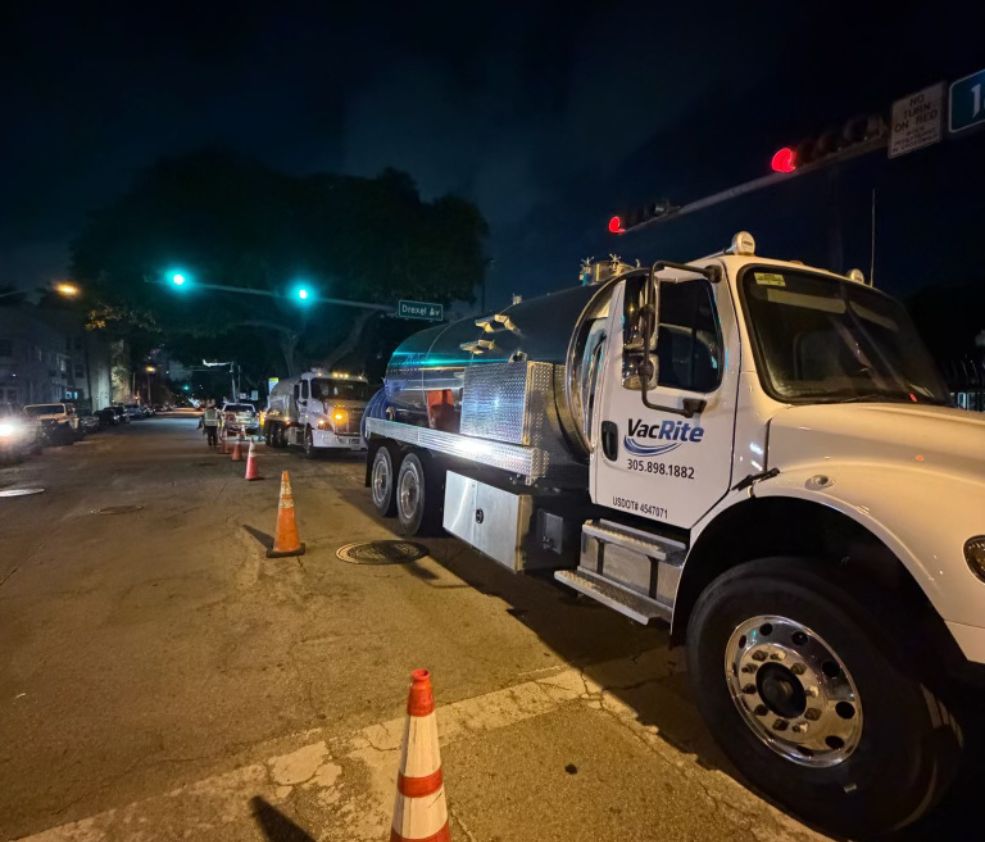
Out of Miami, across South Florida
Grease and drainage work runs out to roughly a hundred and fifty miles from the yard, which covers the tri-county area, the southwest coast and the Treasure Coast. Excavation travels further still, and statewide is on the table when the job justifies the trip.
The ground changes as you go. Miami-Dade is limestone with the water table right underneath. Western Broward and Palm Beach are drained wetland that still drains through district canals. The Treasure Coast is lagoon country where nitrogen rules drive the septic conversion work. Knowing which one you are standing on matters before anybody starts digging.
Questions we get asked
Do you do both excavation and grease trap work, or is one the real business?
Both, genuinely. They share a yard, a permit set and a dispatch line. A vacuum truck that can pull slurry out of a utility hole can pull a grease trap, and the permits that let us haul one let us haul the other.
How fast can somebody get out here?
Depends where you are and what is already running. Call and you will get a real answer about timing rather than a maybe. We run every day of the year.
How far do you travel?
Grease and drainage work runs to about a hundred and fifty miles from Miami. Excavation goes further, statewide when the job calls for it.
Are you licensed and insured?
Bonded and insured, with a master plumber on staff, CDL drivers, a haulers permit, a dumping permit, and USDOT 4547071 as an active carrier. Certificates before the work starts if you need them.
What happens to what you pump out?
It goes to an approved disposal facility under our permits, and you get the documentation. That paperwork is the part that protects you in an inspection.
Do you work nights and weekends?
Constantly. Most kitchen work happens after close, a lot of roadway and utility work happens off-peak, and emergencies do not check the calendar.
Tell us what the job is
Excavation, grease, drainage or something you are not sure how to categorize. Tell us where it is and what is happening.
Two trades, one call. We own the trucks, hold the permits, and put our own people on the job.
VacRite, Miami
info@vacriteservices.com
Open 24/7/365
USDOT 4547071