
Hotel Grease Trap Service
Interceptor service for hotel and resort properties, where the load swings with the event calendar and the only access window is overnight.

Hotels, resorts, conference properties, banquet and catering operations, and property management or engineering departments running several kitchens on one campus.
How a job runs, step by step
Map the property first
Most hotels have more than one grease connection. Restaurant kitchen, banquet kitchen, pool grill, staff cafeteria. We want them all on the sheet before the first service, not discovered on the third.
Work the overnight window
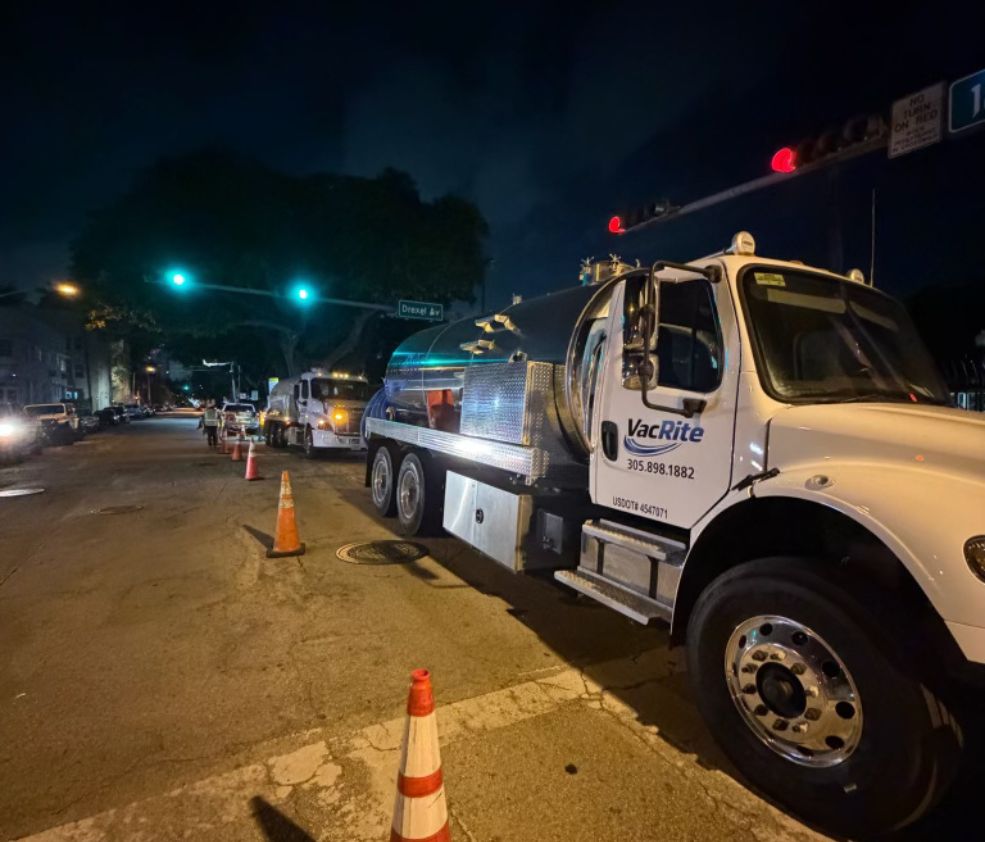
Guest-facing property means the truck comes in when the restaurant is closed and the loading area is quiet.
Full service on each structure
Complete pump-out, scraping, hardware inspection, permitted disposal. Every unit gets treated as its own asset with its own record.
Set intervals against the calendar
A banquet kitchen coming into high season and a banquet kitchen in August are not the same building. Intervals should say so.
Report to engineering, not to a drawer
One document set per property, per unit, in the format your chief engineer already files.
Banquet load is spiky, and spiky is the hard part
A restaurant kitchen loads a trap on a rhythm. A banquet operation loads it in bursts. A property can run three quiet weeks and then serve four hundred covers a night for a conference, and the interceptor sees a month of normal loading inside a long weekend. That is genuinely harder to schedule for than steady volume, because a flat quarterly interval is either wasteful in the quiet stretch or dangerously late after the busy one. In South Florida the seasonal swing makes it sharper again. A lot of properties run hard from late fall through spring and then go soft through the summer, so the same trap on the same schedule is over-serviced in July and behind in February. The sensible answer is to build the interval around the event calendar rather than the months. If your sales office knows a thousand-cover convention is booked for March, that is a service before and a service after, not a date somebody picked in advance. Send us the calendar and we will plan against it. A hotel that services on a fixed date all year is not managing the trap, it is hoping.
Several kitchens, one property, one file
The thing that surprises new facilities managers is how many grease connections a full-service property actually has. There is the main restaurant. There is usually a separate banquet or catering kitchen with its own interceptor, often much larger. There may be a pool bar or grill on its own small trap, a lobby cafe, a room service pantry, and a staff cafeteria that nobody thinks of as a kitchen but which feeds several hundred people a day. Each one of those is a separate asset with its own size, its own loading pattern and its own service history, and on older properties at least one of them is usually undocumented because it was added during a renovation. Getting them all onto one sheet at the start is worth more than any single cleaning. It also keeps the compliance file coherent, because a utility asking about your property does not care that the pool grill was somebody else’s responsibility. One vendor across all of them means one record format and one number to call when a line backs up at midnight, which is when hotel lines back up.
The access window is narrow and full of other people
A hotel loading dock at two in the morning is not empty. There is a linen truck, there is a produce delivery staging for five, there is engineering doing the work they cannot do during the day, and there is a security desk that wants to know who you are. The service itself is straightforward. Getting a vacuum truck to a lid on a live guest property is the part that needs planning. The recurring problems are worth naming: an interceptor lid inside a fenced service courtyard with one narrow entrance, a lid in the valet path where a truck cannot sit, a unit under a dumpster corral, and the classic, a car parked over the access point by an employee who was not told. Because we own our trucks and run our own crews, the people who arrive are the people whose names and insurance you already have on file, which removes an argument at the security desk at two in the morning. Send access rules and dock hours with the work order rather than letting a driver find out.
Odor is a guest complaint before it is a maintenance ticket
In most buildings a struggling grease interceptor is a maintenance problem. In a hotel it is a guest experience problem, and it becomes one earlier. A trap that is overdue produces sulfur odor as the settled solids on the floor break down, and that odor travels through floor drains and dry traps into corridors, back stairwells and sometimes into ground floor rooms near the kitchen stack. By the time it reaches a guest, it is a review. The specific thing to watch for on a property with seasonal swings is the quiet period. When a banquet kitchen goes dormant for six weeks, the drains dry out, the trap sits with a full load of decomposing solids and nothing flowing through to move air the right way. That is why the service before a slow stretch matters as much as the one after a busy one. If a corridor near the kitchen smells and nobody can find the source, the interceptor is worth checking before anybody starts pulling apart the HVAC.
Worth knowing
If a wing near the kitchen stack has started smelling and housekeeping cannot place it, check the interceptor before chasing it through the ductwork. Solids sitting on the floor of an overdue trap will push odor through dry floor drains, and it reads to a guest as the building rather than the kitchen.
Ask any contractor where what they pump out actually goes. It is a fair question, and the answer tells you a lot.
VacRite
Other compliance work
The other side of the company
Most of our customers only ever need one half of what we do. It is worth knowing the other half exists.
Something failed tonight. Somebody answers.
Struck line, blocked kitchen drain, a basin backing up in the middle of a storm. We run every day of the year, and the phone reaches a person rather than a queue. This company is first responder owned, and the emergency side of it works the way that suggests.
Questions we get asked
Can you work overnight without disturbing guests?
That is how most hotel work runs. We service after the restaurant closes and before morning deliveries, and we stage at the dock rather than anywhere guest-facing.
We have four kitchens on the property. Can you cover all of them?
Yes, and we would rather cover all of them than one. Every unit goes on the sheet with its own size, interval and record, and you get one file for the property.
Our load swings hard between season and summer. How do we schedule that?
Off the event calendar rather than a fixed date. Send us what the sales office has booked and we will plan services around the heavy weeks instead of around the month.
Can you meet our vendor insurance and credentialing requirements?
We are bonded and insured with CDL drivers and current haulers and dumping permits. Send your requirements and we will provide the documentation up front.
What if a line backs up during an event?
Call 305-761-4311. We run 24/7/365 and we can put a truck on it. Owning the equipment rather than brokering the work is what makes a middle-of-the-night call answerable.
Do you also jet the kitchen lines?
Yes. Kitchen line jetting, catch basins and storm structures on the property all run under the same permits and the same documentation, which is usually simpler than three separate vendors.
We run hotel grease trap service across South Florida, including Miami, Fort Lauderdale, West Palm Beach, and the rest of the region. See every city we cover or look at the trucks on the job.
Tell us what the job is
Tell us about the hotel grease trap service job. Where it is, what is around it, and when you need it.
Two trades, one call. We own the trucks, hold the permits, and put our own people on the job.
VacRite, Miami
info@vacriteservices.com
Open 24/7/365
USDOT 4547071