
Pinecrest
Excavation, grease and drainage work in Pinecrest, off our own trucks and answered around the clock.
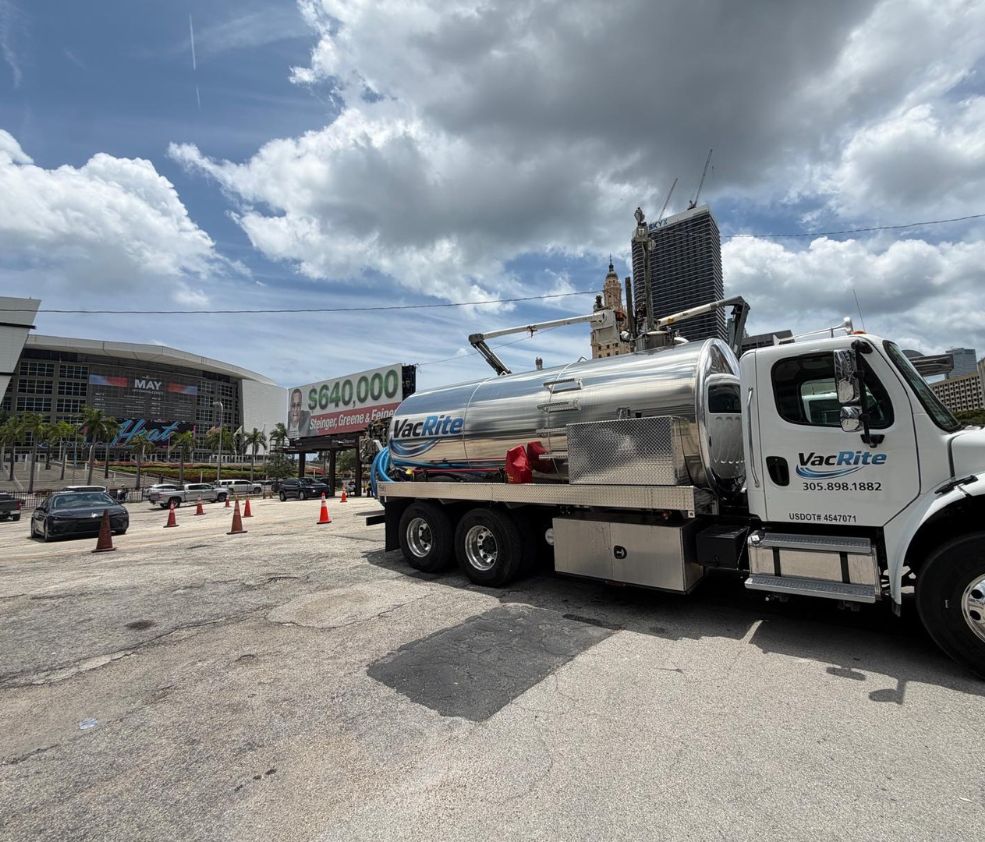
Working in Pinecrest
We work Pinecrest regularly, mostly around South Dixie Highway, the Suniland area, and the large-lot residential grid.
Large lots, heavy tree canopy and long private laterals running from the house to the street. Septic has been common here, and the combination of protected mature trees and long private runs is a strong argument for digging with water.
Who calls us here
Limited commercial food service, with most work being private-property drainage, utility locating and lateral exposure.
What we run in Pinecrest
Pinecrest is the clearest hydro excavation case on our whole map. Large lots, heavy protected canopy, and private laterals that run a long way from the house out to the street, often installed decades ago with no drawing anybody can produce. When a line needs finding, or a septic tank located, or a new water or electrical service brought in, cutting a trench through root zones under mature trees is both a permitting problem and a good way to kill something irreplaceable. We open a narrow hole with water, expose exactly what is needed, and backfill. Slot trenching runs the same way for longer laterals. Commercial kitchen work here is limited to a few spots along the Suniland stretch of South Dixie.
Getting a truck in
Everything happens on private property with the owner watching. Driveways are long and often gated, and the surface is pavers, coral rock or stamped concrete nobody wants tracked or cracked, so we stage where we will not mark anything and run hose instead of moving the truck. Overhead clearance is the constant concern: the canopy on these streets is low and dense and a tanker does not fit everywhere a pickup does, so we scout the approach. Lawn irrigation and landscape lighting are buried shallow across the whole property. South Dixie handles the through travel and the side streets are quiet, which helps.
Through the year
Rainy season brings the private drainage calls, and on lots this size a low spot that ponds for days is a genuine nuisance. Hurricane season is the biggest driver here because tree work follows storms and tree work means digging: root pruning, replanting, replacing damaged services, all of it needing utilities located first. Fall and winter are drier and easier for excavation, so scheduled projects cluster there. Septic pumping picks up ahead of storm season when the ground is still able to take water.
Pinecrest sits in Miami-Dade County, and everything on this page runs out of our yard in Miami. See the rest of Miami-Dade or look at the trucks working.
One call covers both halves of the job in Pinecrest
Ask most contractors in this village to pump a trap and daylight a service line in the same week and you are hiring two companies, coordinating two schedules and chasing two sets of paperwork. We built this one so that is a single call.
Take a blocked kitchen line. Clearing it is a jetting job. Finding out why it keeps blocking can mean exposing the lateral, and if that lateral runs under a finished surface next to other buried services, the digging is the careful part. Splitting that across two companies is how a one day job becomes a three week one.
The same logic runs the other way. A restaurant with a line that keeps blocking has a jetting problem and a trap interval problem, and treating either one alone means doing it again in a few months. Because the crew that clears the line is the crew that services the trap, the conversation covers both instead of stopping at the edge of somebody’s scope.
What you get in writing
Every environmental service in Pinecrest generates a manifest showing what came out and where it went, before and after photographs, and disposal records from an approved facility. That file is what an inspector asks for, and it is the reason the haulers permit and the dumping permit matter rather than being background detail.
On the excavation side the deliverable is different but the principle is the same. An exposed utility gets measured for depth and offset, identified by size and material, and photographed, so the drawing can be corrected before a trench crew corrects it the expensive way. Everything we run is available across this area, and telling us the job is the fastest way to find out which part of it you actually need.

What we run in Pinecrest
Both halves of the company work this village. Excavation on one side, grease and drainage on the other, one phone number for both.
Also close by
We are usually working somewhere in this corner of Miami-Dade already.
Something failed tonight in Pinecrest. Somebody answers.
Struck line, blocked kitchen drain, a basin backing up in the middle of a storm. We run every day of the year, and the phone reaches a person rather than a queue. This company is first responder owned, and the emergency side of it works the way that suggests.
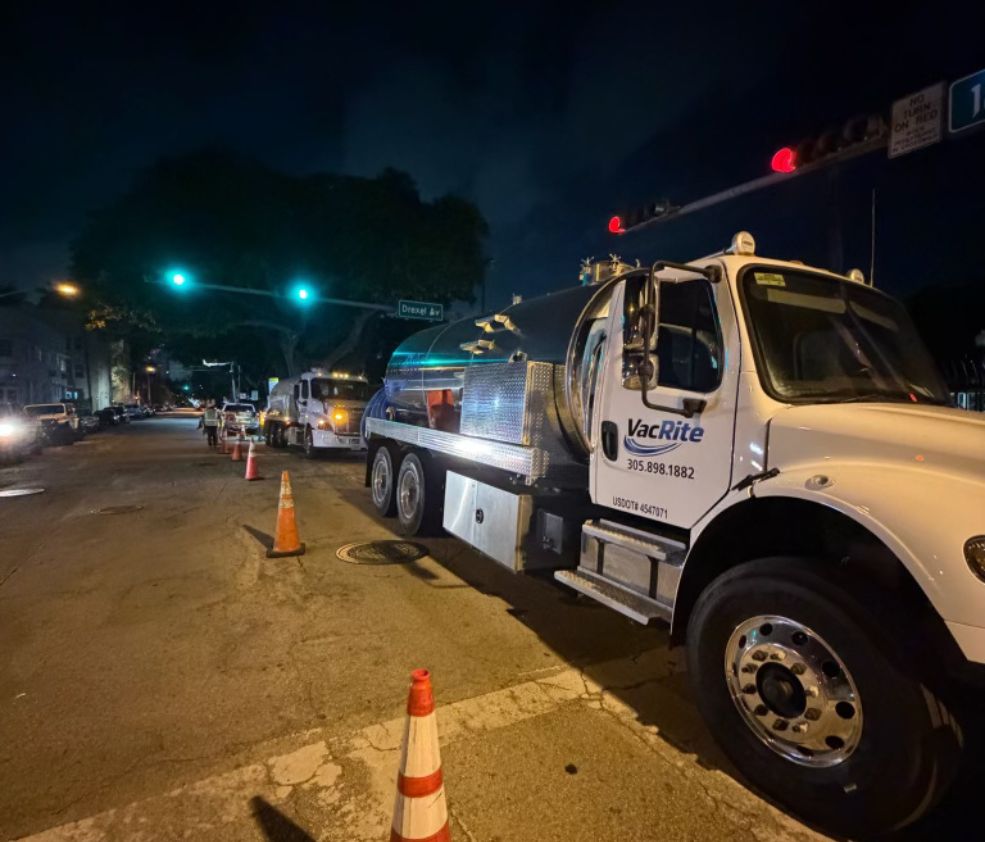
Questions we get asked
Do you charge extra to come out to Pinecrest?
Pinecrest is inside the area we run. Tell us the job and we will tell you plainly whether it makes sense for us to be the ones doing it.
How fast can you get a truck to Pinecrest?
Depends what is already running and where you are. Call and you will get a real answer rather than a maybe. We run every day of the year.
Do you service both restaurants and construction sites in Pinecrest?
Both. Grease traps and cooking oil on one side, excavation and utility work on the other, out of the same yard.
Do you work nights here?
Regularly. Most kitchen work in Pinecrest happens after close, and a lot of utility work has to happen off-peak.
What paperwork do we get?
Manifests, disposal records and photos on the environmental side, and measured, photographed utility records on the excavation side.
Tell us what the job is
Tell us where in Pinecrest the job is and what is going on.
Two trades, one call. We own the trucks, hold the permits, and put our own people on the job.
VacRite, Miami
info@vacriteservices.com
Open 24/7/365
USDOT 4547071