
Hydro Excavation
Digging with pressurized water and vacuum instead of steel, so the pipe or conduit in the hole comes out of the ground untouched.

Utility contractors, general contractors, telecom and fiber crews, pipeline operators, municipalities, and restoration companies working anywhere near buried services.
How a job runs, step by step
Locate first
The dig gets marked before anything runs. Locates tell us what is supposed to be down there, and the excavation tells us what is actually down there. Those two are not always the same, which is a large part of why this method exists.
Cut with water
A pressurized wand breaks up the soil in a controlled pattern. Pressure and nozzle get matched to the ground. South Florida fill, sand and weathered limestone all take a different setting.
Lift with vacuum
The slurry goes straight up the hose into the tank on the truck. Nothing gets spread across the work area, which matters on an active site and matters more on a finished parking lot.
Expose and verify
The utility gets uncovered, measured and photographed. Depth, size, material and position all get recorded so the design can be confirmed or corrected before anyone commits to a trench line.
Backfill and leave it clean
The hole gets backfilled and the surface restored. Spoil rides out in the tank to an approved disposal site under our haulers permit.
Why water instead of a bucket
A backhoe tooth does not know the difference between fill and a gas service. Water does. Pressurized water erodes soil but flows around a pipe, a duct bank or a fiber conduit without cutting it. That is the entire argument for the method, and on a congested corridor it is a strong one. A strike is not just a repair bill. It is a shutdown, a report, an outage that lands on somebody else’s customers, and a crew standing around while it all gets sorted out. The other half of the argument is the tolerance zone. Once a facility is marked, the utility owner and the state dig law put a buffer around that paint where mechanical equipment is not permitted, and inside that buffer you have two options. You dig by hand, which in limestone is a long and demoralizing day, or you dig with water and vacuum. Most crews figure out which one they prefer the first time they try the other.
The wand, the tank and the settings in between
The tool itself is simple enough to describe and harder to run well. A lance carries water to a tip at the end, the operator works that tip across the soil in a pattern, and the material breaks loose as slurry. A separate hose, wide enough to swallow gravel and root, lifts everything into a debris tank on the truck under vacuum. Neither half is doing anything clever on its own. The craft is in the settings. Pressure gets matched to the ground, and the tip gets matched to what is near it. A rotating head spreads energy across an arc and is the usual choice once we are close to a facility. A tight straight jet cuts faster and will mark a coating if somebody lets it dwell, so the wand stays moving and holds standoff. Anyone can rent this equipment. What you are actually hiring is the hand on the wand.
What South Florida ground does to a dig
Around Miami you hit oolitic limestone shallower than crews from other states expect, and you hit water not far below that. A high water table means a hole wants to refill while you are still working in it, and it means loose sandy fill above the rock moves easily. Vacuum excavation handles both. The tank pulls water and spoil together, so a wet hole is a normal Tuesday rather than a problem to solve. Move west into the drained wetland ground behind Broward and Palm Beach and the argument inverts. There the material is soft, wet muck that takes almost no pressure to move and will not hold a vertical wall for long, so the hole gets opened deliberately and the walls get watched. Out on the southwest coast toward Fort Myers and Naples it is sand, which runs easy and sloughs easy. Rainy season adds an afternoon storm to the plan most days from June onward, and some of that day belongs to the weather whether or not anyone budgeted it.
Where the spoil goes, and why that is your problem too
What comes out of the hole is a regulated waste stream from the moment it enters the tank. It is soil mixed with groundwater and whatever the site has been holding, and it cannot be dumped in a corner of the lot, washed into a basin, or left as somebody else’s decision. It rides out in the tank to a facility permitted to receive it, and there is a record of that. We hold the haulers permit that lets the truck carry it and the dumping permit that gives it a legal destination. That chain matters more than it sounds like it should, because the generator of the waste, which on most jobs is you or your owner, keeps a share of the responsibility for where it ends up. Ask any vacuum contractor where the spoil goes. If the answer is vague, that is the answer.
Owned trucks, and the whole job from locate to restoration
The work runs off our own tanker units. We are not brokering the job to whoever is available, which is the difference between a scheduled window and a maybe, and it is the difference between one crew that knows your site and a stranger every visit. Every driver holds a CDL and the fleet runs under USDOT 4547071, active. The company is family owned, first responder owned, bonded and insured, with a master plumber on staff and the phone answered at any hour of any day. A job runs the same way each time: the ticket goes in and the marks go down, we work from those marks and confirm what is really there, the hole gets opened and the facility exposed clean, everything gets measured and photographed, then it is backfilled, compacted and the surface put back. Spoil leaves with the truck. You get the record.
Worth knowing
Anyone can rent a vac trailer. The part that matters is what happens to what comes out of the hole. Slurry is a regulated waste stream, and a contractor without a haulers permit and a disposal permit has to put it somewhere. Ask where.
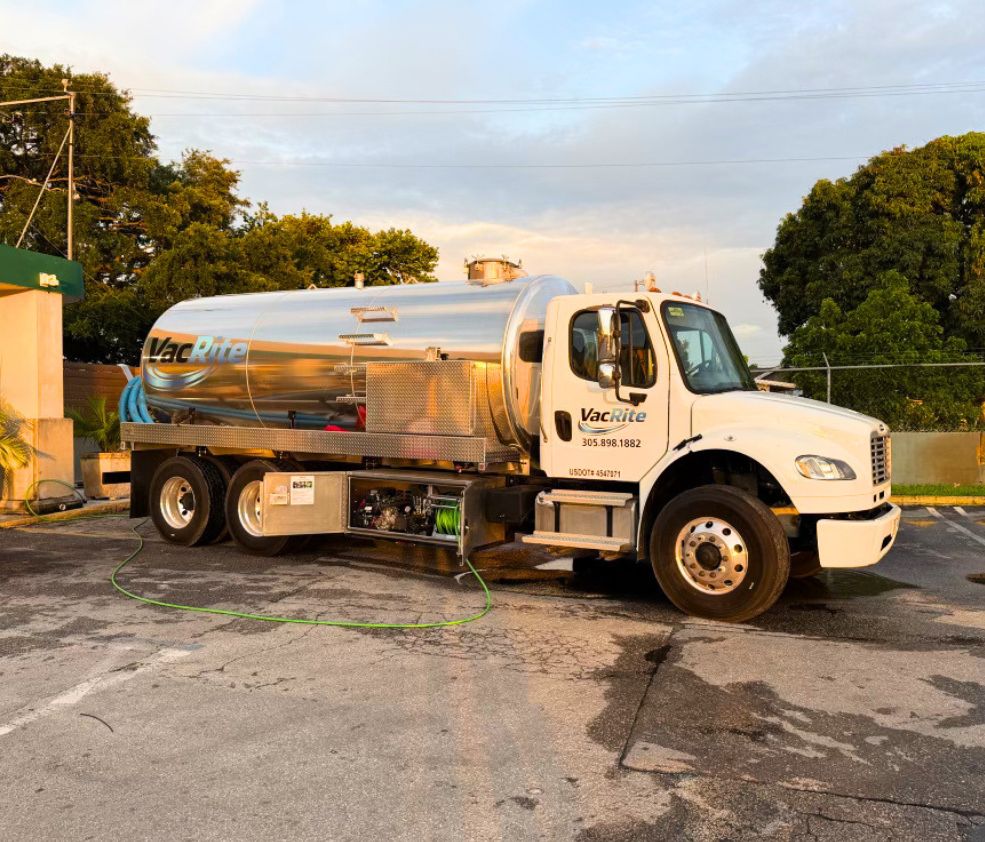
Ask any contractor where what they pump out actually goes. It is a fair question, and the answer tells you a lot.
VacRite
Other excavation work
The other side of the company
Most of our customers only ever need one half of what we do. It is worth knowing the other half exists.
Something failed tonight. Somebody answers.
Struck line, blocked kitchen drain, a basin backing up in the middle of a storm. We run every day of the year, and the phone reaches a person rather than a queue. This company is first responder owned, and the emergency side of it works the way that suggests.
Questions we get asked
Is hydro excavation safe around live utilities?
That is the reason it exists. Pressurized water erodes soil but flows around pipe, conduit and cable instead of cutting through it. It is the accepted method for working inside a tolerance zone where mechanical digging is not allowed.
How deep can you actually dig?
Routine potholing and daylighting work runs comfortably into the deeper end of normal utility depth, and reach depends on the truck, the hose run and the ground. Tell us the depth and the soil and we will tell you straight whether it is a job for our unit or not.
Do you handle the locates?
Utility locates go through the state one-call system before any dig, and we work from those marks. Locates tell us what should be there. The excavation confirms what is.
What happens to the spoil?
It goes into the tank and rides out with the truck to an approved disposal facility. We hold the haulers permit and the dumping permit that make that legal, and we can document it.
Can you work at night or on a weekend?
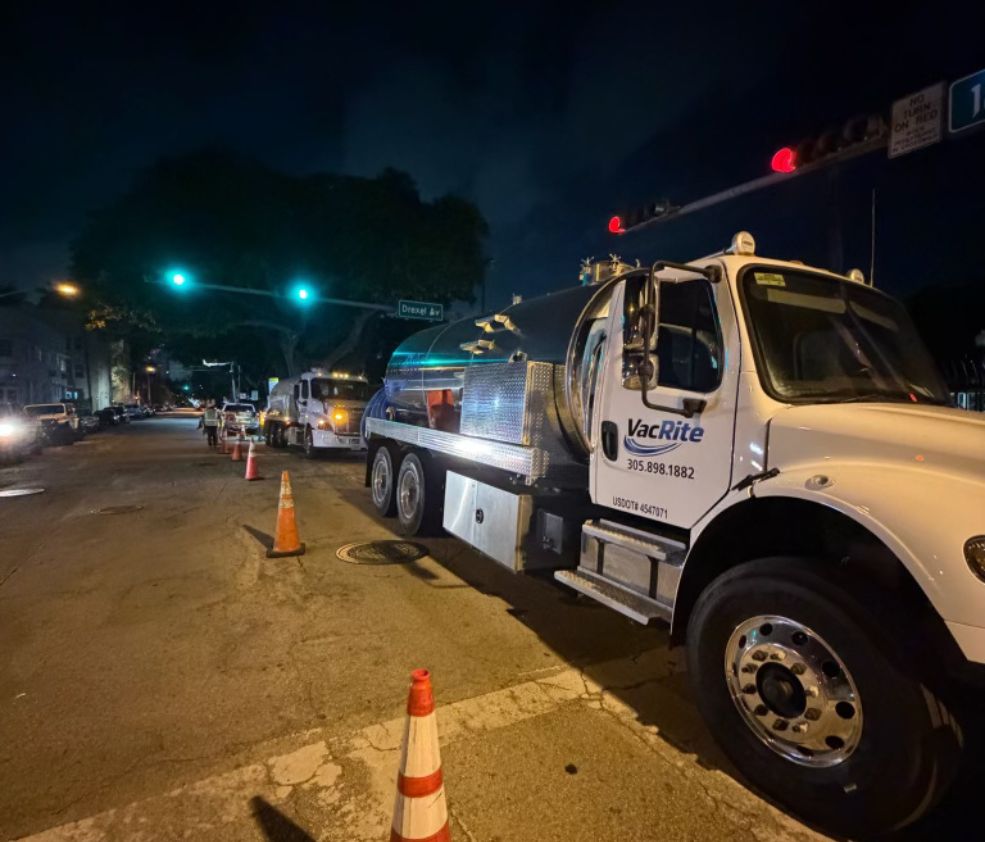
Yes. A lot of utility and roadway work has to happen off-peak, and we run around the clock. Night work gets scheduled the same way day work does.
How far will you travel for excavation work?
Excavation travels further than our grease and drainage side. Statewide is on the table when the job calls for it. Give us the location and the scope.
Do you own your trucks or subcontract the work?
They are ours. Our own tanker units, our own CDL drivers, running under our own USDOT number. That is why a scheduled window means something and why the crew that shows up already knows your site.
We run hydro excavation across South Florida, including Miami, Fort Lauderdale, West Palm Beach, and the rest of the region. See every city we cover or look at the trucks on the job.
Tell us what the job is
Tell us about the hydro excavation job. Where it is, what is around it, and when you need it.
Two trades, one call. We own the trucks, hold the permits, and put our own people on the job.
VacRite, Miami
info@vacriteservices.com
Open 24/7/365
USDOT 4547071