
Electrical Line Daylighting
Opening the ground over a buried electrical run so its real depth and position can be measured before anyone designs or digs alongside it.

FPL contractors, electrical subs setting poles and light bases, engineers routing new conduit through an occupied corridor, and crews who need to know where the primary runs before they commit to a bore.
How a job runs, step by step
Start with the ticket and the owner
Marks go down through Sunshine 811 first. On electric work we also want to know whether the facility belongs to the utility or stops being theirs at a meter, because private secondary past the meter never comes back on a ticket and it is energized all the same.
Open over the target, not across it
Water and vacuum take out a window directly above the run. The footprint is sized to answer the question, and the wand works down in lifts so the first sign of red concrete, warning tape or sand bedding shows up before anything is riding on top of it.
Uncover and clean the run
The duct bank, conduit or direct-buried cable gets cleared off enough to be read. Number of ducts, spacing, encasement, whether it is one bank or a bank with a stray secondary lying above it. That last one is the finding that changes drawings.
Measure it against your reference
Depth to top from existing grade, outside width, offset from a curb line or station, direction of run. Photographs with a tape in the hole. The numbers get tied to whatever framework your drawing already uses.
Close it up
Backfill, compaction, surface restored. Spoil rides out in the tank under our haulers permit to a facility permitted to take it, and there is a record of where it went.
Depth on an electric run is a question nobody can answer from the surface
A locator reading a signal on an energized primary gives you a line on the pavement and nothing else. It does not tell you whether that line is thirty inches down or seven feet down, and on electric it swings further than most people expect. A duct bank laid during a road project sits at whatever depth the road profile demanded that year. A direct-buried secondary running to a pad transformer may be barely under the sod. Then somebody raises grade for a parking lot, or a swale scours out, and the cover changes without anybody touching the cable. Around here you can add fill placed over decades on ground that was wetland before it was a subdivision. Daylighting is how that becomes a measurement instead of a guess, and it is cheaper to take that measurement while the route is still a line on a drawing.
Duct banks, direct-buried cable, and the thing lying on top of them
What comes into daylight is rarely as tidy as the section detail. Concrete-encased duct banks read clearly enough once the red concrete shows, and they are the easy version, because the encasement is doing the protecting. Direct-buried primary is a different animal: cable in a sand bed with warning tape somewhere above it, and nothing between the cable and whatever is coming down at it. Then there is the secondary, the street light circuit, the traffic signal interconnect, the irrigation controller feed, all of which have a habit of running shallow and crosswise over the thing you were actually looking for. Water finds all of it and cuts none of it. A backhoe tooth finds the shallow one with the primary still ten inches below, which is the sequence that ruins an afternoon.
Ground that argues, and weather that has an opinion
Oolitic limestone sits shallower under Miami-Dade than crews from other states plan for, and there is water not far under that. On an electric daylight that combination cuts both ways. The rock takes real pressure to move, and the loose sandy fill above it moves too easily and will slough off a vertical wall once groundwater is running through it. West into the drained wetland muck behind Broward and Palm Beach the material goes soft and the walls stop standing in any meaningful way, so the hole gets opened wider and watched. Out toward Fort Myers and Naples it is sand, which runs easy and sloughs easy. From June on, a storm shows up most afternoons and some of the day belongs to it whether or not anyone put that in the schedule. A vac truck handles a wet hole because the tank takes water and spoil together.
Coordination with the utility, and what that buys you
Electric daylighting goes better when the owner knows it is happening. Some facilities carry conditions on who may work over them and how close anything mechanical may come, and a standby representative is a normal request on a transmission duct bank or a feeder that a lot of customers sit behind. That is not an obstacle so much as a phone call made early. Our crews work to a no-contact rule regardless: the wand holds standoff, the tip keeps moving, and the vacuum hose stays off the facility. A rotating head spreads the energy across an arc once we are close, because a tight straight jet that sits in one place will mark a jacket, and a marked jacket on somebody’s primary is a conversation nobody wants to have. If the owner runs a prequalification packet, send it over early rather than the week of, since bonding and insurance certificates with the right holders and wording on them take longer to produce than the dig does.
The record is the deliverable
The hole gets backfilled the same day. What survives is the file, and it has to make sense to somebody who was never on site. Each exposure comes back with depth to top of the facility measured from existing surface, the width of the bank or the diameter of the conduit, the material and encasement, the condition of anything visible, and the direction of run. Anything else found in the same window gets written down too, because a stray secondary crossing at eighteen inches is the detail that moves a bore path. Position ties to your station and offset, your survey point, a curb, a building corner, whatever your drawing speaks. Photographs go with all of it, including one with a tape in the hole so the depth is more than a number in a table. Send the reference framework before the day and the record comes back ready to drop into the drawing.
Worth knowing
Electric is the one utility where the 811 marks feel most reassuring and carry the least depth information. Two circuits stacked read as a single line of paint, and private secondary past a meter never appears on the ticket at all. If a bore is crossing a feeder, daylight it before the drill is on site rather than after.
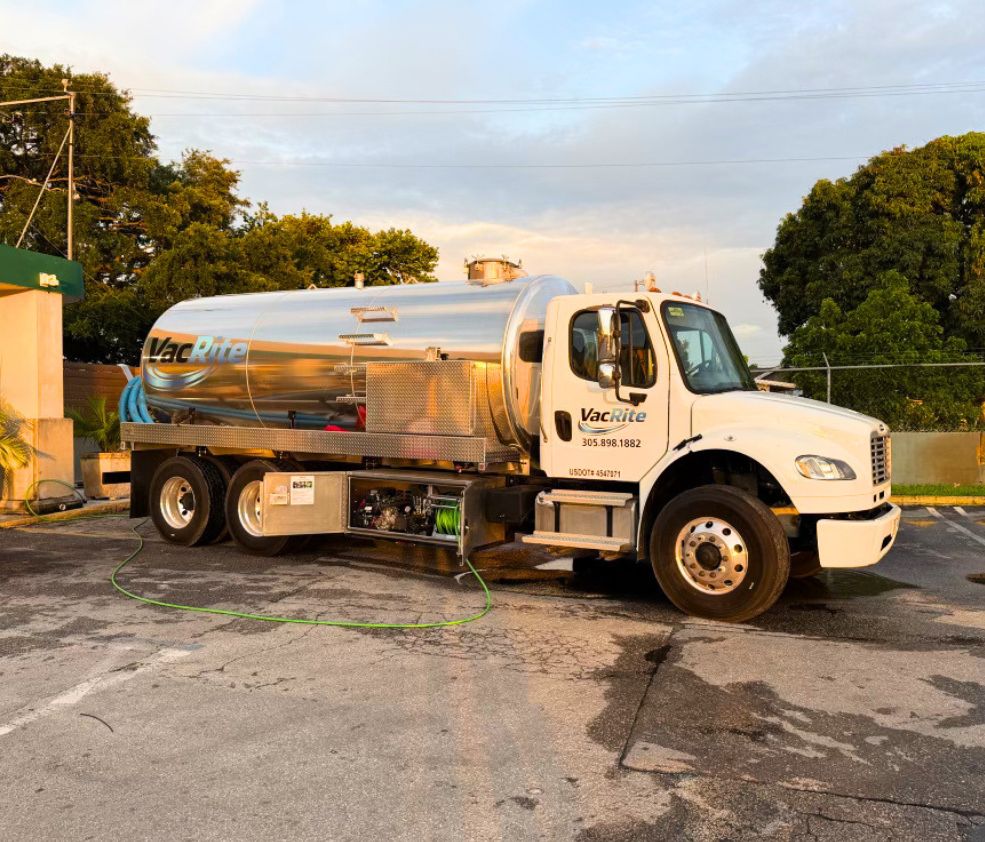
Ask any contractor where what they pump out actually goes. It is a fair question, and the answer tells you a lot.
VacRite
Other utilities work
The other side of the company
Most of our customers only ever need one half of what we do. It is worth knowing the other half exists.
Something failed tonight. Somebody answers.
Struck line, blocked kitchen drain, a basin backing up in the middle of a storm. We run every day of the year, and the phone reaches a person rather than a queue. This company is first responder owned, and the emergency side of it works the way that suggests.
Questions we get asked
Can you daylight an energized line?
Yes. Water erodes soil and flows around conduit, encasement and cable instead of cutting into it, which is why non-destructive excavation is the accepted method inside a tolerance zone. Nothing mechanical touches the facility.
Do we need FPL out there while you work?
Sometimes. Certain facilities carry conditions about who may work over them, and a standby representative is a routine ask on a transmission duct bank or a major feeder. Tell us what the line is and we will sort the coordination before the day.
What is the difference between this and potholing the same line?
Scope. A pothole answers what is at one point. Daylighting opens a longer window to see how the run behaves between points, whether it changes depth, whether it bends where the drawing shows it straight. Congested corridors are where the longer look earns its keep.
Will you find the street light and signal circuits too?
Usually, and they matter. Shallow secondary, lighting and traffic signal interconnect cross over primary constantly and rarely appear where anyone expects. Everything found in the window gets recorded, not only the facility you asked about.
How deep is buried electric around here?
It varies more than people expect and we will not quote you a number. Duct banks under roadway sit at whatever the profile demanded, direct-buried secondary can be shallow, and grade changes move cover without anyone touching the cable. That is the reason to measure it.
Can you work at night in a travel lane?
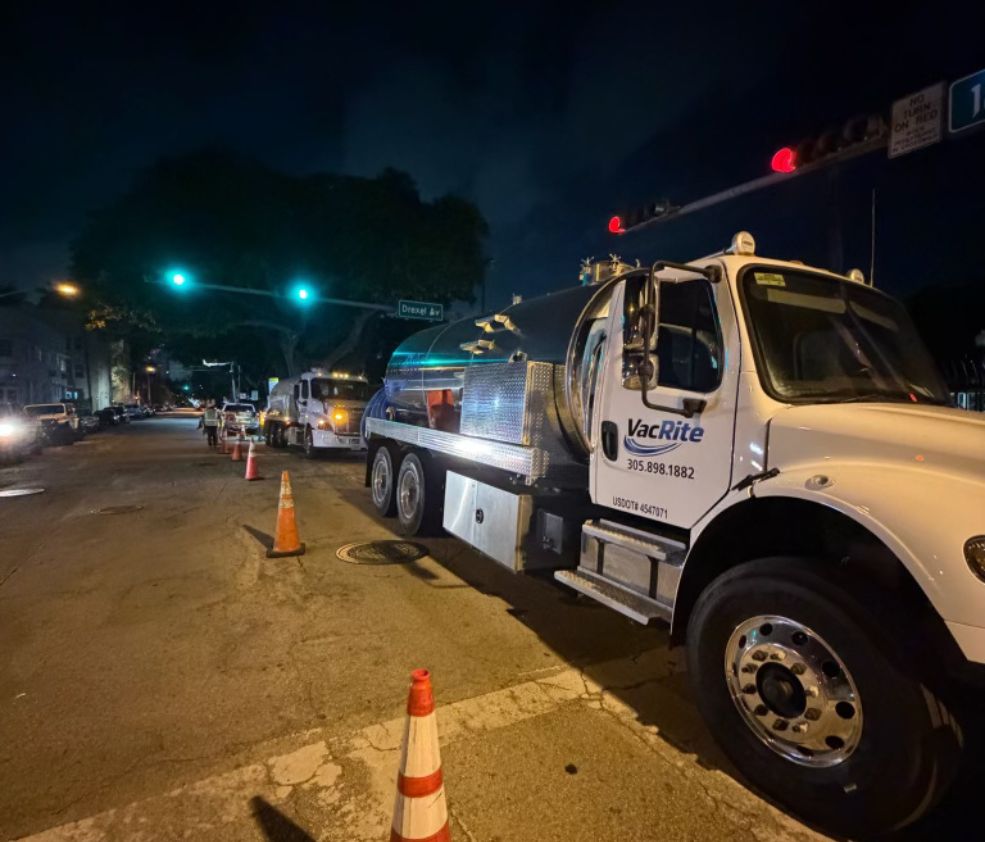
Yes. Roadway exposures commonly run off-peak with traffic control and a permit, and we run around the clock. Night work gets scheduled the same way day work does.
What do we get at the end?
Depth to top, size, material and encasement, condition, direction of run, and anything else in the hole, tied to your station and offset or survey reference, with photos including a tape shot. Give us your reference framework up front and it comes back in a form you can use directly.
We run electrical line daylighting across South Florida, including Miami, Fort Lauderdale, West Palm Beach, and the rest of the region. See every city we cover or look at the trucks on the job.
Tell us what the job is
Tell us about the electrical line daylighting job. Where it is, what is around it, and when you need it.
Two trades, one call. We own the trucks, hold the permits, and put our own people on the job.
VacRite, Miami
info@vacriteservices.com
Open 24/7/365
USDOT 4547071