
Where the trucks go
Out of Miami across eight counties, with excavation traveling further still when a job justifies the trip.
How far we go depends on what you need
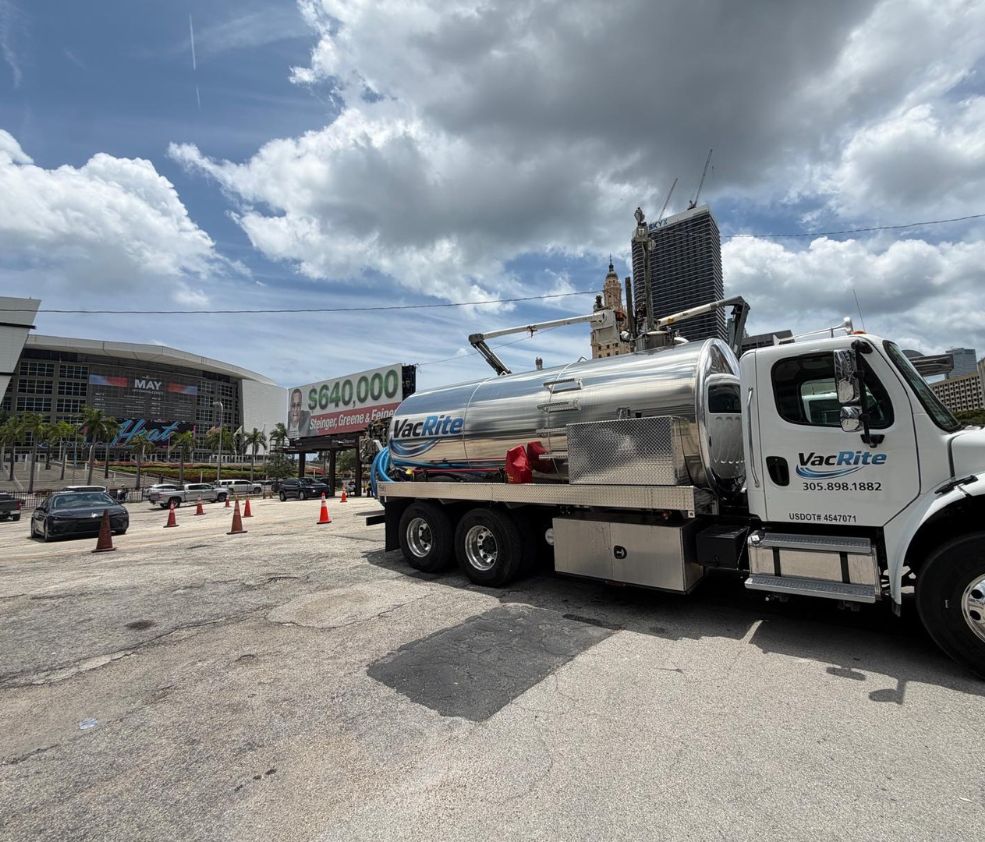
Grease trap, cooking oil and drainage work runs out to roughly a hundred and fifty miles from the yard in Miami. That covers Miami-Dade, Broward and Palm Beach comfortably, reaches the southwest coast around Naples and Fort Myers, and takes in the Treasure Coast from Stuart up through Vero Beach.
Hydro excavation travels further. A hundred miles is routine and statewide is on the table when the scope justifies the trip. Utility, pipeline and municipal work often sits outside anybody local, and moving a vac truck a few hours is a smaller problem than not having one.
Grease and drainage runs to about a hundred and fifty miles. Excavation goes further, statewide when the job justifies it.
Two radiuses
The ground is not the same across that footprint, and it changes how a job runs. Miami-Dade is limestone with the water table close underneath. Western Broward and Palm Beach are drained wetland that still drains through district canals and pumps. The southwest coast is sandy. The Treasure Coast is lagoon country, where nitrogen rules drive a great deal of septic-to-sewer conversion work. Knowing which one you are standing on is part of the job.
Miami-Dade County
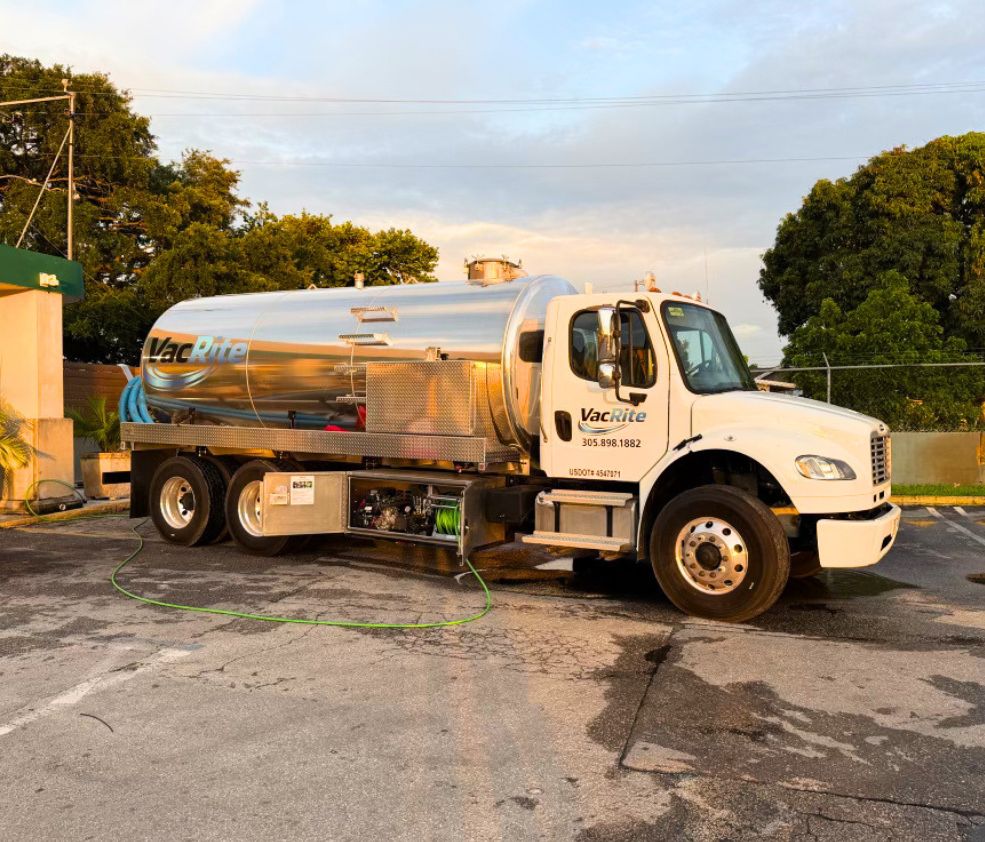
Miami-Dade sits on oolitic limestone with the water table close under it, and the county has been steadily converting septic properties onto sewer. Both facts shape how excavation runs here: shallow rock, wet holes, and a lot of new connection work into ground that already has plenty buried in it.
Broward County
Much of western Broward was drained wetland before it was subdivisions, and it still drains through improvement and water-control districts rather than by gravity alone. Canals, pumps and a high water table are the working conditions on most of these sites.
Palm Beach County
Palm Beach County runs on a patchwork of water-control and improvement districts, and several cities operate their own utilities. Who administers the drainage and the sewer changes from one municipality to the next, which matters for both permitting and disposal.
Lee County
Southwest Florida is sandier than the Miami-Dade rock, and Lee County carries an enormous canal inventory plus a long-running utilities extension effort moving properties off septic and well onto city service.
Collier County
Collier is strongly seasonal. Kitchens that run flat out from January through the spring go quiet in the summer, and service intervals that ignore that are either wasteful half the year or inadequate the other half.
St. Lucie County
Everything here comes back to the Indian River Lagoon. Nitrogen loading into the lagoon is what drives the septic-to-sewer work, and it is why disposal documentation gets taken seriously on this part of the coast.
Martin County
Martin County sits where the St. Lucie River meets the lagoon, and water quality is a live public issue here in a way it is not everywhere. Two of the communities we serve are unincorporated, so county rules apply rather than municipal ones.
Monroe County
The Keys are one road, US 1, with bridges between islands and water on both sides. Staging a heavy truck, tank capacity before a disposal run, and the drive back to an approved facility decide the day before the excavation does.
Hendry County
Sugar and cattle country west of Lake Okeechobee. Agricultural land, packing operations, canals doing the drainage, and long distances between anything. Grouped work travels well here; a single small job does not.
Okeechobee County
The north shore of the lake. Agricultural and small-town work, the Herbert Hoover Dike and the water district infrastructure around it, and a high water table everywhere.
Indian River County
Indian River County fronts the lagoon and runs an active septic-to-sewer effort for the same water-quality reasons as its neighbors to the south. The barrier island adds an access problem on top of it.
Something failed tonight. Somebody answers.
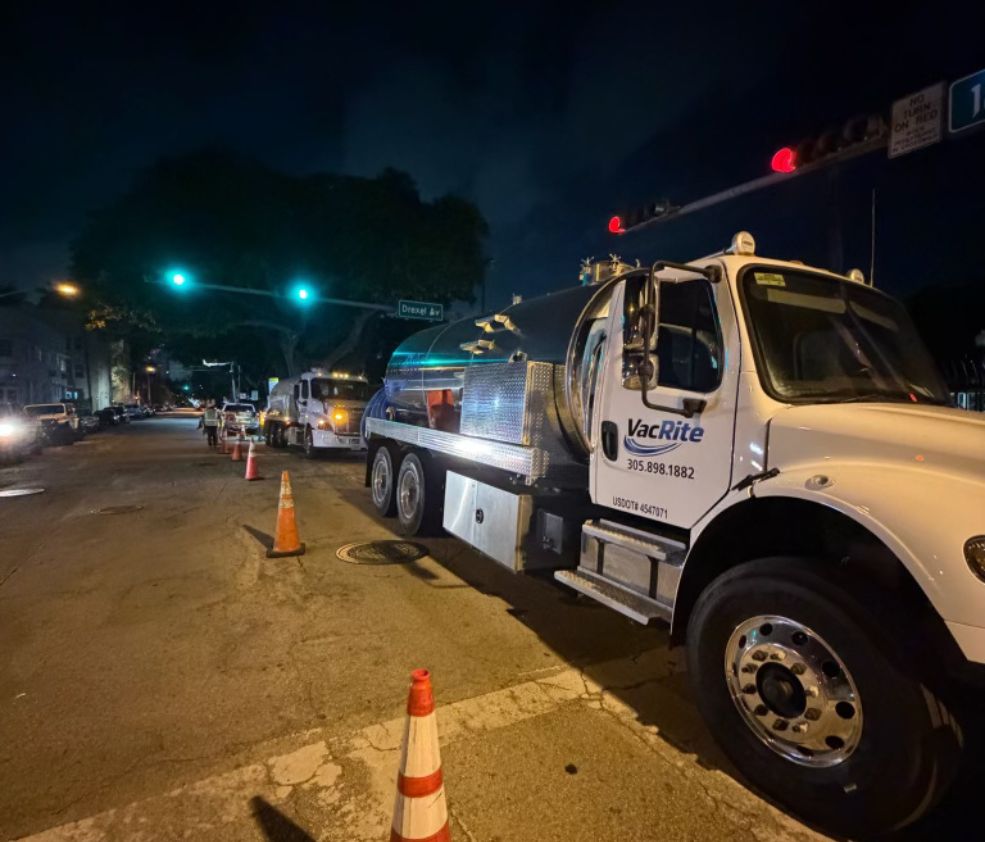
Struck line, blocked kitchen drain, a basin backing up in the middle of a storm. We run every day of the year, and the phone reaches a person rather than a queue. This company is first responder owned, and the emergency side of it works the way that suggests.
Questions we get asked
Do you charge more to travel?
Distance is part of scoping any job, and we would rather talk it through than have you guess. Tell us where the work is and we will tell you straight whether it makes sense for us to be the ones doing it.
My city is not listed. Do you still come out?
Probably. The lists here are the cities we have pages for, not a fence. If you are inside the radius, call and ask.
How far will you go for excavation?
Further than for grease and drainage. Statewide is realistic for utility and pipeline work when the scope justifies it.
Do you cover the Keys?
Tell us the job. Access and logistics down there are their own conversation and it is better had before anybody commits to a date.
Can you handle several sites across different counties?
Yes, and portfolios are easier to run on one schedule with one record format than site by site with different vendors.
Tell us what the job is
Tell us where the work is. If it is outside the usual radius we will say so rather than waste your time.
Two trades, one call. We own the trucks, hold the permits, and put our own people on the job.
VacRite, Miami
info@vacriteservices.com
Open 24/7/365
USDOT 4547071