
Sewer Line Exposure
Uncovering gravity sewer, laterals and force mains for repair, tie-in or connection work, without breaking the pipe or disturbing the grade it depends on.
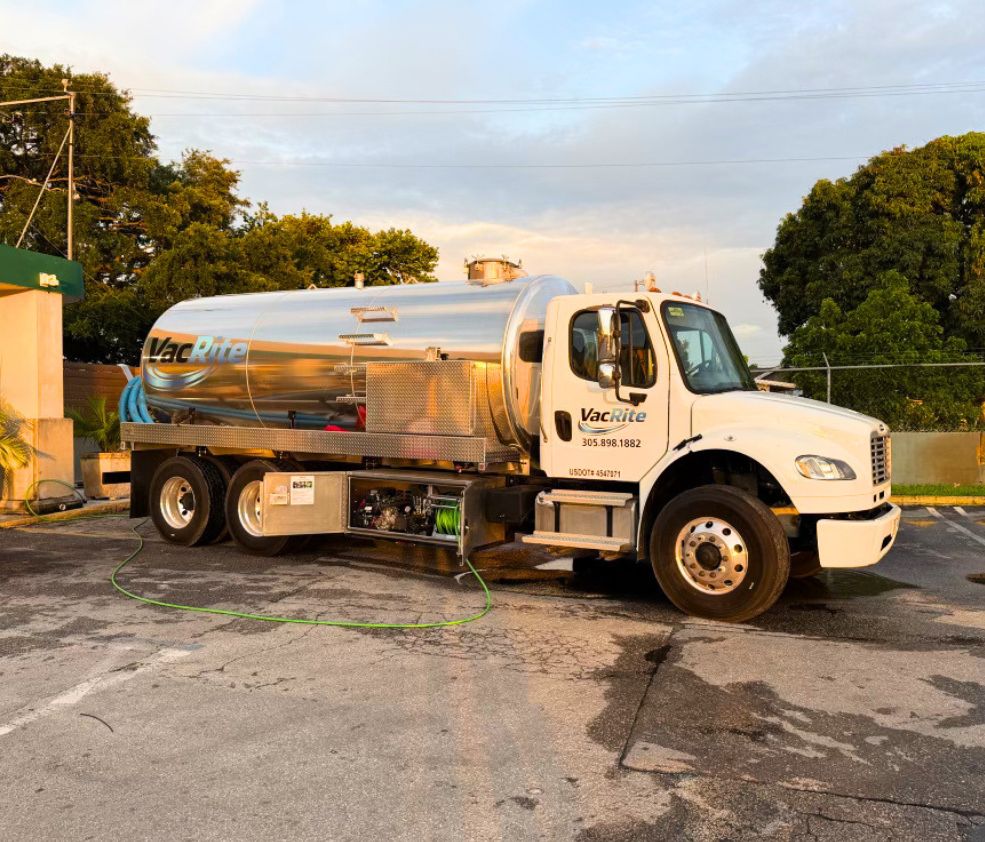
Underground utility contractors, plumbing contractors tying a building into the collection system, municipal wastewater departments, and property owners going through a septic to sewer conversion.
How a job runs, step by step
Establish gravity or pressure
A gravity main and a force main are different jobs with different consequences. Gravity depends on a slope that must not be disturbed. A force main is a pressurized pipe carrying sewage, and a breach there is a spill event.
Find the depth honestly
Sewer runs deeper than most of what shares its corridor, and the deeper the pipe the further the marks can be off laterally. Ground gets opened with that in mind rather than driving straight down at the paint.
Expose without undermining
Water and vacuum take material off the pipe and out of the hole. On gravity, the bedding under the pipe is left alone, because a pipe that settles half an inch has a grade problem that outlives everybody on site.
Build the hole for the repair
A clamp, a saddle, a cut-in wye or a tie-in each need different room. Depth means shoring, and shoring gets planned before the crew arrives rather than improvised at the bottom.
Close it out clean
Backfill and compaction get done with the pipe’s support in mind, the surface goes back, and spoil leaves in the tank under permit to an approved facility.
Gravity and pressure are two different animals
Everything about how a sewer exposure runs comes down to which one you have. A gravity main works because of slope, sometimes a very small one held over a long run, and that slope is set by the bedding under the pipe. Wash out the bedding and you have not damaged the pipe at all, you have just introduced a low spot that will collect solids for the next thirty years and generate a call nobody will connect back to this afternoon. So on gravity, material comes off the top and the sides and the support underneath is left where it is unless the repair specifically requires otherwise. A force main is the opposite problem. It is a pressurized pipe full of raw wastewater, usually running from a lift station, and it does not stop being pressurized because somebody is digging near it. Damage there is a spill, a notification, and a very different day. Both are reasons the pipe gets uncovered with water rather than steel.
Depth, shoring and the ground it sits in
Sewer is normally the deepest utility in the corridor, because it has to run below everything it crosses and stay on grade doing it. Depth compounds every other problem. Locate marks drift further from the truth as the facility gets deeper, since the mark is a projection to the surface from a signal below. A hole that reaches sewer depth is a hole a person cannot safely stand in without it being sloped, benched or shored, and in this soil that is not a formality. Loose sandy fill over the limestone in Miami-Dade sloughs off a vertical wall without warning, especially once groundwater is running through it, and out in the drained wetland muck behind Broward and Palm Beach the walls do not hold at all in any useful sense. At sewer depth here the hole is also usually below the water table, so it takes water for as long as it is open and the truck and the pumps keep working the whole time.
Septic to sewer conversions on the Treasure Coast
There is a specific and growing category of this work along the Indian River Lagoon, where nitrogen loading rules have pushed a lot of property off septic and onto the collection system. St. Lucie, Martin and Indian River counties have all been running conversion work, and the job on any individual property is a small excavation with a large number of constraints around it. The lateral has to reach the main at a workable depth and slope, the connection point often sits in a right of way or under a driveway, and the route from the building to the street is threaded past a water service, an irrigation system, a power drop, landscaping the owner cares about and a tank that is being abandoned. Vacuum excavation suits this because it opens a small hole exactly where it is needed, leaves the surroundings intact, and does not need a machine sitting on somebody’s lawn. The homeowner keeps their yard. The plumber gets a clean connection point.
Laterals, tie-ins and the hole the plumber actually needs
Most sewer exposures exist so somebody else can make a connection or a repair, which makes the shape of the hole more important than the fact of it. A cut-in wye or a tapping saddle on a live main needs the pipe clean around the crown, room to work, and usually room below the springline. A repair clamp needs a strap all the way under. A lateral tie-in needs enough length exposed to set the fitting and check the fall. If somebody is going in the hole with a saw or a fusion machine, that is a person in a confined space over a live sewer, and it gets treated that way with shoring, ventilation planning where it applies, and a hole that is stable rather than technically open. So we ask before the truck rolls what is happening down there. That one question changes the excavation more than the pipe material does.
Spoil, odor and the record
Spoil from a sewer exposure is a regulated waste stream and it is one nobody wants lying around. It is soil, groundwater and, on a repair, whatever the pipe has been leaking into the ground around it. It goes into the tank and rides out to a facility permitted to receive it under our haulers permit and dumping permit, documented, rather than into a corner of the site or the nearest structure. On occupied property and in retail or residential settings that also matters for the obvious reason: a sealed tank on a truck does not smell like an open pile does. The exposure itself gets recorded like any other, with depth to top, pipe size and material, condition of the pipe and any visible joint, direction and apparent fall, and whatever else turned up in the window, with photographs including a tape shot. On conversion work that record is frequently what the inspector wants to see.
Worth knowing
Say whether it is gravity or a force main when you call. On gravity the bedding under the pipe has to be left intact or you trade a repair today for a low spot that collects solids for decades, and on a force main any breach is a spill event. At sewer depth here the hole is also below the water table and needs shoring, so both answers change how the day gets planned.

Ask any contractor where what they pump out actually goes. It is a fair question, and the answer tells you a lot.
VacRite
Other utilities work
The other side of the company
Most of our customers only ever need one half of what we do. It is worth knowing the other half exists.
Something failed tonight. Somebody answers.
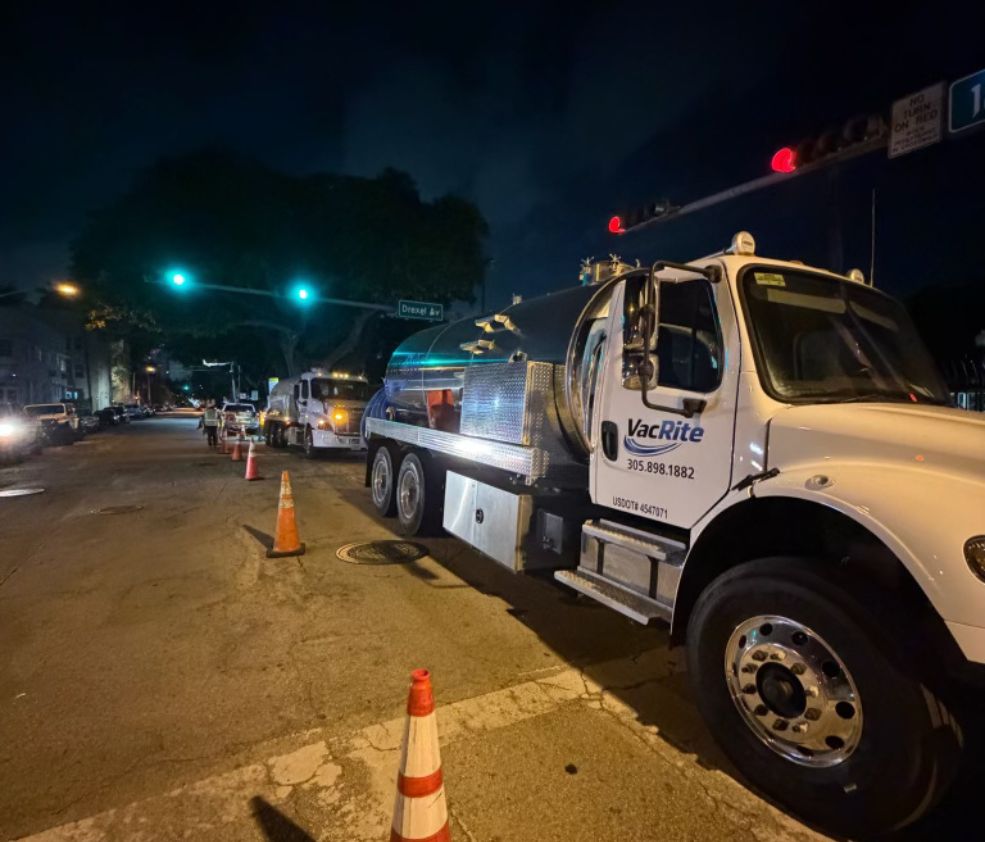
Struck line, blocked kitchen drain, a basin backing up in the middle of a storm. We run every day of the year, and the phone reaches a person rather than a queue. This company is first responder owned, and the emergency side of it works the way that suggests.
Questions we get asked
Can you expose a live sewer main without damaging it?
Yes. Water erodes the soil away and the vacuum lifts it out, so nothing mechanical touches the pipe. On a gravity line we also leave the bedding under the pipe alone, since disturbing the support is how a grade problem gets created.
Do you work on septic to sewer conversions?
Yes, and it is steady work along the Treasure Coast where lagoon nitrogen rules have pushed properties off septic. We open the connection point and the lateral route without putting a machine across the yard, and the plumber gets a clean hole to tie into.
What is different about a force main?
It is pressurized and full of raw wastewater, so a breach is a spill event rather than a repair. It gets exposed with more standoff and more care, and we want to know it is a force main before the truck rolls, not when the pipe comes into view.
How deep do these holes get, and do you shore them?
Sewer is usually the deepest thing in the corridor and the holes reflect that. Anything a person enters gets sloped, benched or shored for the soil it is in, and around here that soil argues. Tell us how deep and how long you need it and it gets built to be worked in.
The hole is below the water table. Can you still work it?
Yes, that is standard here. The tank lifts water and spoil together and pumps go in when the inflow outruns the vacuum. An open hole at sewer depth takes water the whole time it is open, and the day is planned around that.
What happens to the spoil from a sewer dig?
It goes in the tank and leaves with the truck to a permitted disposal facility, documented under our haulers permit and dumping permit. On occupied property that also means a sealed tank instead of an open pile, which the neighbors notice.
Can you expose a lateral we cannot locate?
Often. Old laterals go unmarked, get abandoned, or run nothing like the drawing shows, and finding them is a regular part of this work. Tell us where the building connection is and roughly where the main runs and we will open ground between them.
We run sewer line exposure across South Florida, including Miami, Fort Lauderdale, West Palm Beach, and the rest of the region. See every city we cover or look at the trucks on the job.
Tell us what the job is
Tell us about the sewer line exposure job. Where it is, what is around it, and when you need it.
Two trades, one call. We own the trucks, hold the permits, and put our own people on the job.
VacRite, Miami
info@vacriteservices.com
Open 24/7/365
USDOT 4547071