
Water Line Exposure
Uncovering water mains, services and valves without damaging them, in ground where the hole wants to fill back up while you are still working in it.

Utility contractors making taps and tie-ins, plumbing contractors chasing a service leak, municipal water departments, and general contractors who need a main uncovered before anything else on the site can move.
How a job runs, step by step
Sort out main from service
A main and a service line get approached differently and belong to different people. We confirm which one the job is about, and whether the point of interest is upstream or downstream of a meter, before the wand comes out.
Open to the pipe, not into it
Water and vacuum erode soil away from the pipe. Ductile iron, PVC, asbestos cement and old galvanized all behave differently under a wand, and the settings come down as the pipe gets close.
Manage the water in the hole
In most of this territory the hole starts taking groundwater before it reaches pipe depth, and on a leak it is taking the leak too. The vac truck lifts water with the spoil and pumps run when the inflow outpaces it.
Clean the pipe and bell out the bottom
A tapping sleeve, a repair clamp or a saddle needs the pipe clean all the way around and needs room underneath for a strap. That gets done on site rather than left for the crew that follows.
Hold it or close it
Open holes get shored, plated and barricaded. Finished ones get backfilled and restored, with the spoil hauled out under permit to an approved facility.
A wet hole is the normal condition here
This is the part that separates water line work in South Florida from water line work almost anywhere else. The water table is high and tidally influenced along both coasts, which means an excavation at service or main depth often starts taking groundwater before the pipe is even visible, and it keeps taking it for as long as it is open. On a leak call it is taking the leak on top of that. Mechanical excavation in those conditions turns the hole into a soup nobody can see into or stand in. Vacuum excavation handles it because the tank lifts water and spoil together, so the truck is already doing dewatering as a side effect of digging. When inflow outruns the vacuum, pumps go in. Either way, a wet hole is a Tuesday rather than a crisis, and the crew that follows gets to see what they are working on.
Ductile, PVC, asbestos cement and whatever else is under there
Water systems around here are a museum. Newer mains are ductile iron or C900 PVC and are forgiving enough. Older distribution includes asbestos cement pipe, which is brittle, cracks if anything mechanical touches it, and carries handling requirements of its own the moment it is disturbed. Galvanized services from mid-century construction are frequently more rust than steel by now and will fail if you look at them the wrong way. Copper services run shallow and bend. Polyethylene services move under load. None of those want a backhoe tooth anywhere near them, and several will not survive an aggressive wand held in one place either, which is why standoff and a rotating head matter as much on water as they do on anything else. Tell us the pipe material if you know it. If nobody knows, we open ground assuming the fragile version.
Taps, valves and leak repairs each want a different hole
The pipe is the same. The excavation is not. A wet tap with a tapping sleeve and valve needs the main clean the whole way around, room for a machine and a crew to bolt up, and enough clearance underneath to get a strap or a wrench under the pipe. Belling out the bottom is a five minute decision on site and an hour of somebody else’s misery if it gets skipped. A valve exposure is a different shape entirely, since the target is a buried valve and its box, often a valve nobody has turned in twenty years, sometimes a valve the map put thirty feet from where it actually is. A leak repair means finding the failure point in ground that is already saturated and washed out around the pipe, and it usually means the hole has to be bigger than the repair to give the clamp somewhere clean to land. So we ask what is happening in there after we leave, and the hole gets built for it.
Where the water goes, and the paperwork behind it
Everything that comes out of a water line hole is a regulated waste stream from the moment it enters the tank. It is soil, groundwater, whatever the site has been holding, and on a leak job a quantity of potable water that is now neither potable nor anyone else’s problem to place. It does not get discharged into a swale, washed into a catch basin, or left in a corner of the lot for the next trade to inherit. It rides out in the tank to a facility permitted to receive it, and there is documentation of that. We hold the haulers permit that lets the truck carry it and the dumping permit that gives it a legal destination. That chain matters to you more than it looks like it should, because the generator of the waste, which on most jobs is your owner, keeps a share of responsibility for where it ends up. Ask any vacuum contractor where the spoil goes. A vague answer is an answer.
Working next to everything else in the corridor
Water mains do not get their own easement. They share a corridor with gas, electric, fiber, telecom and storm, usually in the same strip between a curb and a sidewalk, sometimes stacked. That is why an exposure over a water line so often uncovers three other things first, and why it is worth having every one of them recorded rather than just the pipe you came for. It is also why mechanical digging is restricted inside the tolerance zone around the marks in the first place. Once you are inside that buffer, the choices are hand digging, which in limestone is a long and demoralizing day, or water and vacuum. Each exposure comes back with depth to top, pipe size, material, condition, direction of run and whatever else was in the window, tied to a curb line, station or survey point, with photographs including a tape in the hole.
Worth knowing
Tell us whether it is a main or a service and, if you know, what the pipe is made of. Asbestos cement and old galvanized get opened differently from ductile or C900, and on a leak call the hole will be taking groundwater and the leak at the same time, which changes how the day is staffed.
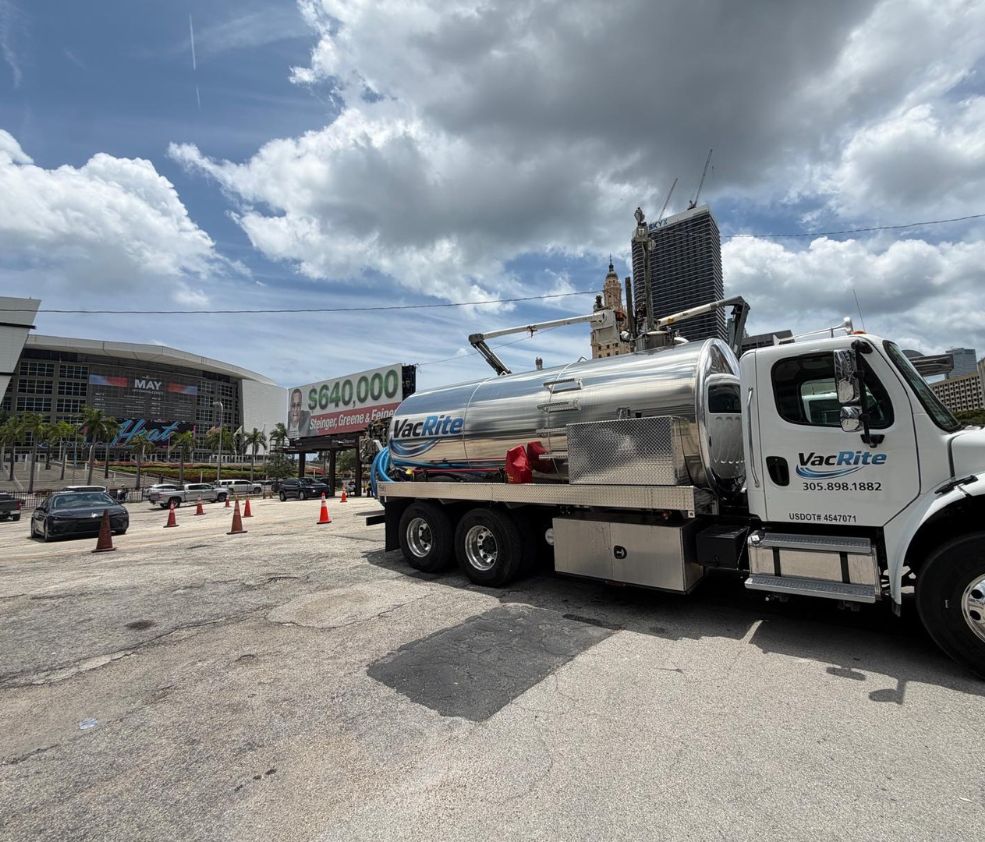
Ask any contractor where what they pump out actually goes. It is a fair question, and the answer tells you a lot.
VacRite
Other utilities work
The other side of the company
Most of our customers only ever need one half of what we do. It is worth knowing the other half exists.
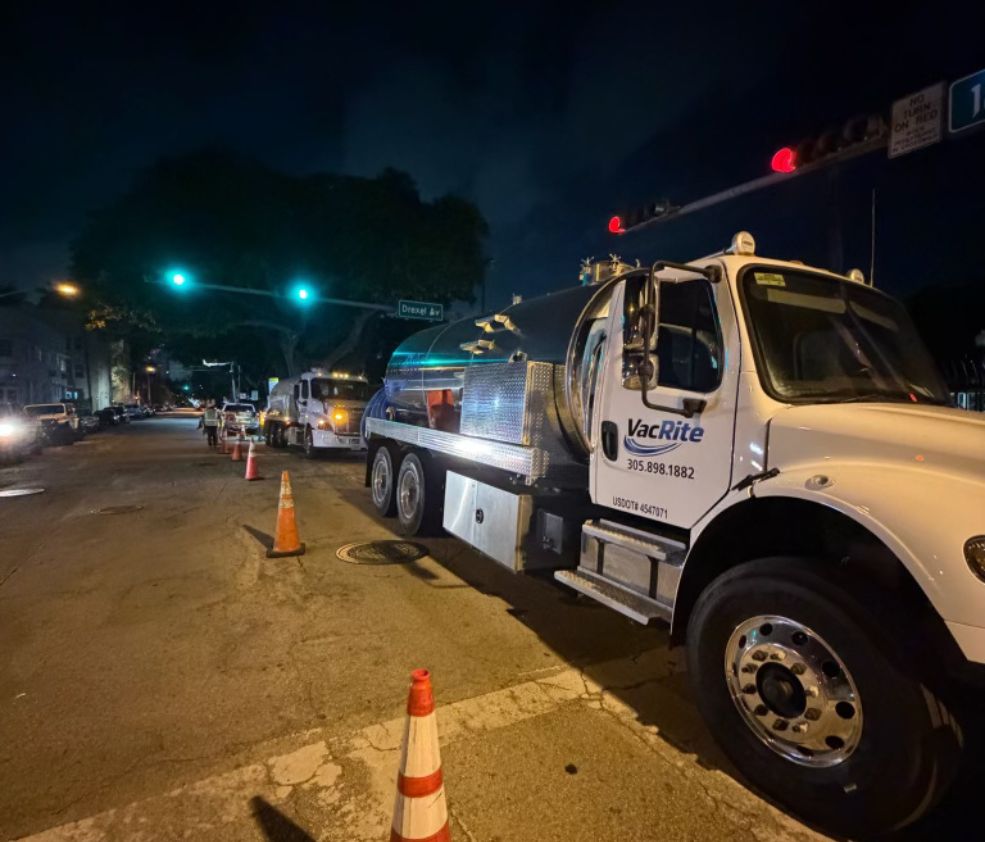
Something failed tonight. Somebody answers.
Struck line, blocked kitchen drain, a basin backing up in the middle of a storm. We run every day of the year, and the phone reaches a person rather than a queue. This company is first responder owned, and the emergency side of it works the way that suggests.
Questions we get asked
Can you expose a live pressurized main?
Yes. Nothing mechanical touches the pipe. Water erodes the soil around it and the vacuum lifts the spoil away, which is the accepted method for working inside the tolerance zone around a marked facility.
The hole keeps filling with water. Is that a problem?
It is the normal condition in most of this territory, and the equipment is built for it. The tank lifts water and spoil together, and pumps go in when the inflow outruns the vacuum. A wet hole is expected here rather than exceptional.
Can you get the pipe ready for a tapping sleeve?
Yes, and that is a common reason for the call. The main gets cleaned all the way around with room underneath for a strap, and the hole gets sized for the machine and the crew that will bolt it up.
What if the pipe is asbestos cement?
Then it gets treated as the brittle material it is, with no mechanical contact and a gentler approach at the pipe, and disturbed material is handled under the rules that apply to it. Tell us in advance if you expect it on the route.
We cannot find the valve. Can you help?
Frequently, yes. Buried valves end up paved over, buried under raised grade, or simply somewhere other than where the map put them. Tell us what you know and we will open ground for it without endangering the main or anything else sharing the corridor.
Where does the water and mud from the hole go?
Into the tank and out with the truck to an approved disposal facility. We hold the haulers permit and the dumping permit that make that legal, and it can be documented. It does not go into a swale or a catch basin.
Can you come out for a break after hours?
Yes. We run twenty four hours a day, every day of the year, and a main break does not wait for morning. Call and somebody who can put a truck on it will answer.
We run water line exposure across South Florida, including Miami, Fort Lauderdale, West Palm Beach, and the rest of the region. See every city we cover or look at the trucks on the job.
Tell us what the job is
Tell us about the water line exposure job. Where it is, what is around it, and when you need it.
Two trades, one call. We own the trucks, hold the permits, and put our own people on the job.
VacRite, Miami
info@vacriteservices.com
Open 24/7/365
USDOT 4547071