
Potholing
Precise test holes that confirm exactly what is buried at a specific point, and exactly how deep.
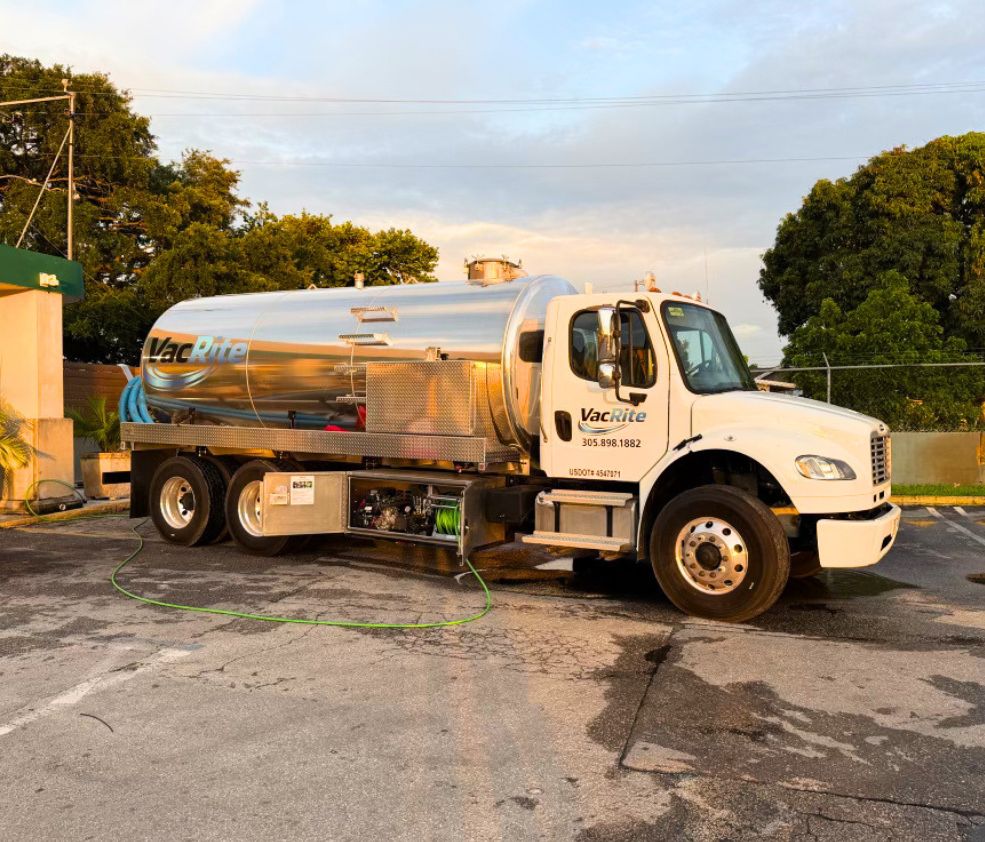
Anyone about to bore, trench, drive pile or set a foundation near existing services.
How a job runs, step by step
Mark the point
The test location comes from your drawing or from the conflict you are trying to resolve.
Cut the core if it is paved
On asphalt or concrete the surface is cored cleanly so the plug can go back and the patch is small and tidy.
Open the hole
Water and vacuum take it down to the target with a footprint typically small enough to be unremarkable the next day.
Measure and record
Depth to top of pipe, size, material, and position relative to your reference. Photographed.
Close it up
Backfill, compact, replace the core, restore the surface.
Potholing before a bore
Directional drilling has no eyes. A bore path crosses whatever is between entry and exit, and the only defense is knowing what is there before the head goes in. Potholing at each crossing turns an assumption into a measurement. Crews that pothole their crossings do not make the evening news. The pattern we see most often is a bore plan drawn off a set of as-builts that were accurate when they were drawn and have been quietly wrong ever since, because a service got relocated during a road widening and nobody redlined it. A test hole at the crossing costs a morning. Pulling a reamer through a fiber bundle costs a great deal more than that, and the cost is never only money. It is the outage report, the utility owner’s damage claim, and the conversation with the owner about why the schedule moved.
Small holes, small restoration
The finished footprint is small enough that restoration is a genuinely minor item. On finished commercial parking, tenant-facing frontage or a municipal sidewalk, that is not a small thing at all. On pavement we core the surface rather than break it, keep the plug intact, and set it back in when the hole is backfilled and compacted, so what is left behind is a seam instead of a patch. Municipal inspectors notice the difference, and so do property managers who have to explain a scarred lot to a tenant. On unpaved ground the disturbed area is small enough that turf and landscape recover on their own.
Reading the ground you are actually in
Pressure and nozzle get chosen for the material, and around here the material changes with the county line. Miami-Dade sits on oolitic limestone that can appear a couple of feet down, and it takes a tighter, harder pattern to break through the weathered cap without going wild once you are past it. The drained wetland muck out in western Broward and Palm Beach is the opposite problem, soft and wet and prone to caving in on itself, so the wand stays moving and the hole gets opened deliberately rather than fast. Sandy ground on the southwest coast around Fort Myers and Naples runs easy and sloughs easy. A crew that runs the same settings everywhere is either slow in the rock or careless in the muck.
What you get back from the hole
A test hole is a measurement, and a measurement nobody wrote down is worth almost nothing three weeks later when the design is being revised. Every pothole gets depth to top of pipe, outside diameter, material, condition of the coating or wrap where it is visible, and position tied to whatever reference you are working from, whether that is a station and offset, a survey point or a curb line. Photographs go with it, including one that shows the tape in the hole. Engineers get something they can put straight into a drawing. Field crews get something they can hand to the next shift.
Water table, traffic and the rest of the day
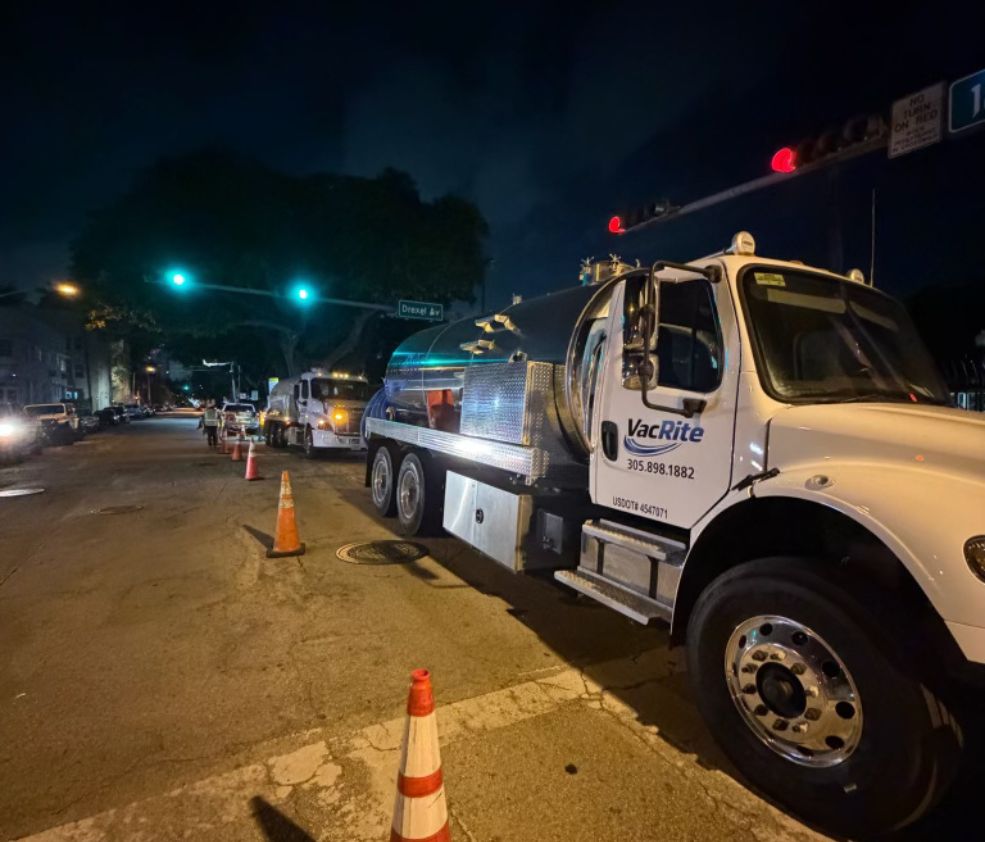
Two things decide how a potholing day actually runs in South Florida, and neither is the digging. The first is groundwater. The table sits high across most of the tri-county area, and closer to the coast it moves with the tide, so a hole that was dry at eight in the morning has water in it by noon. The vac truck handles that, since it lifts water and spoil together, but it changes how long a hole can stay open for somebody else to work in. The second is traffic control. Holes in a travel lane or a shoulder need a plan, a permit in most municipalities, and often a night window. We would rather sort that out with you in advance than find it out at the curb.
Worth knowing
Tell us what you are looking for and what you plan to do with the answer. A hole to confirm a bore depth and a hole to prove a conflict are dug the same way but documented differently.

Ask any contractor where what they pump out actually goes. It is a fair question, and the answer tells you a lot.
VacRite
Other excavation work
The other side of the company
Most of our customers only ever need one half of what we do. It is worth knowing the other half exists.
Something failed tonight. Somebody answers.
Struck line, blocked kitchen drain, a basin backing up in the middle of a storm. We run every day of the year, and the phone reaches a person rather than a queue. This company is first responder owned, and the emergency side of it works the way that suggests.
Questions we get asked
How small is a typical pothole?
Small. It is sized to expose the target and no more, which is what keeps the restoration minor. Exact footprint depends on depth and what we are uncovering.
Can you pothole through asphalt or concrete?
Yes. The surface gets cored, the plug is kept, and it goes back when the hole is backfilled.
How many can you do in a day?
It depends on depth, spacing, ground and traffic control. A row of shallow holes in one work zone moves quickly. Scattered deep holes across a corridor do not.
Do you pothole for directional boring crews?
Regularly. Confirming each crossing before the bore is one of the most common reasons anyone calls for this work.
What if you find something that is not on the drawings?
You hear about it that day, with photos and measurements. Unmarked and mislocated utilities are exactly what these holes are for.
Does the 811 ticket cover the potholing itself?
You still need an active ticket for the dig, and we work inside it. What the marks will not give you is depth, and they are a horizontal approximation rather than a guarantee. That gap between the paint and the pipe is the reason test holes exist.
Does groundwater stop you from potholing here?
No. The table is high across most of South Florida and a hole frequently takes water while we are in it. The truck pulls water and spoil together, so a wet hole is normal. It does affect how long an open hole stays workable, so tell us if another trade is coming behind us.
We run potholing across South Florida, including Miami, Fort Lauderdale, West Palm Beach, and the rest of the region. See every city we cover or look at the trucks on the job.
Tell us what the job is
Tell us about the potholing job. Where it is, what is around it, and when you need it.
Two trades, one call. We own the trucks, hold the permits, and put our own people on the job.
VacRite, Miami
info@vacriteservices.com
Open 24/7/365
USDOT 4547071