
Grease Trap Replacement
Removing a trap that is past repair and setting a correctly sized one in its place, with the kitchen down for as little time as possible.

Operators with a failed structure, buyers taking over an older restaurant space, property managers handed a condemned interceptor, and kitchens that outgrew the trap they inherited.
How a job runs, step by step
Confirm replacement is the answer
The existing unit gets pumped, opened and assessed first. Structural condition, hardware, size against the current fixture count, and service history together decide whether this is a repair or a replacement.
Size for the kitchen you have now
The old trap’s capacity is a data point, not a specification. Menus change, equipment gets added, dining rooms get bigger. The replacement gets sized off the current fixture count and the way the kitchen cooks today.
Plan the downtime
The drains are out of service from the moment the old unit comes out until the new one is tied in. That window gets planned around your hours, and for most kitchens it means overnight or a closed day.
Pump, disconnect and remove
The old unit is emptied completely, cleaned, disconnected and removed. Concrete structures that cannot come out whole get broken down in place and hauled off under our permits.
Set and plumb the new unit
New structure bedded level, held against buoyancy where the water table calls for it, inlet and outlet tied in at the correct elevations, tees set to depth, flow restrictor and venting sorted.
Inspect, backfill, restore and document
Inspection before anything gets buried, then backfill, compaction, surface restoration and an as-built record of what was set and where.
Deciding between one more repair and a replacement
Most operators arrive at this question after a run of repairs rather than after a single event, and the history is usually the clearest evidence. Repairs landing closer together is the signal. The same wall opening back up after being sealed is another. Concrete spalling across several faces with reinforcement exposed and corroded means the structure is losing section, and patching a losing structure buys months. A steel indoor unit that has perforated at the waterline is finished, because the corrosion that produced the first hole produced thin metal everywhere along that line. Then there is the category that has nothing to do with condition: a trap in perfect shape that is too small for the kitchen. No repair fixes capacity. If your fixture count has grown, if you added a fryer bank or a second dish station, if the concept changed from sandwiches to a full hot line, the box in the ground may be structurally fine and permanently inadequate. We put the assessment in writing with photos either way, because a replacement is a real disruption and you should be able to see why it is being recommended.
Getting the old one out of the ground
Removal is frequently the harder half of the job, particularly on in-ground concrete. The unit has to be pumped completely and cleaned before anybody works on it, because it is a confined space full of regulated waste and there is no version of this where that step gets skipped. Then the excavation has to be opened around a structure that has been sitting undisturbed for years, and what is around it is rarely what the original drawing shows. Water service, electrical conduit, gas, irrigation and the sewer lateral itself all tend to have been routed past the trap by somebody at some point. That is exactly the ground where we use water and vacuum rather than a machine, because a strike during a removal turns a planned overnight into a multi-day shutdown with other trades involved. Concrete tanks that are too large or too deteriorated to lift out whole get broken down in place and removed in pieces. Everything that comes out, the waste and the structure, leaves under our haulers and dumping permits and goes to a facility permitted to receive it.
The downtime window, and how it gets kept short
The kitchen’s drains are unusable from the moment the old unit is disconnected until the new one is plumbed and tested. Everything else in the job, opening the ground, removing the old structure, setting the new one, can be sequenced around service, but that tie-in window cannot. So the work gets planned backward from it. The new unit is on site and staged before the old one comes out. Fittings, adapters and anything that might be needed for an elevation mismatch are on the truck rather than at a supply house. The dig is opened and the connections are exposed ahead of the shutdown so nobody is discovering the condition of the existing lateral at two in the morning. For most restaurants that puts the actual down window overnight or on a closed day. Where a kitchen genuinely cannot lose a service period, there are interim arrangements worth discussing, but they add cost and complexity and most operators, once they see the plan, would rather take one quiet night.
Sizing the replacement for today, not for whoever installed the last one
The single most common mistake in a replacement is ordering the same size that came out. It feels safe and it is frequently wrong. The trap you are removing was sized for a kitchen that may have had a different menu, less equipment, fewer seats and a different dish setup. If your intervals have been short for years, that is the box telling you it was undersized, and putting an identical one back in guarantees the same complaint for another decade. The opposite case is real too. A space that used to be a full-service restaurant and is now a coffee and pastry operation may be sitting on an interceptor that is far too large, which brings its own trouble with stagnation and sulfide. Replacement is the one moment when getting the size right costs almost nothing extra, because the excavation and the tie-in are happening regardless. So the fixture count gets redone from scratch, the menu gets discussed, and the new unit gets sized for the kitchen that exists now.
Doing it while the ground is open
An excavation is the expensive part of the work, and once it is open there are things worth handling that would never justify a dig of their own. The section of lateral between the kitchen and the trap is exposed and can be inspected or replaced if it is sagging, cracked or heavily scaled, and a bad lateral will make a brand new trap look like it is failing. Access covers and frames get set to the finished grade they should have been at, which is often not where they ended up after a repaving. Venting that was never properly connected gets connected. Where the water table is shallow, the anti-buoyancy detail gets built in properly rather than improvised. If the truck access has always been awkward, this is the moment to move the service point. None of this is upselling, it is a question of doing the work once. We walk the list with you before the ground is closed, with photos, so you can decide what is worth doing while it is easy.
Worth knowing
Do not order the same size that came out without checking. A trap that has been on a short interval for years is telling you it was undersized, and an identical replacement repeats the problem.
Ask any contractor where what they pump out actually goes. It is a fair question, and the answer tells you a lot.
VacRite
Other installation work
The other side of the company
Most of our customers only ever need one half of what we do. It is worth knowing the other half exists.
Something failed tonight. Somebody answers.
Struck line, blocked kitchen drain, a basin backing up in the middle of a storm. We run every day of the year, and the phone reaches a person rather than a queue. This company is first responder owned, and the emergency side of it works the way that suggests.
Questions we get asked
How long will our kitchen be down?
Only for the tie-in itself, which is typically an overnight or a closed day. The excavation, the removal and setting the new structure happen around your service hours.
Can you reuse the old excavation?
Often, though the hole usually needs opening up. Where the new unit is a different size or has to sit at a different elevation, the excavation gets reworked to suit it.
What happens to the old trap?
It is pumped and cleaned first, then removed. Concrete that cannot come out whole is broken down in place. The waste and the structure both leave under our haulers and dumping permits and go to a facility permitted to take them.
Should the new one be the same size?
Only if the fixture count says so. We redo the sizing from the current kitchen, because menus and equipment change and the original trap was sized for a different operation.
Do we need a permit?
Yes. A replacement is permitted plumbing work and gets inspected before it is buried. We have a master plumber on staff and we build to the approved drawing.
Is there anything else worth doing while the hole is open?
Usually. The lateral between the kitchen and the trap is exposed, covers can be reset to grade, and venting can be corrected. We walk the list with you before backfill so you are deciding while it is still cheap.
Can you tell us whether to repair or replace?
Yes, and we would rather do that assessment than sell a repair that will not hold. The trap gets pumped and opened, we photograph what is there and give you the reasoning in writing. Call 305-761-4311 and we will get a truck out to look.
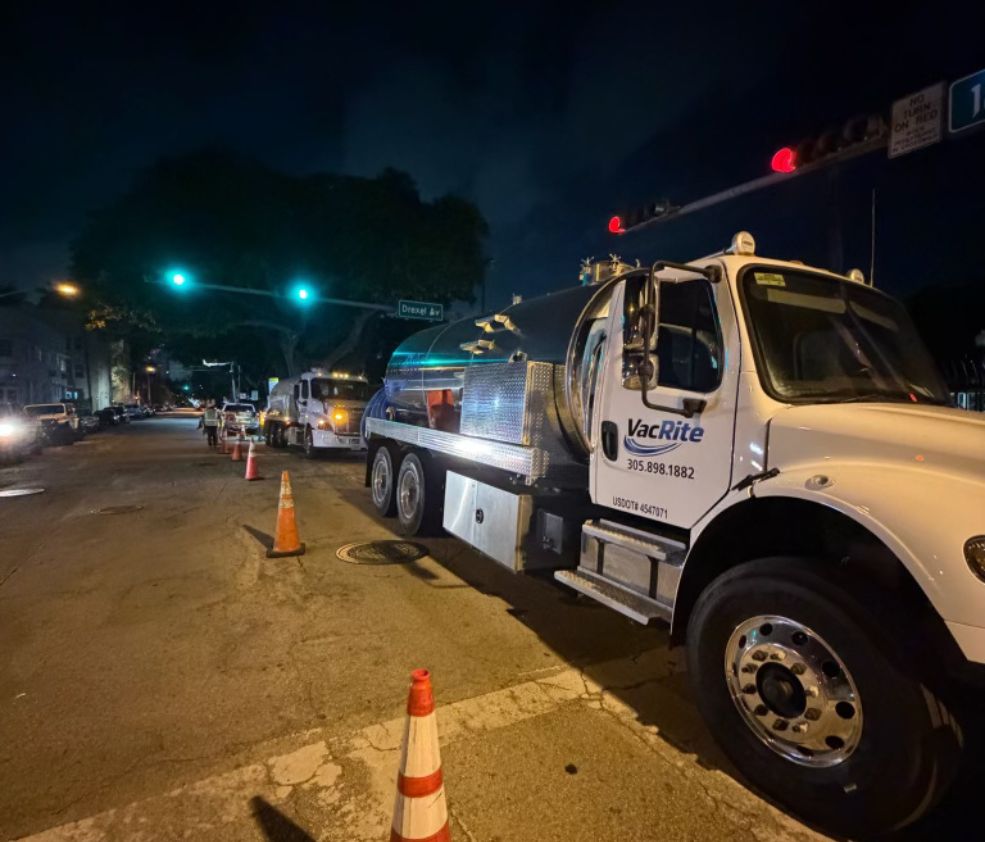
We run grease trap replacement across South Florida, including Miami, Fort Lauderdale, West Palm Beach, and the rest of the region. See every city we cover or look at the trucks on the job.
Tell us what the job is
Tell us about the grease trap replacement job. Where it is, what is around it, and when you need it.
Two trades, one call. We own the trucks, hold the permits, and put our own people on the job.
VacRite, Miami
info@vacriteservices.com
Open 24/7/365
USDOT 4547071