
Know what runs under a Hialeah site first
Older buildings off Okeechobee Road sit on ground that has seen decades of work. We locate the lines, then open a small test hole so the depth on paper is a depth somebody measured.
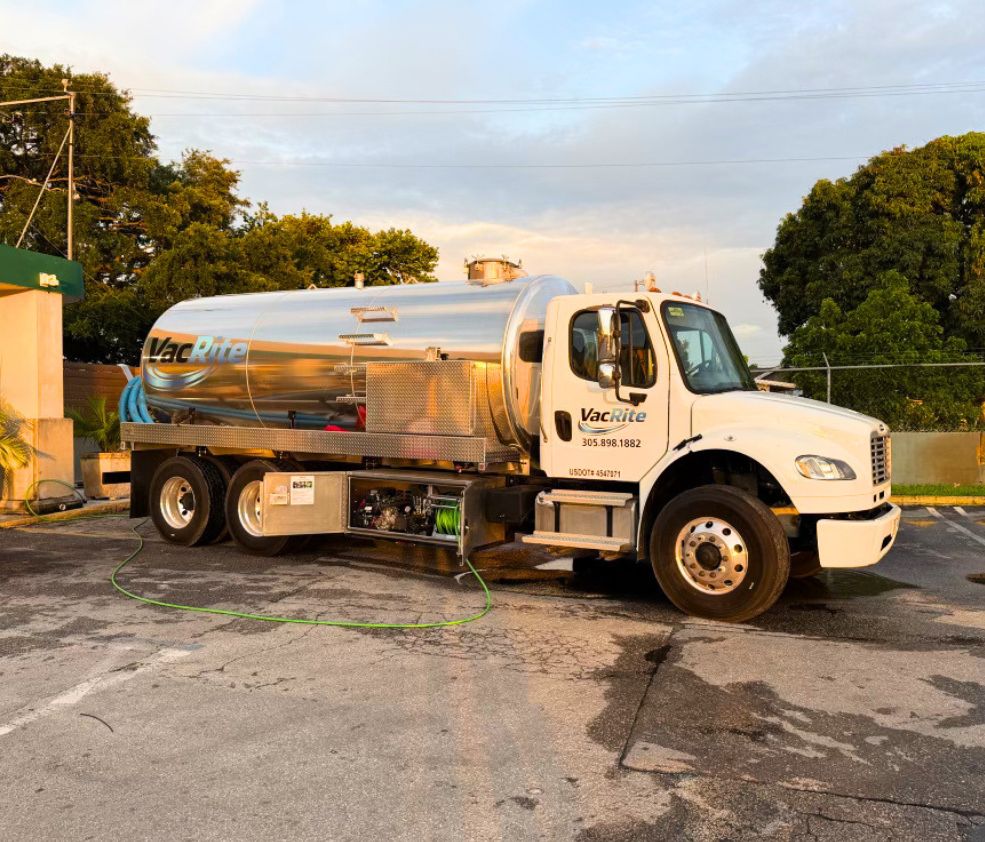
Hialeah ground with a lot of history in it
Okeechobee Road’s industrial belt has been working ground for a long time. Tenants come and go and yards get repaved, and each round of that tends to leave something buried. Some of it still feeds the building. Some of it fed a use that ended years ago, and nobody pulled it out. Before anybody opens ground next to one of those buildings, somebody should know which line is which.
Where the old drain lines are
The older sections of the city carry drain lines that went in a long time ago, before anyone was keeping the kind of records a designer wants today. Material varies with whatever was standard when the block went up. Those lines are easy to walk right past with instruments alone. A marked site can still hide one. The record for a building like that is often just someone’s memory of where the cleanout used to be.
That is why a locate here is worth doing even for a small job. A new sign footing or a repair at the loading dock can find a line as easily as a long trench does. The ground along that stretch is heavy, and fixing a struck line in it is slow, wet work.
Why the truck comes with the locator
Plenty of outfits can put paint on the ground and leave. On our jobs a vacuum truck follows the locator, our own truck with a CDL driver, and it has the tank room to open as many test holes as the site calls for. Hydro excavation is half of what this company does, so proving a mark is routine for the crew.
When the instruments go quiet
Old drain lines in the older parts of Hialeah are the classic case. They usually carry no tracer wire and may give no signal at all, so the locate is partly detective work: a cleanout by the wall, or a patch in the asphalt running toward the building. When the evidence points somewhere, a test hole settles it. Paint alone would have been a guess.
The same trucks haul what comes out of the hole to an approved facility under our permits, so a test hole in a paved yard does not leave a spoil pile by the dock. Wet holes close to the water table get pumped into the tank as the crew goes. If the locate shows the work needs a real excavation near live lines, the same company can do it with water instead of a bucket. That is one call for the whole job, and one set of records at the end of it.
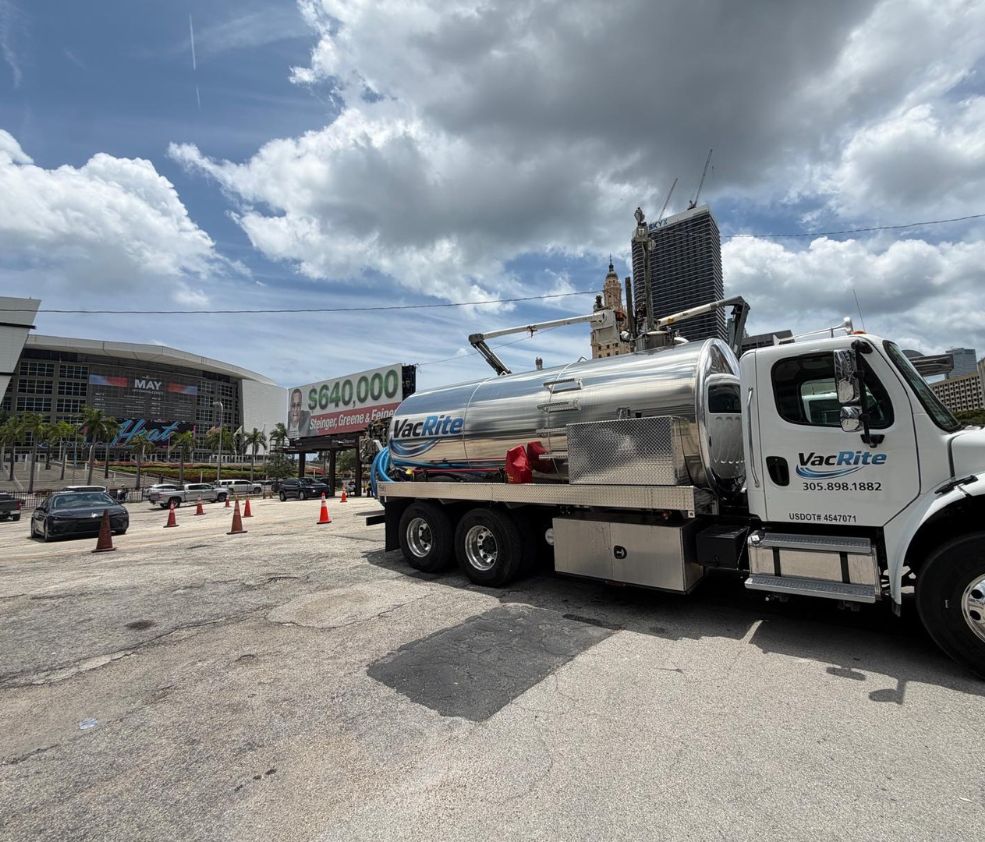
We measure a line’s depth in a test hole before anyone digs next to it.
VacRite
The order of work on a Hialeah locate
A lot of our locating in Hialeah is on the Okeechobee Road side, where the streets are wide and there is yard space to park a vacuum truck beside the work. That matters, because on our jobs the locate and the test hole are one visit. The locator marks what the instruments find and what the surface shows, and the truck is already there to prove the mark. The one thing that slows the day is the rail crossings in the belt, so we set the stops to avoid crossing them twice. Tell us what you plan to build and we locate for that footprint.
Start with what you plan to dig
Show us the footprint of the work, whether that is a trench line, a footing or a new connection into the building. We locate that area and a margin around it, because a bore or an excavator arm rarely stays exactly on the drawing. Old site plans help if you have them.
Mark the public and the private
The one-call marks cover the utilities’ own lines. Everything on the owner’s side of the meter at an older industrial building is private, and that is where the surprises on this stretch tend to be. We sweep for those lines with our own equipment and mark them separately.
Pothole the marks that matter
A painted line tells you roughly where to look and nothing about how deep. Where the work crosses a mark, we open a small hole with water and vacuum until the line shows, and measure it. On heavy old ground this is the step that settles arguments before anyone swings a bucket.
Put it in writing
For every line we expose you get the depth, the offset from a fixed point on the site, the pipe or conduit size and what it is made of, plus photographs. Trucks on an Okeechobee Road apron wear paint off quickly. Your drawing keeps the numbers.
What tends to come next on an older property
A locate on an older Hialeah building rarely ends at the locate. Sometimes the line we find is the one that has been giving the building trouble. If that old drain line is the reason the site keeps backing up, that is a jetting job, and our crew runs the jetter too. If the yard around it holds water after rain, the catch basins probably want cleaning before the wet season.
Once the lines are measured, the digging itself is usually next. That can mean potholing along a bore path or daylighting a line ahead of a tie-in. We do it with water and vacuum around lines we have already put numbers on. The record from the locate goes straight into that dig plan, so the crew is not searching again.
Some of these older buildings also run a kitchen, and the grease trap out back is our work too. Put everything happening at the property on one call and we will sort out which truck goes first.
There is more on utility locating in general, and a page for Hialeah as a whole. Describe the job and we will say straight whether it is ours, or browse the job photos first.
Other work we run in Hialeah
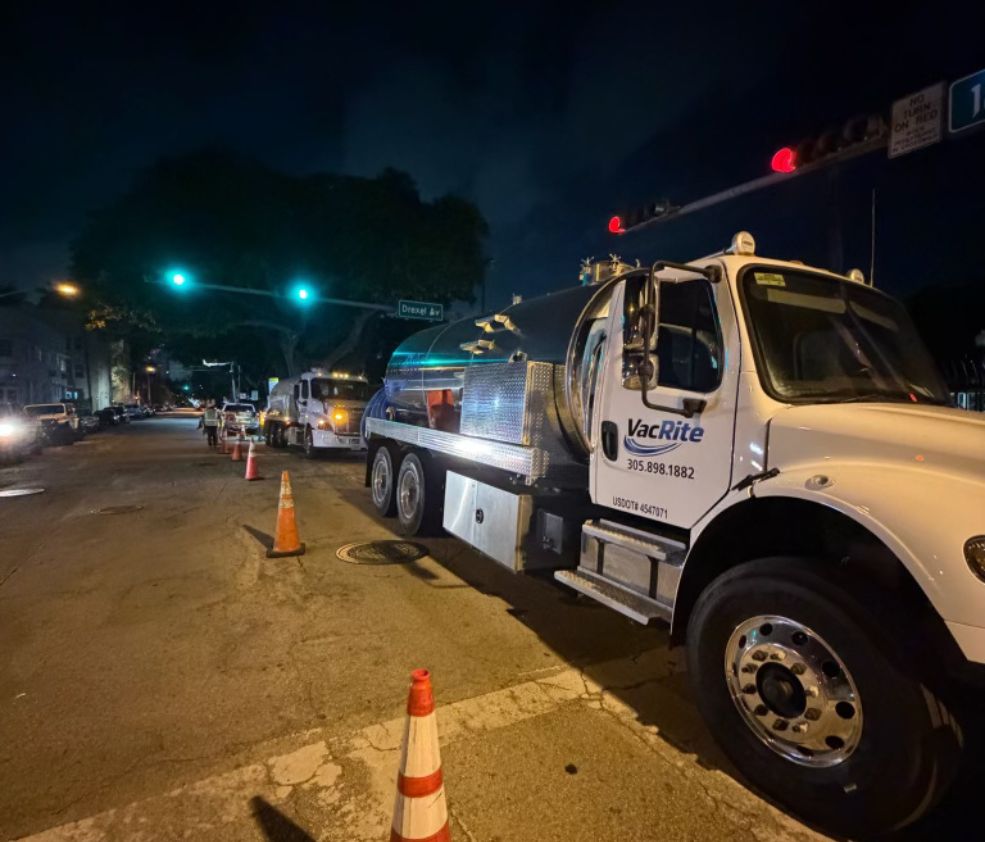
Something failed tonight in Hialeah. Somebody answers.
Struck line, blocked kitchen drain, a basin backing up in the middle of a storm. We run every day of the year, and the phone reaches a person rather than a queue. This company is first responder owned, and the emergency side of it works the way that suggests.
Questions we get asked
Why locate on an older Hialeah property if the one-call marks are already out?
The one-call marks cover what the member utilities own. On older buildings along Okeechobee Road, a lot of what is buried belongs to the property or served a use that ended long ago, and none of that gets painted. Private locating fills that gap.
How accurate are the marks?
They get you close horizontally and tell you nothing about depth. Stacked lines can read as one. That is why we expose the lines that sit in the path of the work with a vacuum test hole and measure them before anyone digs.
What do I get at the end?
A written record for each exposed line: depth, offset from a fixed point, size, material, and photographs of the line in the hole. Hand it to your engineer or your trench crew. It is still accurate after the paint is gone.
Can you find old drain lines that do not show on any plan?
Usually, though not every time from the surface. Older drain lines give instruments little to work with, so we read cleanouts and pavement patches, then confirm with a test hole. If a line cannot be found that way, we tell you plainly.
Do you also do the digging after the locate?
Yes, with the same trucks. Potholing, daylighting and trenching around the lines we located can run on the same records, so you are not handing one contractor’s paint to a second contractor and hoping it holds.
Is truck access a problem at older Okeechobee Road buildings?
Rarely. Most of those sites have wide streets out front and yard space for a vacuum truck. The harder spots are older commercial blocks with a narrow driveway to the back, so tell us where the work is on the lot when you call.
Tell us what the job is
Send us the site address and a sketch of what you plan to dig, and we will put a truck on it with the locator.
Two trades, one call. We own the trucks, hold the permits, and put our own people on the job.
VacRite, Miami
info@vacriteservices.com
Open 24/7/365
USDOT 4547071