
Commercial Hydrovac
A hydrovac on call for the buildings and lots you manage, for the parking lot dig, the catch basin that stopped draining, the water line nobody can find, and the standing arrangement that means you are not sourcing a truck at four on a Friday.
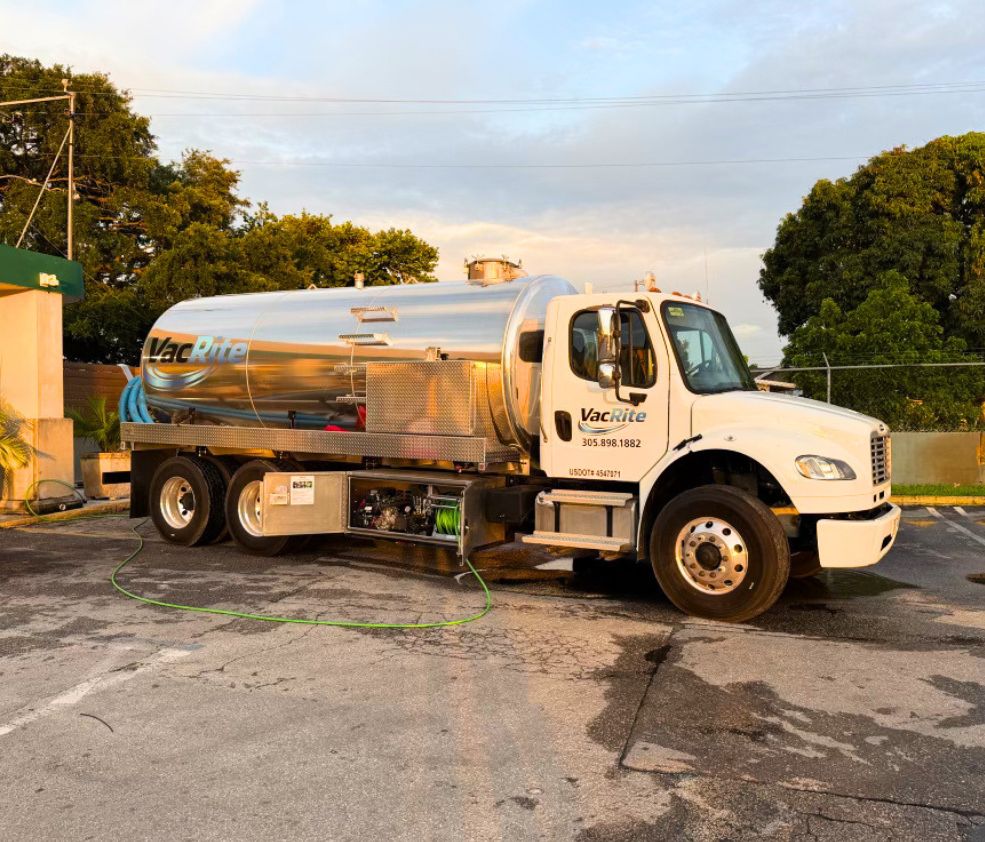
Property managers, facilities directors, HOA and condo boards, retail and restaurant portfolio managers, and the maintenance companies who take the call before you do.
How a job runs, step by step
One call describes the property, not the service
Tell us what is happening and where. Whether it is a dig, a drainage structure or a line nobody can locate is our problem to sort out, and the truck that comes is the same either way.
Scope it against the site
Truck position, aisle closures, tenant hours, what surface is over the target and who has the gate key. On a managed property those five things decide the day more than the work itself does.
Do the work with nothing on the ground
Water and vacuum, everything into the tank, surfaces cored rather than broken. No spoil pile in a parking space and no mud tracked to a tenant entrance.
Report it back in a form you can use
Photographs, what was found, depths where it matters, and a plain description of the condition. Boards and owners ask, and a photograph settles it faster than a description does.
Restore and get out before opening
Backfill, compaction, plug reset, washdown, spoil hauled under our permits. On a managed property the measure of success is that nobody who arrives in the morning has anything to notice.
The four calls that make up this work
Across a portfolio it is a short list that repeats. Something has to be dug up on a lot that cannot close, usually a water service, an irrigation main, a light pole base or a line to a building addition nobody has a drawing for. A catch basin or a storm structure has silted in and the aisle it drains ponds after every storm. A pipe is leaking under pavement and nobody can pin down where, so ground has to be opened carefully at three guesses rather than confidently at one. Or a contractor already on site needs an excavation opened without a machine because of what is around it. Those four cover most of it. The reason they land with the same phone number is that all four are the same truck and the same crew, and a property manager who has to source a different vendor for each one is spending time on procurement that the job does not deserve.
Drainage structures on a cycle instead of on a complaint
Across a portfolio the storm structures are the one thing worth putting on a calendar. Silt, gravel washed off the lot, landscape debris and trash build up in the bottom of a catch basin and in the leads between structures, and capacity disappears years before anybody notices, because ordinary rain still goes down. Then a real September afternoon arrives and an aisle is under water at one property while three others are fine. A seasonal cycle turns that into arithmetic instead of luck: walk the lots in the dry months, pull the structures that are loading up, note which ones are back to half full in a year and shorten their interval, leave the ones that stay clean on a longer one. After two cycles the pattern on each property is known and the list stops being a guess. A vacuum truck pulls a basin clean without anybody climbing into it, and the debris leaves in the tank rather than sitting in a pile beside the grate waiting for rain.
What the owner or the board actually gets
The person who signs for this work usually has to hand it to somebody else, which means the record matters as much as the truck. Every visit comes back in the same format so the reports stack instead of each one having to be read from scratch. Property and location on the site. What was found, described plainly rather than in trade shorthand. Photographs before and after, because a board looking at a before photo of a basin packed to the grate stops asking whether the work was needed. Depths and dimensions where they matter, which is any time something is going back into that ground later. And a line on what changed since the last cycle, since that is the part an owner is really buying: whether the property is holding steady or drifting. Reserve studies and capital planning both run on that history, and it only exists if somebody kept it in one shape.
Two in the morning, and who has the gate code
Portfolio work happens at hours nobody planned around, and the difference between a smooth call and a wasted mobilization is almost never the digging. It is whether the crew can get in. So the logistics get recorded once and reused: after-hours contact and a second name when the first one does not answer, gate and lock box codes with a note on which ones the management company rotates, where a loaded tanker can actually turn around on each lot, which aisle the anchor tenant will not tolerate losing, and who has authority to sign a work order at two in the morning without waking a board member. That last one causes more delay than anything mechanical. Properties where somebody sat down and answered those questions in advance get a truck working within minutes of arrival. Properties where nobody did get a driver on the phone in a dark parking lot.
A standing arrangement beats a Friday afternoon search
Most of this work is unglamorous and predictable, which is exactly why it suits a standing relationship rather than a scramble. The alternative is what usually happens: something floods or a line lets go late in the week, and somebody in the office starts calling vacuum companies cold. The good ones are booked. The ones who answer have never seen the property, so the first hour goes to explaining it, and the price of that hour is paid again on the next call and the one after. A vendor already carrying your properties skips all of it and starts working. Over a year that is a meaningful number of hours nobody ever writes down. There is also a plainer reason it works, which is that the trucks are ours instead of brokered, so a property on a standing arrangement gets a committed window rather than a search for whoever is free. The vendors who end up lasting on a portfolio are the ones who learned the properties.
Worth knowing
Get the drainage structures pulled in the dry months rather than after the first bad storm. A basin that has silted in still handles ordinary rain, so nothing looks wrong until an afternoon in September puts water in a ground floor unit. Scheduled, it is a routine visit. Reactive, it is a routine visit plus a claim.

Ask any contractor where what they pump out actually goes. It is a fair question, and the answer tells you a lot.
VacRite
Other industries work
The other side of the company
Most of our customers only ever need one half of what we do. It is worth knowing the other half exists.
Something failed tonight. Somebody answers.
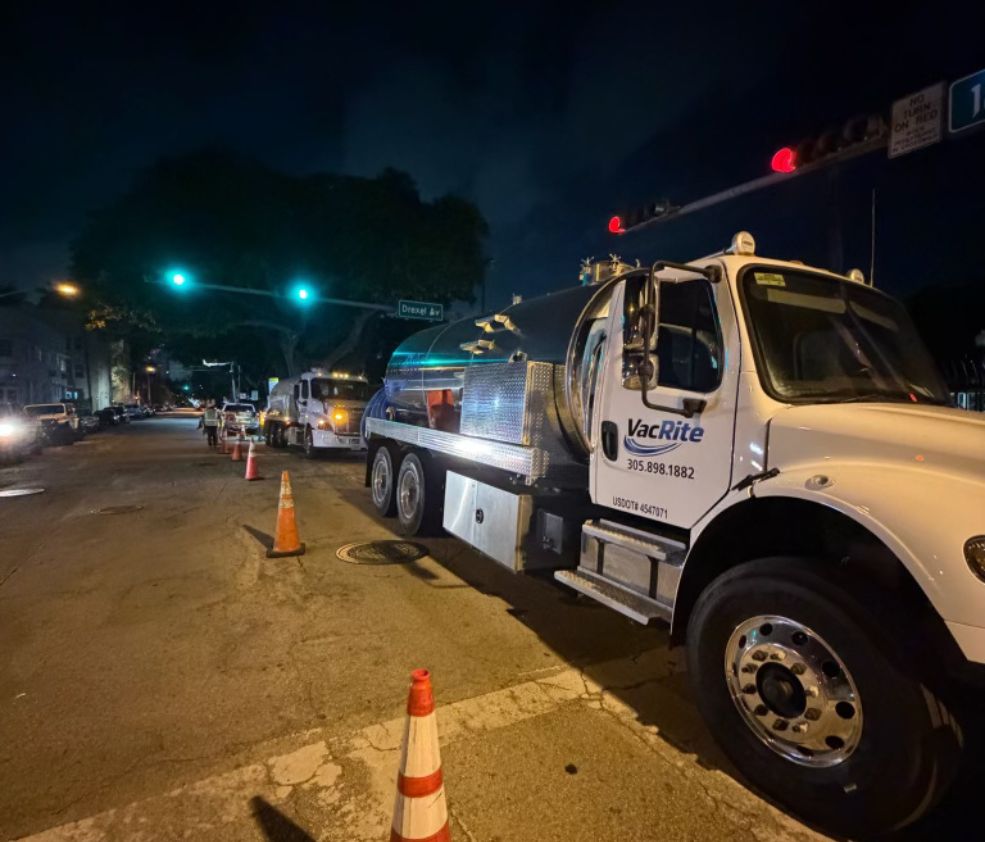
Struck line, blocked kitchen drain, a basin backing up in the middle of a storm. We run every day of the year, and the phone reaches a person rather than a queue. This company is first responder owned, and the emergency side of it works the way that suggests.
Questions we get asked
How many properties does it take before this makes sense?
One, if it has drainage structures and a lot. The arrangement pays more as the count grows, because the second visit to a property you already know is shorter than the first, and that saving repeats across every address on the list.
How often should catch basins be pulled?
It depends on the lot, which is why the first cycle is partly measurement. Structures collecting landscape debris or runoff from a large paved area load up fastest. After two cycles the interval for each property is known rather than guessed at.
Are we locked into a contract or a minimum?
No. A standing arrangement here means we hold your access information, your site notes and your history, and you call when you need a truck. What it buys you is speed on arrival, not an obligation on your side.
What does the report look like?
The same format every visit: property and location, what was found in plain language, photographs before and after, dimensions where something is going back in that ground later, and what changed since the previous cycle.
Can we forward your report straight to the board?
That is what it is written for. No trade shorthand, no abbreviations somebody has to call and ask about. Owners and boards mostly want to see a before photograph and a sentence saying whether the property is holding steady.
Who do we call at two in the morning?
The same number as at two in the afternoon, and a person picks it up. We run around the clock every day of the year. Give us your after-hours contact and gate codes in advance and the truck is working instead of waiting.
Do you carry site access details between visits?
Yes, and it is most of the value. Gate and lock box codes, where a loaded tanker can turn around, which aisle the anchor tenant will not give up, and who can sign a work order without waking somebody up.
We run commercial hydrovac across South Florida, including Miami, Fort Lauderdale, West Palm Beach, and the rest of the region. See every city we cover or look at the trucks on the job.
Tell us what the job is
Tell us about the commercial hydrovac job. Where it is, what is around it, and when you need it.
Two trades, one call. We own the trucks, hold the permits, and put our own people on the job.
VacRite, Miami
info@vacriteservices.com
Open 24/7/365
USDOT 4547071