
Wellington
Excavation, grease and drainage work in Wellington, off our own trucks and answered around the clock.

Working in Wellington
We work Wellington regularly, mostly around Forest Hill Boulevard, State Road 7, the equestrian district and the mall area.
Wellington was built on drained agricultural land and its stormwater runs through an improvement district canal and pump system. The equestrian land use brings waste-handling requirements you do not meet in an ordinary suburb.
Who calls us here
A large winter hospitality and food service surge through the equestrian season, mall and plaza kitchens, hospital food service, and equestrian facility drainage.
What we run in Wellington
Wellington is a village, and the equestrian district is what makes it a different job from anywhere else we run. Show grounds and barns bring temporary and permanent hospitality kitchens that appear at full volume, plus wash racks, waste handling and drainage that has to keep working while horses are on the property. We pump traps, jet lines and clean basins on properties where the schedule is set by a competition ring, not an office. The stormwater here runs through the Acme Improvement District’s canal and pump system rather than draining anywhere by gravity, so inlets and swale structures matter more than people expect. Excavation work is heavy on the drained agricultural ground west of Forest Hill, where irrigation and old field lines hide under everything.
Getting a truck in
Barn and show property access is private drives, gravel or grass, with horses moving on them. We keep the truck slow, shut the vacuum down when animals are passing, and coordinate with a barn manager before anything loud starts. Some of those drives soften after rain, so we check ground before we commit a loaded tanker to a turnaround we cannot back out of. Gated residential and equestrian communities need advance notice at the gate. Forest Hill Boulevard and State Road 7 handle traffic fine most of the year and are genuinely congested during show weekends, which is exactly when the kitchens most need us, so we come in early.
Through the year
Equestrian season runs roughly January into the spring, and it changes everything. Kitchen volume, barn occupancy, wash water, traffic, all of it multiplies for a few months and then the district goes quiet. We build interval schedules in two speeds for this village, tight through the season and stretched after. Summer is when the real maintenance gets done, basins cut back, lines jetted, drainage structures cleared before the district’s canals take on a wet season. Hurricane prep lands in the same window, and it is easier on everybody when the inlets are already open.
Wellington sits in Palm Beach County, and everything on this page runs out of our yard in Miami. See the rest of Palm Beach or look at the trucks working.
What we run in Wellington
Both halves of the company work this village. Excavation on one side, grease and drainage on the other, one phone number for both.
Also close by
We are usually working somewhere in this corner of Palm Beach already.
One call covers both halves of the job in Wellington
Most operators working this village do one side or the other. A vacuum company that pumps grease traps generally does not daylight a gas service, and an excavation outfit generally does not want to hear about your kitchen line. We run both off the same yard in Miami, with the same trucks and the same permit set.
Take a blocked kitchen line. Clearing it is a jetting job. Finding out why it keeps blocking can mean exposing the lateral, and if that lateral runs under a finished surface next to other buried services, the digging is the careful part. Those are usually two vendors and two schedules. Here they are one visit.
The same logic runs the other way. A restaurant with a line that keeps blocking has a jetting problem and a trap interval problem, and treating either one alone means doing it again in a few months. Because the crew that clears the line is the crew that services the trap, the conversation covers both instead of stopping at the edge of somebody’s scope.
What you get in writing
Every environmental service in Wellington generates a manifest showing what came out and where it went, before and after photographs, and disposal records from an approved facility. That file is what an inspector asks for, and it is the reason the haulers permit and the dumping permit matter rather than being background detail.
On the excavation side the deliverable is different but the principle is the same. An exposed utility gets measured for depth and offset, identified by size and material, and photographed, so the drawing can be corrected before a trench crew corrects it the expensive way. Everything we run is available across this area, and telling us the job is the fastest way to find out which part of it you actually need.
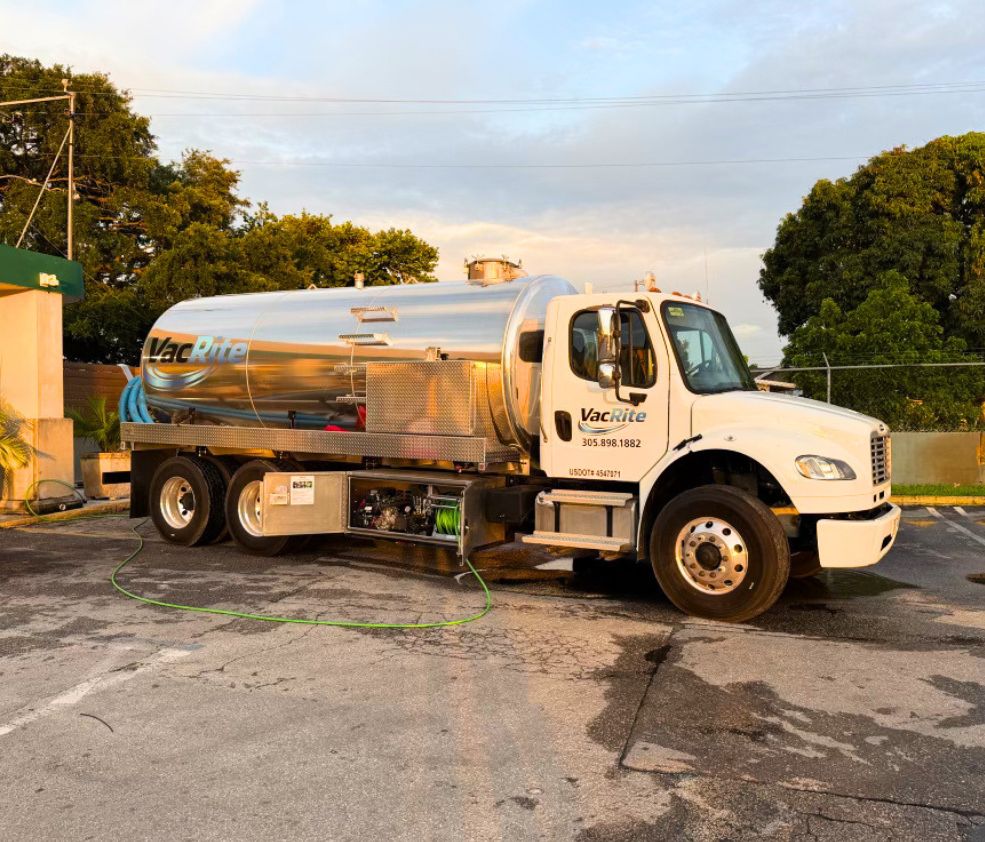
Something failed tonight in Wellington. Somebody answers.
Struck line, blocked kitchen drain, a basin backing up in the middle of a storm. We run every day of the year, and the phone reaches a person rather than a queue. This company is first responder owned, and the emergency side of it works the way that suggests.
Questions we get asked
Do you charge extra to come out to Wellington?
Wellington is inside the area we run. Tell us the job and we will tell you plainly whether it makes sense for us to be the ones doing it.
How fast can you get a truck to Wellington?
Depends what is already running and where you are. Call and you will get a real answer rather than a maybe. We run every day of the year.
Do you service both restaurants and construction sites in Wellington?
Both. Grease traps and cooking oil on one side, excavation and utility work on the other, out of the same yard.
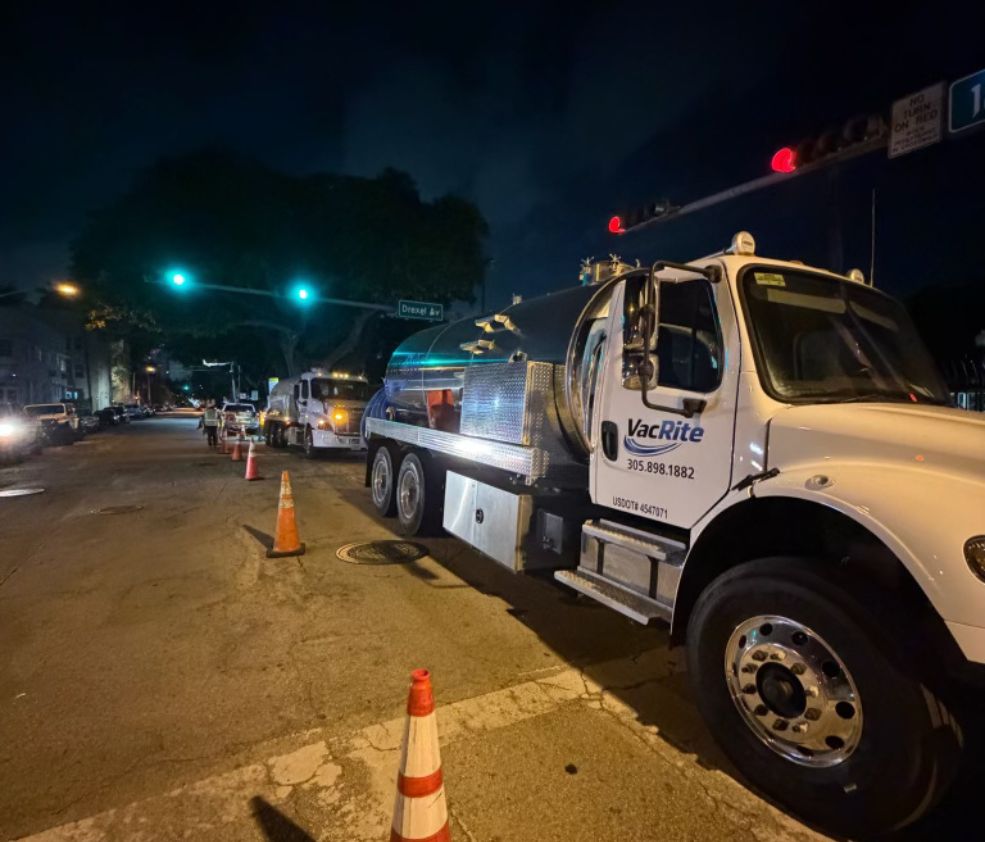
Do you work nights here?
Regularly. Most kitchen work in Wellington happens after close, and a lot of utility work has to happen off-peak.
What paperwork do we get?
Manifests, disposal records and photos on the environmental side, and measured, photographed utility records on the excavation side.
Tell us what the job is
Tell us where in Wellington the job is and what is going on.
Two trades, one call. We own the trucks, hold the permits, and put our own people on the job.
VacRite, Miami
info@vacriteservices.com
Open 24/7/365
USDOT 4547071