
Utility Locating
Finding what is buried and then proving it, with one-call marks and private locating on the surface and a test hole to confirm what the paint is actually pointing at.

Engineers, general contractors, boring crews and property owners who need to know what is under a site before anyone commits a design or a machine to it.
How a job runs, step by step
File the one-call ticket
Sunshine 811 goes in first, and the member utilities mark their own facilities. Those marks are free, they are required, and they are the floor of what you should know rather than the ceiling.
Locate what the ticket does not cover
Private lines past the meter, site lighting, irrigation, fire loops, campus distribution and anything abandoned in place are not on the one-call ticket. That is where private locating goes to work with electromagnetic equipment and ground penetrating radar where the ground allows it.
Read the surface evidence too
Valve boxes, pull boxes, cleanouts, meter positions, risers and old patches in the pavement tell a story that instruments sometimes miss. A locator who never looks up misses half of it.
Confirm by exposure
The mark says roughly where. A vacuum test hole says exactly where and exactly how deep. That last step is the one that turns a locate into a measurement somebody can design against.
Hand over a record you can use
Depth, offset, size, material and position tied to your reference, with photos. Marks fade in a week. The record does not.
What the 811 ticket gives you and what it does not
Sunshine 811 is the right first call on any dig in this state, and it is a legal requirement rather than a courtesy. Member utilities come out and mark their own facilities in the ground within the ticket area. That system works, and it prevents a great many strikes every year. The limits are worth saying plainly. Those marks are a horizontal projection sprayed on the surface by somebody reading a signal peak, and they carry no depth at all. Two facilities stacked one above the other come back as a single stripe of paint. Abandoned lines left in place produce no signal and no mark. The ticket covers member facilities, so everything downstream of a meter, everything a property owner installed themselves, and everything a previous contractor put in without records is simply not part of the answer. None of that is a failure of the system. It is the scope of the system, and knowing the scope is the difference between using it correctly and trusting it too far.
Private locating on a property that has its own history
Commercial and campus properties are where the ticket runs out fastest. Past the meter, everything belongs to the owner: parking lot lighting circuits, irrigation mains and laterals, fire loops, chilled water between buildings, security conduit, generator feeds, sometimes a gas run to a kitchen or a pool heater. Very little of that was ever recorded, and what was recorded is thirty years old and predates two renovations. Private locating works those out with electromagnetic equipment, direct connection to a line where there is a point to connect to, and ground penetrating radar where the soil cooperates. That last qualifier matters here. Radar likes dry sand and dislikes wet clay and saturated fill, and South Florida offers plenty of the second kind. A locator who tells you radar will resolve everything on a wet site in August has not spent much time on one.
Why the exposure is the part that counts
Locating is a signal interpreted by a person, and interpretation has a range of error in it. Depth from an instrument is calculated rather than measured, and it degrades with congestion, with adjacent lines coupling onto each other, and with anything metallic in the fill. A vacuum test hole ends the argument. It gives depth to top of pipe measured with a tape, outside diameter, material and the actual horizontal position, and it does that without any risk to what is being confirmed. This is the whole reason we sell locating and excavation together rather than as separate transactions. Marks alone put you back on the phone when the bore comes up short. Marks plus exposures at the decisions that matter, meaning crossings, tie-in points and proposed structures, give you numbers you can build from.
What ends up in the deliverable
Paint on a parking lot has a lifespan measured in weather. The record is what survives into the design and onto the next crew, so it gets built to be read by somebody who was never on site. Each confirmed point carries depth to top of the facility from existing grade, size, material, coating or duct condition where it is visible, direction of run, and anything else found in the same window, because stacked and adjacent facilities are the single most common surprise. Position gets tied to whatever framework you actually work in, whether that is a station and offset, a survey control point, a curb line or a building corner. Photographs go with it including one with the tape in the hole. Tell us your reference framework before the day and it comes back ready to drop into a drawing rather than needing translation.
Locating around here, and the ground it happens in
Every region has its own habits and this one has several. Shallow oolitic limestone through much of Miami-Dade means facilities are frequently shallower than crews from elsewhere assume, and it means a test hole meets rock sooner. A high, tidally influenced water table means a hole opened in the morning has water in it by noon, which the vac truck handles without complaint but which shortens how long an exposure stays workable for anyone following behind. Western Broward and Palm Beach sit on drained wetland ground with utilities crossing improvement district canals and easements, where the records are patchy and the muck does not hold a wall. FPL feeds the electric on this coast, and their duct banks and direct-buried primary are their own conversation. Fill placed over decades has changed depths on lines nobody ever touched. All of that is ordinary work for a crew that lives here and a genuine surprise for one that does not.
Worth knowing
Marks and a locate report are a starting point, not a measurement. If the answer is going to carry a bore path, a foundation or a design commitment, put a test hole on it. Confirming three points that matter beats marking a whole site and hoping. Tell us what decision the information has to support and we will tell you where the holes belong.
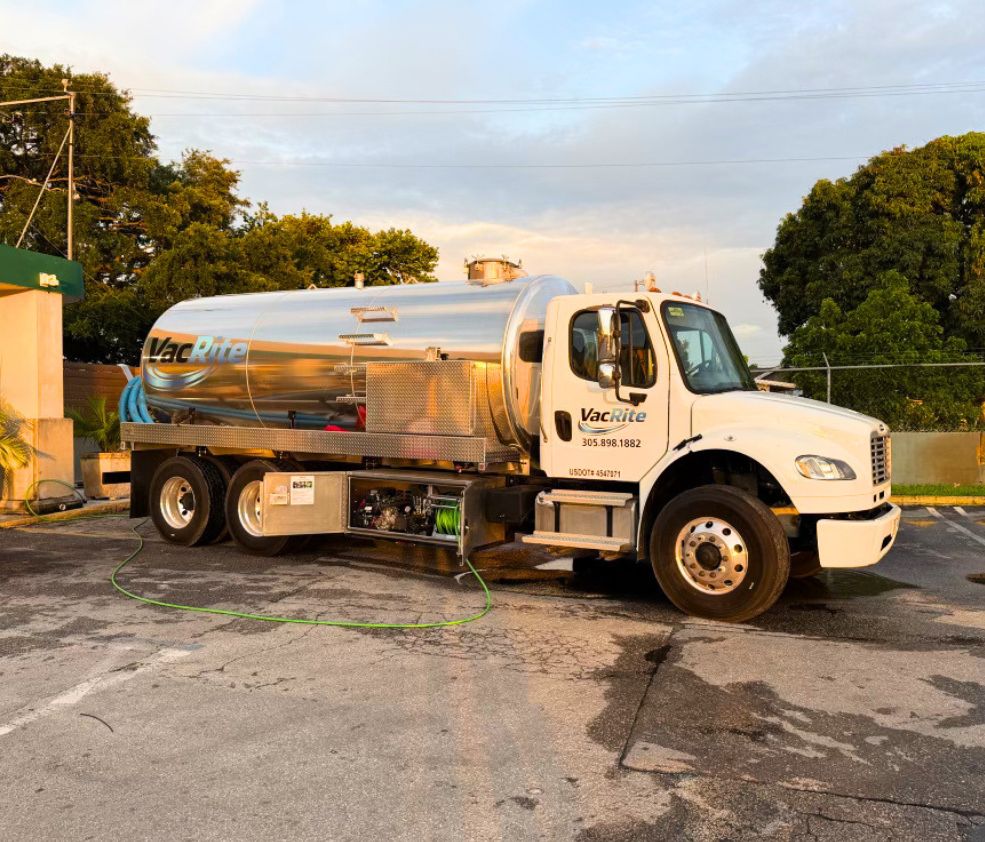
Ask any contractor where what they pump out actually goes. It is a fair question, and the answer tells you a lot.
VacRite
Other excavation work
The other side of the company
Most of our customers only ever need one half of what we do. It is worth knowing the other half exists.
Something failed tonight. Somebody answers.
Struck line, blocked kitchen drain, a basin backing up in the middle of a storm. We run every day of the year, and the phone reaches a person rather than a queue. This company is first responder owned, and the emergency side of it works the way that suggests.
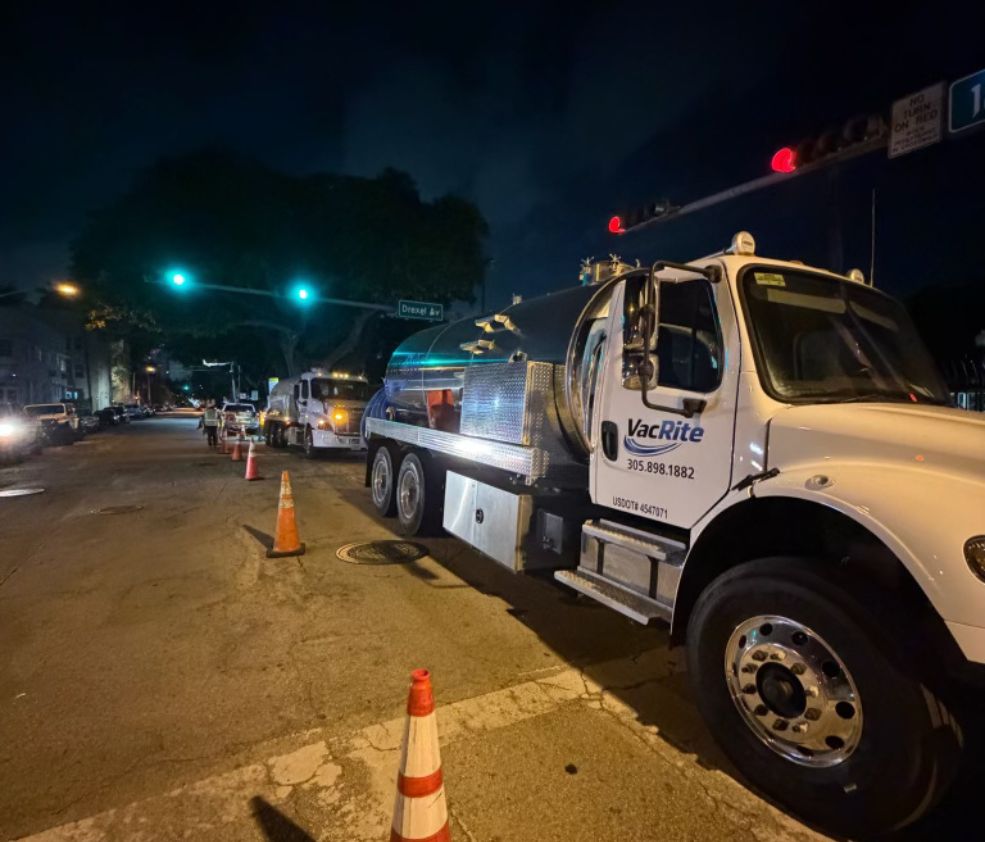
Questions we get asked
Do we still need to call 811 if we hire you?
Yes, always. The one-call ticket is a legal requirement and it brings the member utilities out to mark their own facilities. We work from those marks. What we add is everything the ticket does not cover and the exposure that turns paint into a measurement.
What does 811 not mark?
Anything past the meter, so private lines, irrigation, site lighting, fire loops and campus distribution. Also abandoned facilities, which produce no signal, and anything a previous contractor installed without records. On commercial property that is frequently most of what is actually down there.
Do the marks tell you how deep the line is?
No. The paint is a horizontal projection sprayed above a signal peak and carries no depth at all. Two lines stacked one over the other come back as one mark. Depth comes from a test hole with a tape in it, which is why we do both.
Do you use ground penetrating radar?
Where the ground allows it. Radar works well in dry sand and poorly in wet clay and saturated fill, and South Florida serves up plenty of the second kind. It is one tool alongside electromagnetic locating and direct connection, and none of them replace an exposure at the point that matters.
Can you locate a line nobody has records for?
Often, yes. Unrecorded private lines are a regular part of this work. Tell us roughly where you believe it runs and what it serves, and between surface evidence, instruments and careful vacuum excavation we can usually find it without endangering whatever else shares that ground.
How many points should we confirm with a test hole?
Confirm the ones that carry a decision: bore crossings, tie-in points, proposed footings and structures, anywhere the design has no room to move. Straight runs through known corridors need fewer. We would rather talk through the alignment with you than quote a number blind.
What do we get at the end of it?
Marked facilities on the ground and a written record of every confirmed point: depth, offset, size, material, condition and position tied to your reference framework, with photographs. Send your framework ahead of the day and it comes back in a form you can put straight into a drawing.
We run utility locating across South Florida, including Miami, Fort Lauderdale, West Palm Beach, and the rest of the region. See every city we cover or look at the trucks on the job.
Tell us what the job is
Tell us about the utility locating job. Where it is, what is around it, and when you need it.
Two trades, one call. We own the trucks, hold the permits, and put our own people on the job.
VacRite, Miami
info@vacriteservices.com
Open 24/7/365
USDOT 4547071