
Hydro Excavation Services
The full set of water and vacuum digging services we run out of our own trucks, from a single test hole to a week of right of way work, scheduled or at three in the morning.

Contractors, utility owners, municipalities and restoration companies who would rather call one number than assemble a dig crew out of three vendors.
How a job runs, step by step
Tell us what the job is
The call is short and it decides everything else. What are you trying to expose or open, where is it, how deep do you think it is, what is the surface, and who else needs to work in the hole after us. Five answers and we know which truck and which crew.
We scope it against the ground
Miami-Dade limestone, western muck and southwest sand all run differently, and so does a lot that has to stay open for tenants. That shapes the pressure, the tip, where the truck sits and how much of the day the work will actually take.
The window gets set, or the truck rolls now
Planned work gets a date and an arrival window we intend to keep. Emergency work skips all of that and gets a unit assigned on the phone. Both are the same crews and the same trucks.
The work runs and gets recorded
Locates get honored, the hole gets opened with water and vacuum, whatever is in it gets measured and photographed, and the spoil goes in the tank. Nothing gets left on your surface for somebody else to deal with.
Close out and haul off
Backfill, compaction, surface restoration, and the spoil rides out to a permitted facility under our haulers permit. You get the record and a site that does not look like a dig happened.
What is actually on the menu here
One method covers a lot of different asks, which is why this page exists. Test holes at bore crossings. Longer windows opened over a run so a designer can see where a line really goes. Bell holes on a pipeline for an inspection crew. Slot trenches for conduit across a finished lot. Uncovering a broken service so a repair crew can get their hands on it. Digging around a footing or a tank in a plant where a machine is not allowed near the piping. Cleaning out a wet hole nobody else wants. All of it is the same physics, water to cut and vacuum to lift, and all of it comes off the same trucks with the same drivers. What changes between them is the setup, the documentation and how long the hole stays open. If you are not sure which one your job is, describe the problem instead of the service. We will name it.
What is included on every job, no matter which one it is
There is a floor under all of this work and it does not move. We work from active locate marks. The truck comes with a CDL driver, because every one of our drivers holds one, running under USDOT 4547071. Whatever comes out of the hole leaves in the tank under our haulers permit and lands at a facility permitted to take it, with a record. The excavation gets backfilled, compacted and the surface put back unless you have told us another trade is handling it. Anything we uncover gets measured and photographed whether or not you asked for a formal record, because the client who did not want documentation on Tuesday frequently wants it on Friday. And the site gets left clean. That last one sounds like a small thing until you have watched a vac crew drive away from a slurry puddle in a customer parking lot.
Scheduled work and what a real window means
Planned jobs get a date and an arrival window, and the reason we can commit to one is that the trucks are ours. We are not calling around to see who is free and then calling you back with somebody else’s answer. That also means the crew that shows up for phase two already knows your gate code, where the truck can turn around, and which corner of the lot the property manager does not want blocked. Multi-day and phased work runs the same way, and on longer programs we would rather build the sequence with you up front than discover on day three that the holes were dug in the wrong order for your bore crew. If your work needs night or weekend hours because of traffic, tenants or a utility owner’s outage rules, say so early and it gets scheduled that way rather than squeezed in.
The emergency side of the same phone number
The other half of this is the call that does not get planned. A line got struck. Something is flooding a building and nobody can find where it is coming from. A repair crew is standing on top of a service they cannot safely reach with a machine. We answer at any hour of any day, every day of the year, and a person who works here picks up rather than a service that takes a message. What we need on that call is short: what failed, where, what is around it, whether anything is still flowing or energized, and what the access looks like. Access is the one people forget and the one that decides whether a truck is useful when it arrives. Being first responder owned is not a marketing line here. It is why the after-hours process exists at all and why it is calm.
Who we run this for, and how far the trucks go
Government agencies and municipalities, general contractors, utility and telecom crews, pipeline operators, supermarkets and restoration companies make up most of the work, and each of them wants something slightly different out of the same hole. A municipality wants the record and the permit trail. A GC wants the hole ready when his bore crew shows up. A supermarket wants the parking lot open by the time the store does. A restoration company wants the water gone before the drying equipment goes in. Telling us which of those you are on the first call is worth more than telling us which service you want. Miami-Dade, Broward and Palm Beach are home ground and get the fastest response. We run north through Martin, St. Lucie and Indian River, west and across to Hendry, Okeechobee, Lee and Collier, and down through Monroe. Excavation work travels statewide when the scope is worth the drive, which on a multi-day job it frequently is.
Worth knowing
Describe the problem, not the service name. Half the calls we get open with a term the caller picked up from a spec, and about a third of the time it is the wrong term for what they actually need dug. Tell us what you are trying to find out or get to, and what has to happen in the hole afterward. We will tell you which job that is.
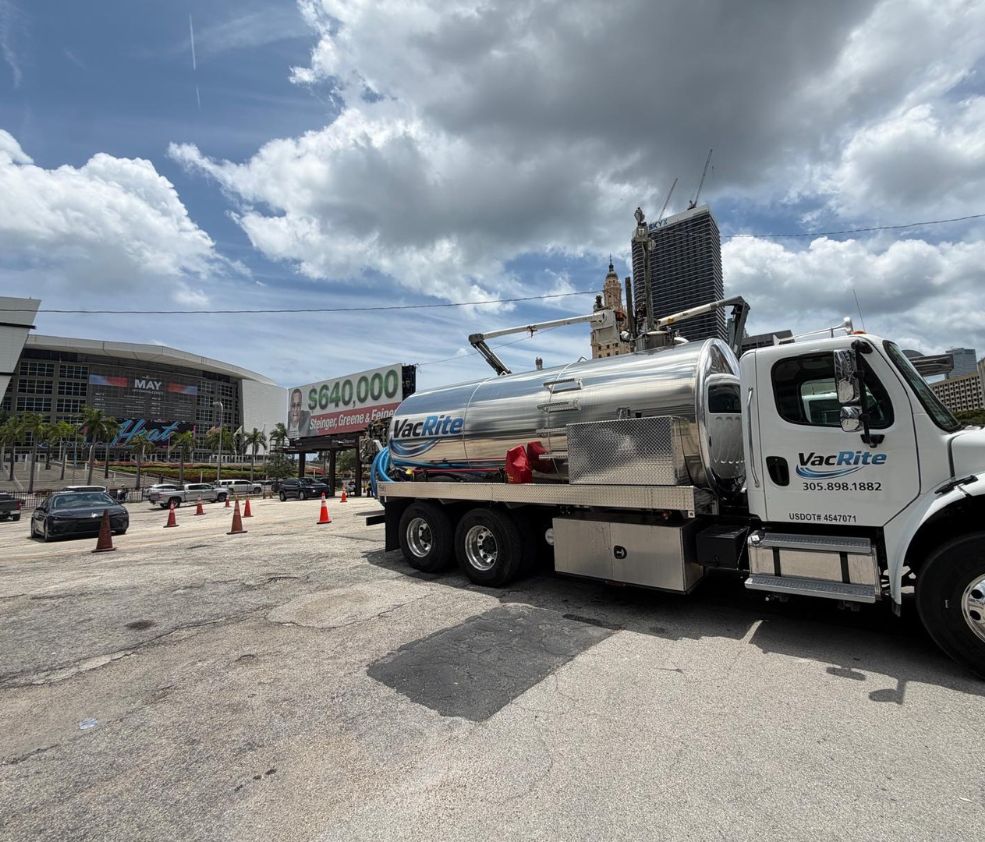
Ask any contractor where what they pump out actually goes. It is a fair question, and the answer tells you a lot.
VacRite
Other excavation work
The other side of the company
Most of our customers only ever need one half of what we do. It is worth knowing the other half exists.
Something failed tonight. Somebody answers.
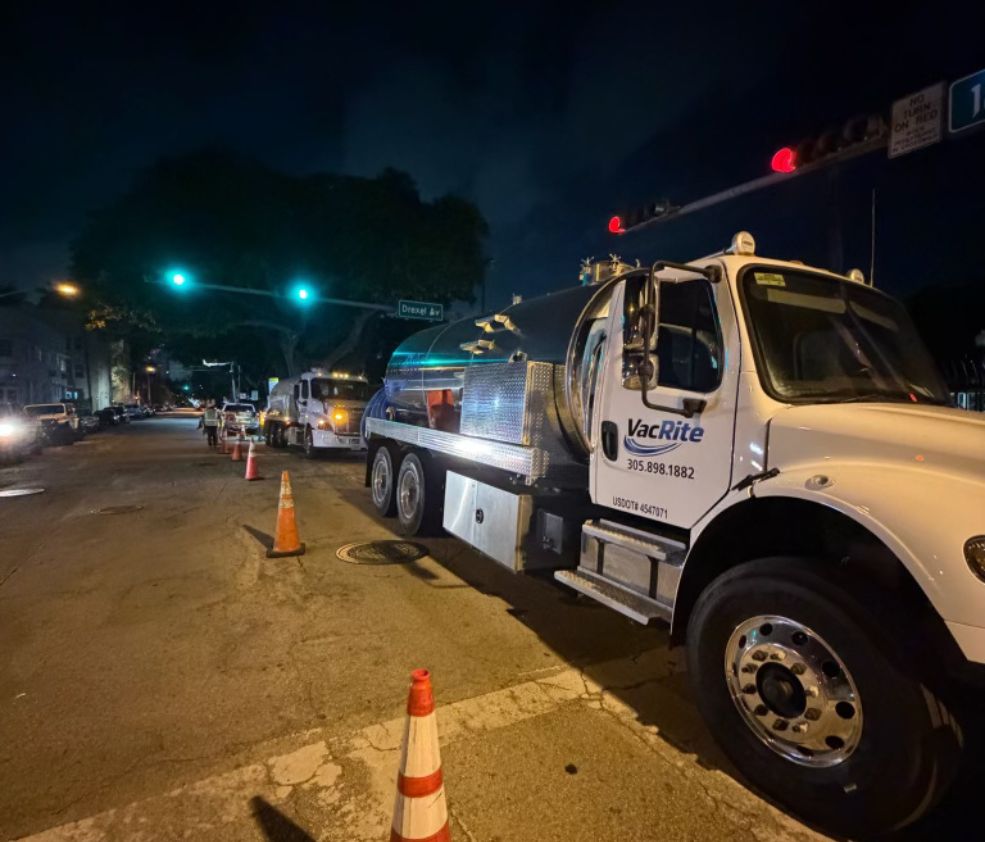
Struck line, blocked kitchen drain, a basin backing up in the middle of a storm. We run every day of the year, and the phone reaches a person rather than a queue. This company is first responder owned, and the emergency side of it works the way that suggests.
Questions we get asked
Do I need to know which service I want before I call?
No. Describe what you are trying to expose or open and what happens next in the hole. The naming is our problem. Getting it wrong on the phone is how a crew shows up sized for a test hole when the job was a bell hole.
Is emergency work handled by the same crews?
Same crews, same trucks, same phone number. What changes is that nothing gets scheduled. A unit gets assigned while you are still on the call. We run around the clock, every day of the year.
Do you provide documentation on every job?
Anything we uncover gets measured and photographed as a matter of course. If you need it tied to a station and offset, a survey point or a specific reporting format, tell us before the day and it comes back that way.
Do you backfill and restore, or does that fall to us?
We do it unless you tell us otherwise. Backfill, compaction and surface restoration are part of the work. Some clients have their own paving or landscape trade following behind, which is fine, we just need to know.
Can you handle multi-day and phased work?
Yes, and that is a good part of what we do. Because the trucks are ours, a sequence means something. Bring us the phasing early so the holes get opened in the order your other trades need them.
How far will you travel?
Miami-Dade, Broward and Palm Beach are home. We run north through Martin, St. Lucie and Indian River, west and across to Hendry, Okeechobee, Lee, Collier and down to Monroe. Excavation work goes statewide when the scope justifies it.
What happens to everything that comes out of the hole?
It leaves in the tank. Slurry is a regulated waste stream from the moment it enters the truck, so it goes to a facility permitted to receive it under our haulers permit and dumping permit, and there is a record of where it went.
We run hydro excavation services across South Florida, including Miami, Fort Lauderdale, West Palm Beach, and the rest of the region. See every city we cover or look at the trucks on the job.
Tell us what the job is
Tell us about the hydro excavation services job. Where it is, what is around it, and when you need it.
Two trades, one call. We own the trucks, hold the permits, and put our own people on the job.
VacRite, Miami
info@vacriteservices.com
Open 24/7/365
USDOT 4547071