
Municipal Hydrovac Services
A standing arrangement that puts a vacuum truck and a crew at a public works department’s disposal for stormwater structures, water and sewer repair support and the calls that come in at three in the morning.

Public works and utility department superintendents, stormwater and street maintenance supervisors, and the staff who have to keep a system running with the crews and equipment the budget actually gave them.
How a job runs, step by step
Put a term agreement in place before you need it
The point of a standing arrangement is that the call does not start with a procurement question. Terms, rates of response, scope boundaries and the record format all get settled once, then the department releases work against it.
Run the routine work on a calendar
Stormwater structures ahead of the season, scheduled cleaning routes, planned exposures for the repair crews. Predictable work gets dates, and the dates hold because the trucks are ours.
Support the repair crew rather than replace it
On a water or sewer failure your crew does the licensed repair. We open the ground around it, keep the hole dewatered and take the material away, so your people are working on pipe instead of on mud.
Take the emergency call at any hour
A person who works here answers, day or night, every day of the year. Tell us what failed, where it is, what is still flowing and what the access looks like, and a unit gets assigned while you are on the phone.
Report everything in one format
Whether it was a routine basin route or a two in the morning main break, the record comes back the same way, so a year of work reads as one file instead of a stack of unrelated tickets.
A standing arrangement versus a phone call in a crisis
Departments that only call a vendor during a failure buy the same work at the worst possible moment. The main is out, the intersection is closed, somebody is asking when the water comes back, and that is when a superintendent starts finding out whether anybody has a truck free and whether purchasing will let them use it. A term agreement moves all of that to a quiet afternoon months earlier. Scope agreed, rates agreed, insurance on file, vendor record active, response expectations written down. After that, a call is a call. The other thing a standing arrangement buys is familiarity. The crew that shows up for the third stormwater route knows your yard, knows which structures give trouble, knows where the truck can sit on that particular block and knows your superintendent by name. None of that is glamorous and all of it takes time out of a bad day.
Stormwater structures across a public system
A city drainage system is a network, and the reason it is worth working as one is that the structures do not load evenly. Basins at the low points and under heavy tree canopy take everything. Structures at the top of a grade barely move for years. On a public system with hundreds of structures, cleaning them on one blanket cycle either wastes visits or starves the ones that matter, and usually manages both at once. Working through them by route with sediment depth recorded each time turns that into a schedule that follows the actual loading. The seasonal argument matters here more than anywhere. Down here the rainy season arrives as intense afternoon storms rather than steady rain, and a structure half full of sand does not care what month it is. Work done in the spring, while the sumps are dry and the schedule is open, is the work that keeps a street from flooding in September. Once the season is running, every city and every property manager in three counties wants the same truck in the same week.
Supporting a water or sewer repair without taking it over
A public utility crew has the license, the parts, the tapping equipment and the authority to work on the system. What they frequently do not have on a bad day is a clean, dewatered hole with the main properly exposed and room to get a repair clamp underneath it. That is the gap this work fills. Water is used to open the ground around a live main or a service without the risk a backhoe carries in that situation, and it makes a real difference on a break, where the ground is already saturated and moving and nobody knows precisely where the failure is until they can see it. The vacuum is the other half. A hole on a broken main fills as fast as you can open it, and the truck lifts water and spoil together, so the crew works in an excavation instead of a pond. Then the same truck takes the material away under permit rather than leaving a pile of wet spoil in the travel lane for somebody else to deal with in the morning.
The emergency call, and what happens on it
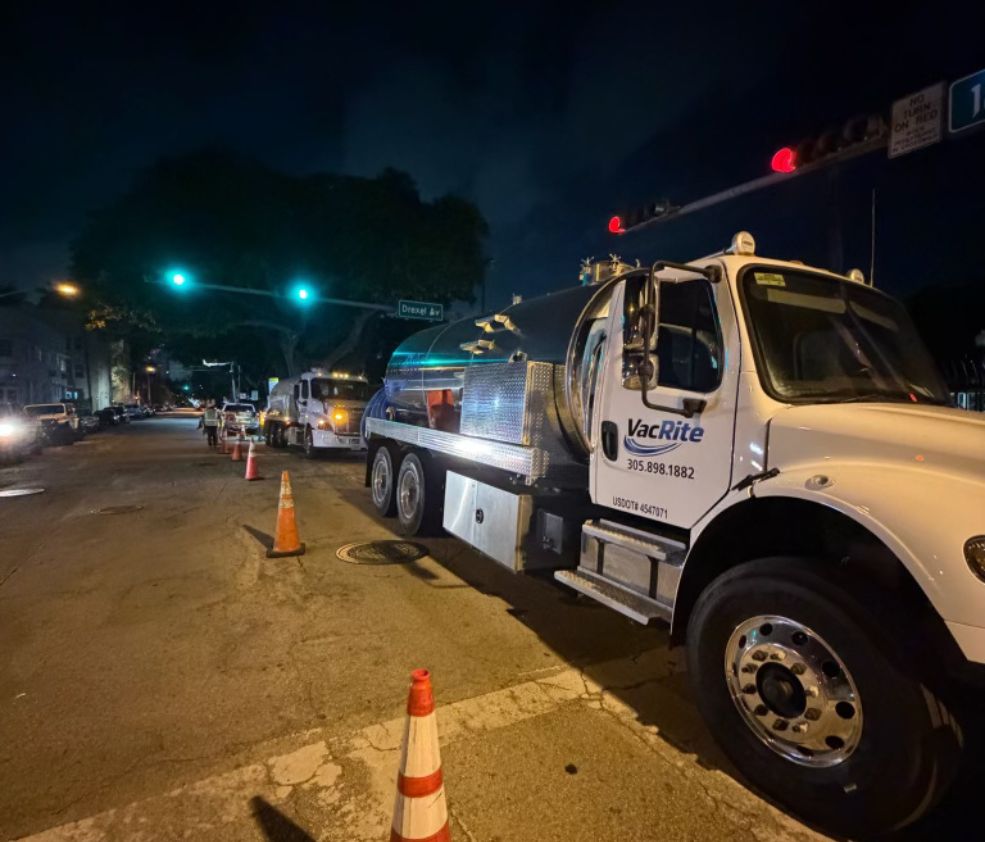
Public infrastructure fails at inconvenient hours, which is a large part of why this company runs around the clock. Being first responder owned shapes how those calls go, which is to say calmly and with a process rather than improvisation. A main break in a street, a collapsed structure under a drive lane, a sinkhole opening beside a manhole, a contractor who struck something and needs the ground opened before anybody can see what they hit. What we want on that call is short: what failed, exactly where, what is still flowing or energized, whether the road is closed and what the access looks like for a tanker. Storm season deserves its own line. From June onward an afternoon storm is in most days’ plan, and a named storm turns a normal week into restoration work for every agency at once. A department that already has us in its vendor system is the one that can actually get a truck when everybody is calling.
One record format for the public file
The single most valuable habit on a municipal account is that everything comes back in the same shape. Routine basin cleaning, a planned utility exposure, an emergency dig at two in the morning, all of it documented the same way: location, structure or facility identifier keyed to your own numbering, what was found, sediment depth or depth to facility, condition of the structure or the pipe, what was done, where the material went, and photographs. That matters because a municipal record is a public record. It gets pulled by the next engineer on that corridor, by a claims adjuster after an incident, by an auditor, and occasionally by a resident with a records request. A file that reads as a coherent history of a system is worth a great deal more than a folder of invoices with dates on them, and it is the same amount of work to produce if somebody decides the format at the start.
Worth knowing
Set the arrangement up before hurricane season rather than during it. Getting certificates, vendor records and terms through a purchasing department takes weeks in a normal month and considerably longer in the week after a storm, when every agency in South Florida is trying to onboard the same contractors at once.
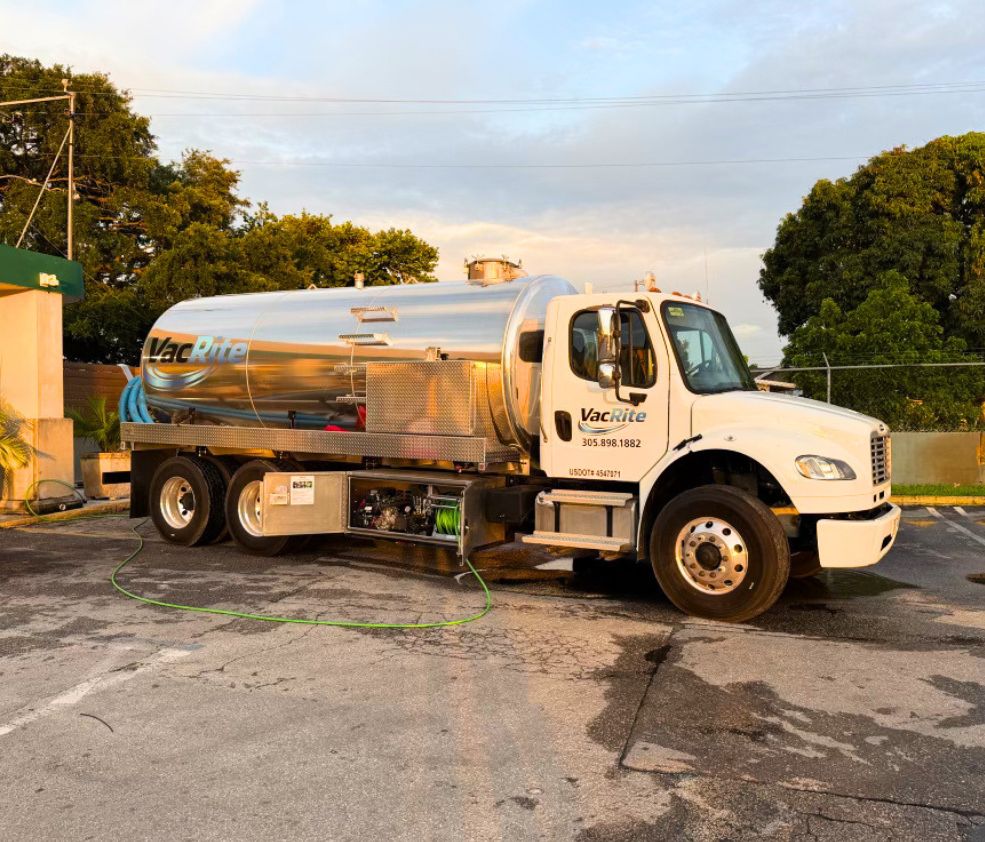
Ask any contractor where what they pump out actually goes. It is a fair question, and the answer tells you a lot.
VacRite
Other industries work
The other side of the company
Most of our customers only ever need one half of what we do. It is worth knowing the other half exists.
Something failed tonight. Somebody answers.
Struck line, blocked kitchen drain, a basin backing up in the middle of a storm. We run every day of the year, and the phone reaches a person rather than a queue. This company is first responder owned, and the emergency side of it works the way that suggests.
Questions we get asked
Can you work under a term agreement or on-call contract?
That is the sensible way to run it. Scope, response expectations, record format and the vendor paperwork get settled once, then your department releases work against the agreement instead of starting a purchasing conversation during a failure.
Do you respond after hours and on weekends?
Around the clock, every day of the year, and a person who works here answers. Because the trucks are ours rather than brokered, a response commitment is something we actually control.
Can you help our crew on a main break?
Regularly. Your crew makes the repair. We open the ground around the live main without the risk a machine carries there, keep the hole dewatered so people are working on pipe instead of in water, and take the spoil away under permit.
Will you clean our stormwater structures on a route?
Yes, and routes work far better than one-off calls. Sediment depth gets recorded per structure, so after a couple of cycles the schedule follows the actual loading instead of a blanket cycle that overserves half the system.
When should the seasonal drainage work happen?
Spring, while the sumps are dry and the calendar is open. Once the storms start, every agency and property manager in three counties wants the same truck the same week, and a structure already full of sand does not get a better place in line for having waited.
What records does the department get?
One consistent format across routine and emergency work: location keyed to your own structure or facility numbering, what was found, depths, condition, what was done, where the material went, and photographs. It is built for a public file that somebody will read years from now.
Are you set up for storm restoration work?
Yes, and it is worth completing the paperwork before the season. The agencies that get trucks after a named storm are the ones already inside a vendor system, not the ones starting an onboarding process while the debris is still in the road.
We run municipal hydrovac services across South Florida, including Miami, Fort Lauderdale, West Palm Beach, and the rest of the region. See every city we cover or look at the trucks on the job.
Tell us what the job is
Tell us about the municipal hydrovac services job. Where it is, what is around it, and when you need it.
Two trades, one call. We own the trucks, hold the permits, and put our own people on the job.
VacRite, Miami
info@vacriteservices.com
Open 24/7/365
USDOT 4547071