
Electrical Utility Exposure
Uncovering duct banks, concrete-encased conduit and direct-buried primary cable so the jacket and the insulation come out of the ground the way they went in.

Electrical contractors, utility crews, campus and plant maintenance, and anyone working near energized cable that a shovel would ruin.
How a job runs, step by step
Establish what is energized and who owns it
Direct-buried primary, a utility duct bank and a customer-owned feeder past the meter all carry different rules and different phone calls. The ownership question gets answered before ground opens.
Work from marks and expect company
Electric shares corridors with everything else, and concrete encasement can mask what is inside it on a locator. The dig is planned to find neighbors gently rather than to reach a target fast.
Strip the soil, leave the encasement
Water erodes soil off the duct bank or the cable and vacuum lifts it clear. Nothing rigid enters the hole, so nothing chips concrete, scars conduit or reaches insulation.
Uncover the cable itself with care
Direct-buried primary is the delicate case. The last soil comes off deliberately, the wand keeps standoff and stays moving, and the jacket gets handed over intact and clean enough to inspect.
Hold it, then put it back
The hole gets dewatered and kept workable for the electrical crew, then backfilled in lifts with warning tape and any specified sand or flowable fill replaced, and the surface restored.
Duct bank, conduit and direct-buried are three different problems
Grouping them under electric hides the part that matters. A concrete-encased duct bank is physically tough and the encasement protects what is inside, so the risk is less about the cable and more about chipping concrete, cracking a duct at a joint, or undermining the bank so it loses support along its length. Conduit without encasement, whether PVC or fiberglass, is easy to crack with a tooth and easy to uncover with water. Direct-buried primary is the one that keeps people awake. There is no duct and no concrete between the soil and the insulation, so the only thing standing between an excavation and a fault is the method and the hand running it. That is the case where non-destructive excavation stops being the convenient option and becomes the only defensible one, and it is more common on older residential feeds and campus distribution than the drawings usually suggest.
Locating electric is harder than locating a pipe
Marks near electric come with more caveats than most. Concrete encasement can attenuate a signal so a heavy duct bank reads faintly, or the locator ends up tracing a ground conductor or a neighboring metallic line and marking that instead. Multiple circuits stacked in one trench come back as a single stripe of paint, which is exactly the condition where an assumption gets somebody hurt. Past the meter, the one-call ticket does not apply at all, and on a commercial property that means parking lot lighting circuits, sign feeds, gate operators, generator and transfer switch feeders, and building to building distribution are all unmarked by default. Around here FPL owns the utility side of that boundary and everything on the customer side is somebody’s private installation with private records, which on a property that has been renovated twice is a polite way of saying no records at all.
Energized, wet, and the hole in between
An energized cable in a hole that is filling with groundwater is a situation to engineer rather than improvise. The table sits high across South Florida and moves with the tide near the coast, so an excavation over a duct bank takes water on its own schedule. The vac truck lifts water and spoil together while excavating, and a pump with a sump keeps the hole workable while the electrical crew is in it. Where something in the excavation genuinely has to stay dry, a splice, a termination, an open pull point, air excavation is worth discussing before the day since it leaves the spoil and the work dry, though it is slower and it does not argue with limestone. That trade-off gets settled in the yard. What does not get improvised is standoff: the wand keeps its distance from exposed cable, keeps moving, and uses a tip that spreads energy rather than concentrating it into one spot on a jacket.
What the electrical crew needs the hole to be
An exposure that another trade works in is a workspace, and electrical work has particular demands. Pulling a section of cable, cutting in a splice, setting a repair sleeve or landing a new conduit into an existing bank all need room around the facility, room under it, and length rather than depth. Splice cases in particular want far more open cable than people plan for, and a hole sized to the fault is a hole somebody widens by hand at the worst moment. Depth means shoring, since anything a person enters gets sloped, benched or shored for the soil it is actually in, and loose fill over the rock through Miami-Dade sloughs once water moves through it. Ladders, plating, barricade and a cover overnight are ordinary. Tell us the task, the tool and the duration and the excavation gets built for that instead of being adjusted around it.
Backfill matters more on electric than on almost anything else
How an electrical excavation gets closed is part of the work rather than cleanup. Duct banks and direct-buried cable are frequently specified to be bedded in sand or flowable fill, and slurry from a water-cut hole is neither. It leaves in the tank under our haulers and dumping permits to a permitted facility with a record of the trip, and the backfill going back in is imported material selected for the specification. Warning tape sits at its specified height above the facility and goes back where it belongs, because the next crew will be relying on it. Compaction happens in lifts, since settlement over a duct bank in a parking lot is the defect a property manager sees every day for years. Where the utility owner or the project specification names its own bedding and restoration detail, send us the wording and the hole gets closed to it.
Worth knowing
If anything in the excavation has to stay dry, a splice, a termination or an open pull point, say so before we roll. It decides whether we cut with water or with air, and that is a much easier decision to make in the yard than at the edge of an open hole with your crew waiting.
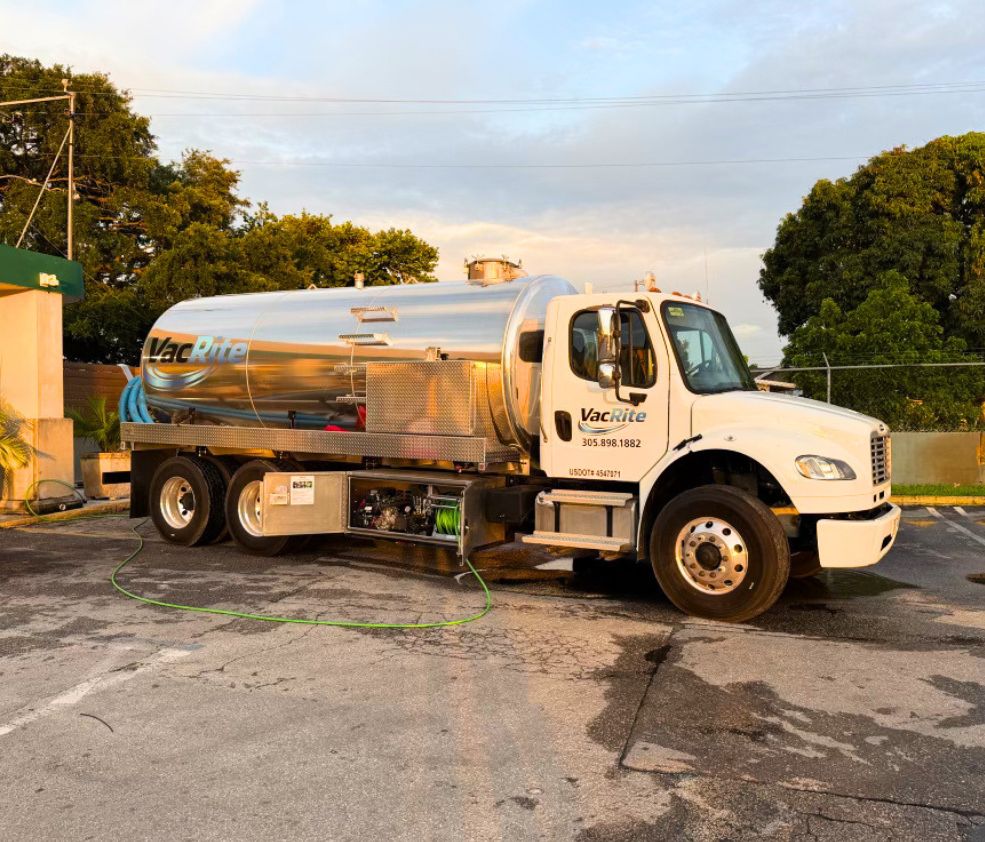
Ask any contractor where what they pump out actually goes. It is a fair question, and the answer tells you a lot.
VacRite
Other utilities work
The other side of the company
Most of our customers only ever need one half of what we do. It is worth knowing the other half exists.
Something failed tonight. Somebody answers.
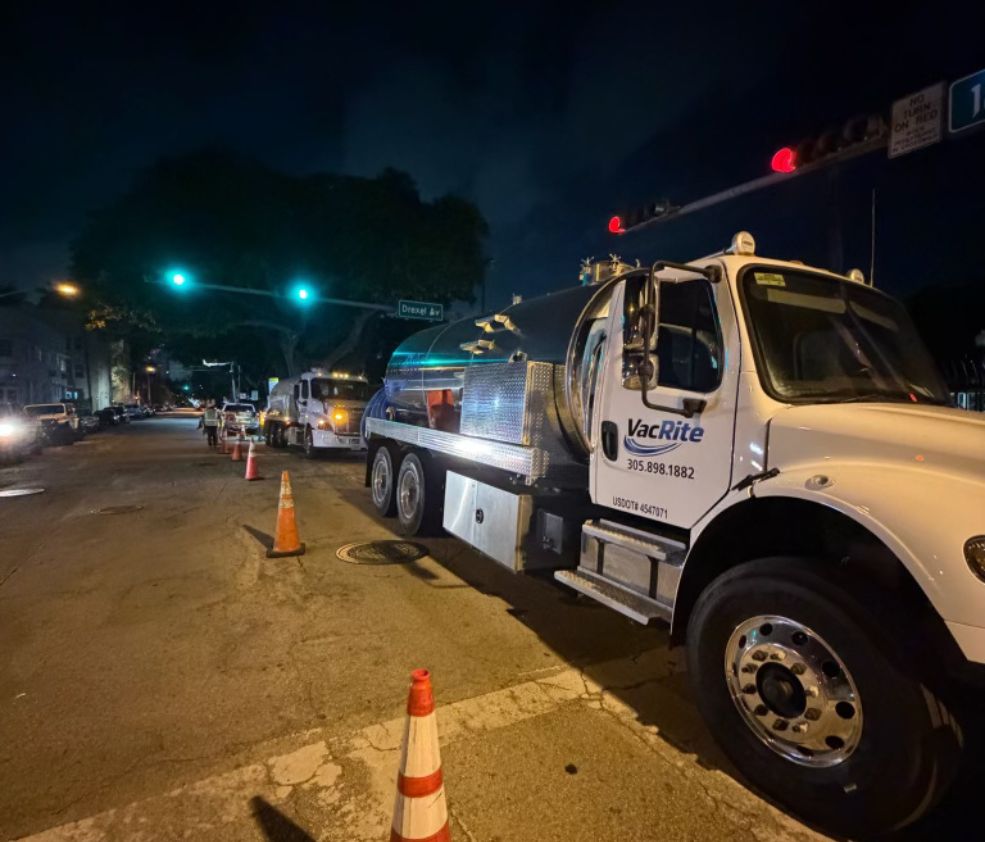
Struck line, blocked kitchen drain, a basin backing up in the middle of a storm. We run every day of the year, and the phone reaches a person rather than a queue. This company is first responder owned, and the emergency side of it works the way that suggests.
Questions we get asked
Can you expose energized cable safely?
That is the reason the method exists for this work. Water erodes soil and flows around a jacket instead of cutting it, and nothing rigid enters the hole. Direct-buried primary is the delicate case and it is handled with standoff, a moving wand and a tip that spreads energy.
Will water excavation crack a concrete duct bank?
No. Water takes soil off the encasement without chipping it, which is the opposite of what an excavator tooth does at a joint. The thing to watch on a duct bank is undermining it along its length, so soil gets removed in a way that leaves it supported.
Does 811 mark our parking lot lighting and building feeders?
No. The one-call ticket covers member utility facilities, and everything past the meter belongs to the property owner. Site lighting, sign feeds, gate operators, generator feeders and building to building distribution are unmarked by default, and private locating is how they get found.
Why do electric locates come back less reliable than water or gas?
Concrete encasement attenuates a signal, a locator can end up tracing a ground conductor or a neighboring metallic line, and several circuits in one trench read as a single mark. The paint also carries no depth. An exposure is what turns any of that into a measurement.
Can you keep the excavation dry for a splice?
A pump and a sump keep a hole workable, and where something truly has to stay dry, air excavation is worth discussing before the day since the spoil and the work both stay dry. It is slower and it struggles in limestone, so tell us the constraint and we will pick the method.
Will the hole be big enough to pull cable or set a splice case?
It will if you tell us the task. Splice work wants far more open length than people plan for, plus room under the facility. Give us the tool and the duration and the excavation gets built for the work rather than for the fault.
How does the excavation get backfilled over a duct bank?
With imported material in compacted lifts, since water-cut slurry leaves with the truck under our haulers permit and is not bedding. Specified sand or flowable fill goes back where the detail calls for it and warning tape returns to its height above the facility. Send the specification and it gets closed to that wording.
We run electrical utility exposure across South Florida, including Miami, Fort Lauderdale, West Palm Beach, and the rest of the region. See every city we cover or look at the trucks on the job.
Tell us what the job is
Tell us about the electrical utility exposure job. Where it is, what is around it, and when you need it.
Two trades, one call. We own the trucks, hold the permits, and put our own people on the job.
VacRite, Miami
info@vacriteservices.com
Open 24/7/365
USDOT 4547071