
Grease Waste Manifest Records
The paperwork chain that follows the waste off your property, from the truck that hauled it to the permitted facility that accepted it, documented so your file closes the loop.

Any operator who has to produce records on request: restaurants, hotels, supermarkets, hospitals, schools, correctional and municipal kitchens, and property managers holding compliance for tenant spaces.
How a job runs, step by step
Document the material at pickup
What came out, from which structure, in what volume, on what date, with the depths recorded on arrival.
Photograph the structure empty
Before and after, from inside the structure. Photos are the only part of the record that proves a complete pump-out rather than a skim.
Haul under our own permits
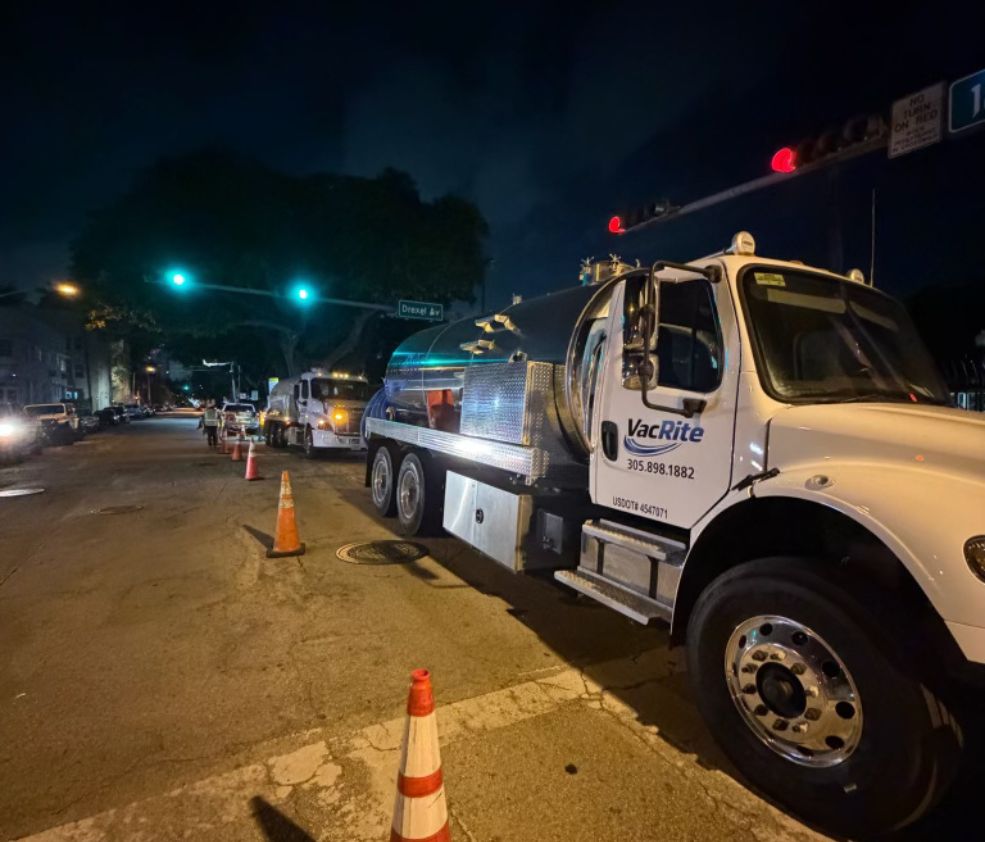
Our haulers permit, our dumping permit, our trucks, our CDL drivers, USDOT 4547071. The transport leg is not handed to a stranger.
Deliver to a permitted receiving facility
The load goes to a facility approved to accept it, and the receipt of that load becomes part of your record.
Close the loop in your file
Manifest, disposal documentation, photos and depth readings, delivered per service in a consistent format that stacks into a history.
A manifest is a chain of custody, not a receipt
The distinction is the entire point and it is worth being blunt about. A receipt is evidence that you paid somebody. A manifest is evidence of what material left your property, how much of it, who took it, and which permitted facility accepted it at the other end. Those are different documents answering different questions, and only one of them is any use when somebody asks where your grease went. The reason the system exists is the failure mode it was built to catch. A hauler pumps a trap, collects payment, drives a few miles and empties the tank into a storm structure, a convenient manhole, a canal, or a piece of vacant ground. It happens. It is cheap, it is fast, and from the kitchen’s side it looks exactly like a legitimate service, because the trap really was pumped and the truck really did leave. When that discharge is traced, the questions come back down the chain to the generator of the waste, which is the operator, and at that point the only thing standing between you and the consequences is documentation showing the material went to a facility licensed to take it. That is what your file is for. It is not bureaucracy for its own sake, it is the mechanism that keeps somebody else’s illegal dump from becoming your problem.
The permits behind the paperwork, and how to check anybody’s
A manifest is only as good as the operation behind it, so it is fair to ask what sits underneath ours. We hold our own haulers permit, which is the authorization to transport this waste, and our own dumping permit, which is the authorization to deliver it to a receiving facility. The trucks are ours rather than brokered, every driver holds a CDL, and the fleet runs under USDOT 4547071. The company is bonded and insured, family owned and first responder owned, with a master plumber on staff. That combination is what allows a load to be tracked in one continuous chain instead of being handed between parties, and it is why we can produce documentation for the whole journey rather than for the part we witnessed. When you are evaluating any vendor, including us, the questions are the same short list. Do you hold your own haulers permit and dumping permit, or do you subcontract the haul. Which facility receives our material. Can I see a manifest from a real service. Will I get photos from inside the structure. Vague answers to any of those are themselves an answer, and the pattern is consistent enough that it is worth treating as a rule.
What belongs in the file, and the format that survives
A usable record set has five things per service and they are all cheap to keep. The manifest, showing date, source, material, volume, hauler and destination facility. Disposal documentation confirming the receiving facility accepted the load. Before and after photographs taken inside the structure, which is the only element that distinguishes a complete pump-out from a skim and is therefore the element most worth insisting on. The measured depths on arrival, grease, solids and liquid, which turn a stack of visits into a loading history. And notes on anything found and what was done about it, a cracked wall, a missing baffle, a flow restrictor that was not there. Format matters more than people assume, because the value of the file is in the sequence rather than in any single sheet. Records in date order, one consistent layout, per location, going back years, tell a coherent story about an operation that runs a program. The same information as loose receipts in three formats from four vendors tells nobody anything, even when all the work was genuinely done. Decide now where the file lives and who at the location keeps it, because the version of this that goes badly is almost never the one where the trap was dirty. It is the one where the records exist and nobody present can find them.
What the file does for you between inspections
Compliance is the reason people start keeping records and it is not the best reason to keep them. Read as a series, the file is the only instrument you have pointed at the inside of your drain system. A structure that used to reach threshold in ninety days and now reaches it in fifty is reporting a change upstream, and the change is usually knowable: a new menu, an added fryer, a tenant swap on a shared interceptor, a crew that started rinsing pans instead of scraping them. Solids climbing while the grease cap stays flat says something different from both numbers rising together. A liquid level that stops matching what the kitchen sent points at groundwater getting in through a failed joint. Hardware findings that repeat across visits say a component was never actually replaced. All of that arrives months before a backed-up line does, and it only arrives if somebody is writing the numbers down and somebody else is occasionally reading them. It also transfers, which matters in an industry with turnover. When the manager who knew the site leaves, the file is the institutional memory that stays. Call 305-761-4311 and we will put a truck on your trap and start a record set you can hand to anybody.
Worth knowing
We can produce complete records for work we performed and nothing for work somebody else did. If you are changing vendors, get whatever file exists from the outgoing one before the relationship ends, because reconstructing a year of service history from people who no longer have your account is close to impossible.
Ask any contractor where what they pump out actually goes. It is a fair question, and the answer tells you a lot.
VacRite
Other compliance work
The other side of the company
Most of our customers only ever need one half of what we do. It is worth knowing the other half exists.
Something failed tonight. Somebody answers.
Struck line, blocked kitchen drain, a basin backing up in the middle of a storm. We run every day of the year, and the phone reaches a person rather than a queue. This company is first responder owned, and the emergency side of it works the way that suggests.
Questions we get asked
What is a grease waste manifest?
A document recording what material left your property, the volume, the date, who hauled it and which permitted facility received it. It is a chain of custody, not a payment receipt, and it is the one that answers where your waste went.
Why is a receipt not enough?
A receipt proves you paid somebody. It says nothing about where the tank was emptied. If a hauler discharges illegally, the questions come back to the generator of the waste, and only the manifest and disposal record protect you.
Do you hold your own permits?
Yes. Our own haulers permit and our own dumping permit, our own trucks with CDL drivers, running under USDOT 4547071. The haul is not brokered, which is why we can document the whole chain rather than part of it.
What exactly do we receive after each service?
The manifest, disposal documentation, before and after photos from inside the structure, the depth readings taken on arrival, and notes on anything found in the hardware or the structure.
Why do photos matter if we already have the manifest?
They answer different questions. The manifest proves the material was legally hauled and disposed of. The photos prove the structure was actually emptied and scraped rather than skimmed, which no piece of paperwork can show.
How long should we keep these records?
Longer than you expect to need them. Requirements vary by jurisdiction and the practical answer is a rolling multi-year file per location. It costs nothing to hold and it is the only version of the history that survives staff turnover.
Can you provide records for services done before we hired you?
No. We can document everything we do, and nothing anybody else did. That is worth knowing before you switch vendors, because the outgoing file is much easier to collect while the account is still open.
We run grease waste manifest records across South Florida, including Miami, Fort Lauderdale, West Palm Beach, and the rest of the region. See every city we cover or look at the trucks on the job.
Tell us what the job is
Tell us about the grease waste manifest records job. Where it is, what is around it, and when you need it.
Two trades, one call. We own the trucks, hold the permits, and put our own people on the job.
VacRite, Miami
info@vacriteservices.com
Open 24/7/365
USDOT 4547071