
Clearing the kitchen lines behind Hialeah’s grease traps
The drain line between your trap and the street takes whatever the trap lets through. In the older parts of Hialeah that line has been in the ground a long while, and we jet it back to clean pipe.
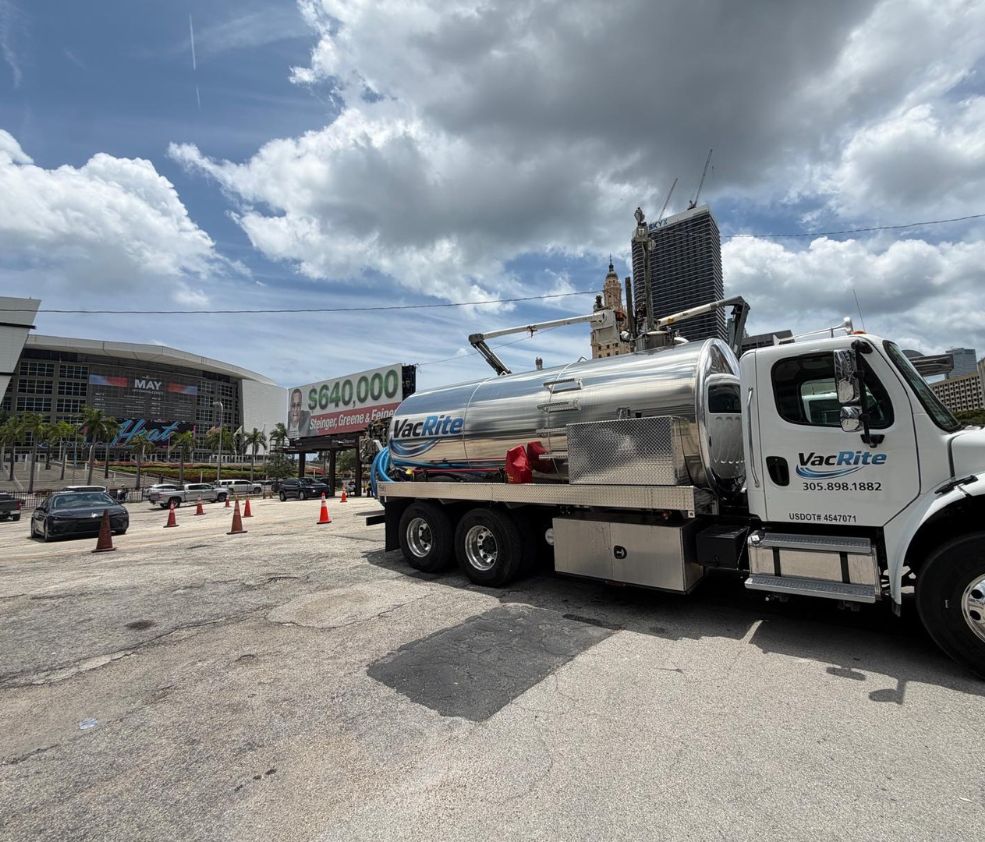
A jetting visit on a Hialeah block
The access is the first thing we sort out. On older commercial blocks the cleanout is often out back in the same cramped service area as the trap, reached down a driveway built for delivery vans. A tanker in a tight rear lot is ordinary work for us. Because Palm Avenue and West 49th clog up at rush hour, we book these jobs early or after the kitchen closes, when a hose across the back does not get in anybody’s way. If there is no usable cleanout, we say so before anything else happens. Once we are set up, the visit goes like this.
Ask about the history
Before the hose goes in, we want to know when the line last blocked, where the water backed up, and what was done about it. A line that was snaked twice this year tells a different story from one that has never given trouble.
Pick pressure for old pipe
Nozzle and pressure get set for the line we found, and in the older parts of Hialeah that often means holding back. We start easier on old pipe and build up only as far as it can take, which clears the grease without testing the joints.
Scour and pull it back
The jetter works up the line, peeling grease off the wall and washing it back to the cleanout. Our vacuum truck is on the same job, so what comes loose goes into the tank and leaves with us instead of lodging further down toward the street.
Run water and write it up
We run water through and watch it move before calling the line clear. Then you get a record of what we did and what we saw, including anything that points past plain buildup, like material that keeps catching at the same distance from the cleanout.
Hialeah’s older drain lines and the grease that reaches them
Most of our jetting in Hialeah is on the lines behind grease traps along Palm Avenue and West 49th Street, the stretch where bakeries and cafeterias sit close together and cook all day. Those kitchens push a lot of volume through their traps. Whatever grease rides out of a trap that is running full ends up in the line behind it, where it cools and grips the pipe.
Pipe that went in a long time ago
Older sections of Hialeah still drain through lines that were laid a long time ago. Old pipe tends to be rougher inside than new, and a rough wall gives grease something to hold onto. It can also be more worn than it looks from the cleanout. That changes how we jet it. On an old line we would rather make an extra slow pass than push hard and open up a weak spot.
So a Hialeah jetting job starts with finding out what kind of line we are dealing with. Where the cleanout sits, how big the pipe is, what it seems to be made of, and how often it has blocked before. The last question matters most, because the answer usually tells us whether the trouble is buildup, the trap upstream, or the pipe itself. Owners and managers usually know that last answer better than anyone.
Other calls that follow a cleared kitchen line
Trap pumping is the obvious one, and after a jetting job it is usually the next thing we put on the calendar. If your trap has been running full long enough to coat the line, its interval needs resetting, and the first pump-out after a jetting visit is a good time to measure what the kitchen actually sends it.
Fryer oil is worth asking about too. On a lot of Hialeah counters the fryers stay on most of the day, and any oil poured down a drain shows up in the same line we just cleared. An oil drum out back, emptied on a schedule, keeps it out of the trap and out of the pipe.
And if the line keeps failing in one spot, the next step is below grade. Laterals on older Hialeah lots can run close to other buried services, so the ground gets opened with water and vacuum instead of a bucket. Hydro excavation and utility locating come out of the same yard as the jetter, and one call reaches both. That is the part most jetting companies hand off.
How we handle line jetting everywhere else is written up separately. For the rest of our work in town, start at Hialeah. Photos of the trucks are on the gallery, and the job request form reaches the same people who answer the phone.
Other work we run in Hialeah
When the same Hialeah kitchen calls us back
If we jet a line behind a Palm Avenue bakery and it blocks again a couple of months later, jetting alone was never going to fix it. The line keeps catching grease because the trap ahead of it runs past full, and a full trap passes grease along instead of holding it. Clearing the pipe buys time. Getting the trap on an interval that fits the kitchen is what stops the next one.
Because we pump the traps on these blocks as well as jet the lines behind them, that conversation happens on the spot. The crew clearing your line can check the trap on the same visit, see how loaded it is, and set a pumping interval that fits the kitchen’s real volume. Nobody has to call a second company to sort out whose half of the problem it was.
When the pipe is the problem
Sometimes the trap is fine and the line still blocks at the same spot. On old pipe that can mean a sag or a joint that has shifted, and jetting cannot fix the shape of a pipe. Finding out for sure can mean exposing the lateral, often under pavement with other buried services close by. That careful digging is work our own crew does, so the job stays with one outfit.

Jetting clears the pipe. If the trap upstream stays full, we will be back, and we would rather tell you that now.
VacRite
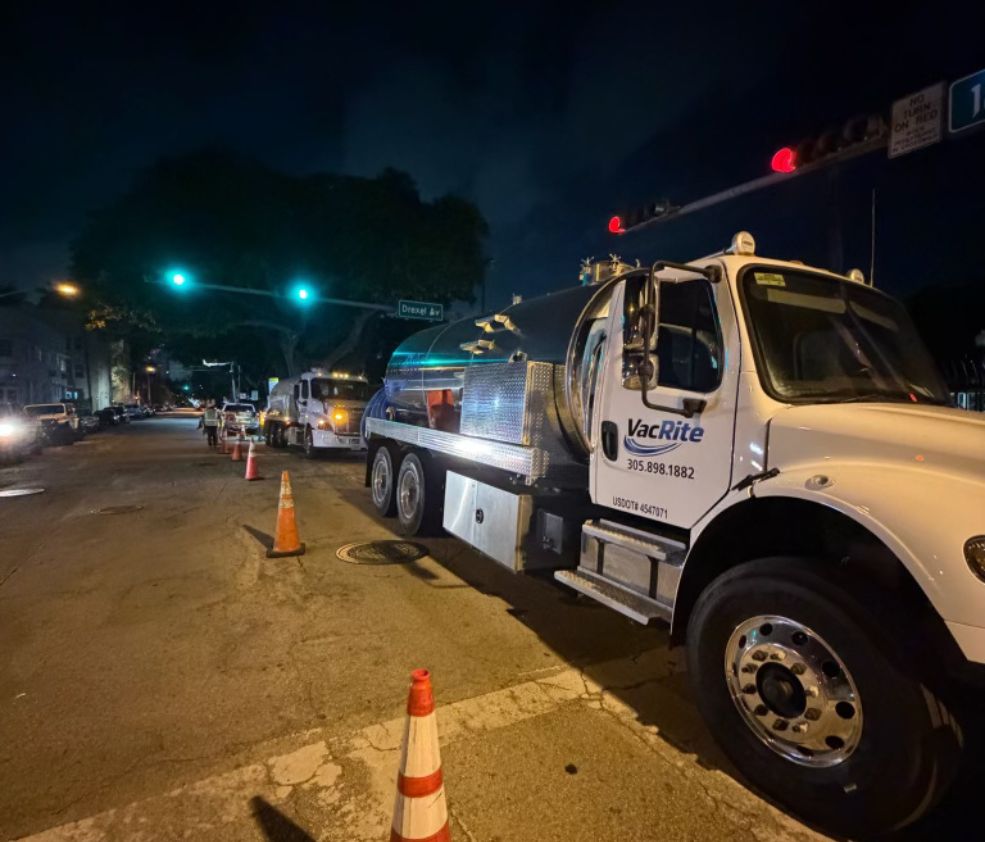
Something failed tonight in Hialeah. Somebody answers.
Struck line, blocked kitchen drain, a basin backing up in the middle of a storm. We run every day of the year, and the phone reaches a person rather than a queue. This company is first responder owned, and the emergency side of it works the way that suggests.
Questions we get asked
Why does our line behind the trap keep blocking?
Most of the time the trap ahead of it is running too full and passing grease into the pipe. Old pipe in the older parts of Hialeah grabs that grease quickly. If it keeps blocking in one exact spot, the pipe itself may have a sag or a shifted joint.
Is jetting safe on an old line?
It is when the pressure and nozzle suit the pipe. On older Hialeah lines we ease into it and raise pressure only when the pipe handles it. If what we see says the line is too far gone to jet hard, we tell you before pushing it.
Do you need to look at our trap if we only called about the drain?
We would like to. A blocked line behind a Hialeah bakery or cafeteria usually traces back to a trap that fills faster than its schedule allows for. Checking it while we are already on site saves a second trip, and it tells us whether the line will stay clear.
What happens if jetting does not fix it?
Then the problem is probably the shape of the pipe, and the way to know is to expose the lateral. Our excavation crew handles that digging carefully around whatever else is buried nearby. It is the same company and the same phone call, so nothing gets handed off.
Does jetting make a mess of the back of the building?
It should not. The vacuum truck pulls what we wash back to the cleanout, so it goes in the tank instead of onto the pad. On a tight Hialeah service area we lay the hose so deliveries and the back door stay usable while we work.
How often should a kitchen line in Hialeah get jetted?
There is no fixed number. A line behind a trap that gets pumped on the right interval may go a long time without it. One that needs jetting every few months is telling you the trap schedule is off, and that is where we would look first.
Tell us what the job is
Say which line backs up and for how long, and we will come jet it.
Two trades, one call. We own the trucks, hold the permits, and put our own people on the job.
VacRite, Miami
info@vacriteservices.com
Open 24/7/365
USDOT 4547071