
Commercial Hydro Excavation
Digging on occupied commercial property, where the finished surface, the tenants and the hours of business are constraints on the work rather than details around it.
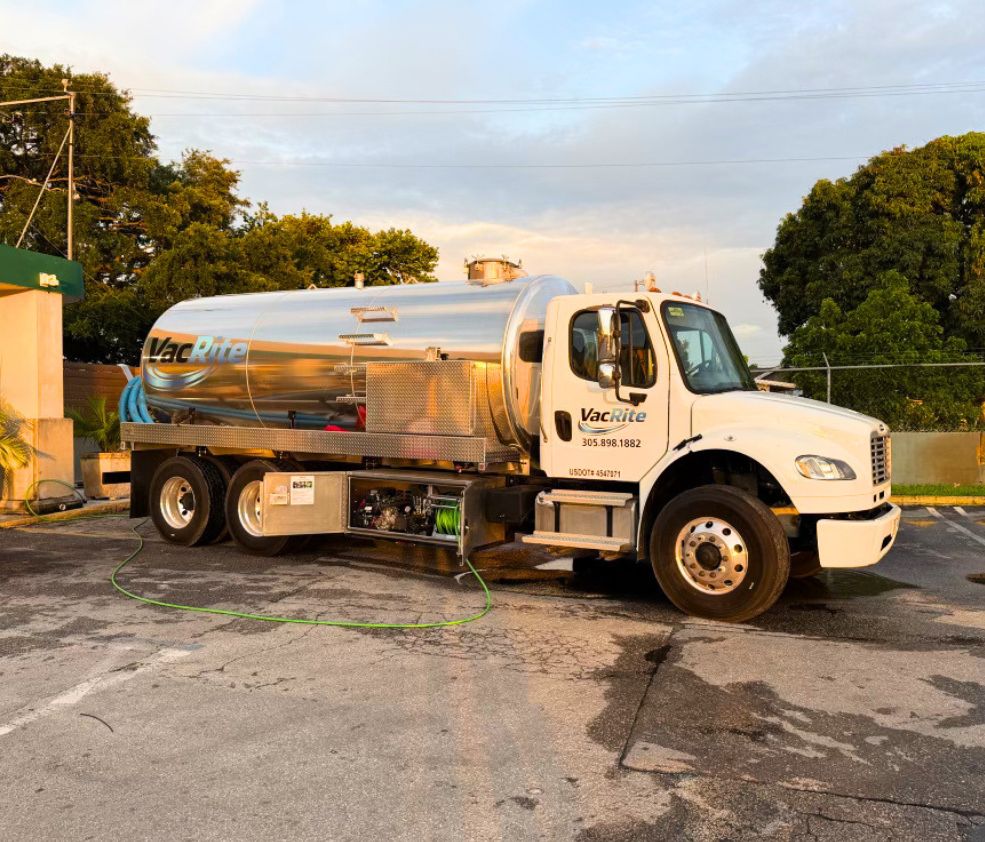
General contractors on occupied sites, property managers, retail and restaurant construction teams, hotel and hospital facilities staff, and condo and multifamily boards dealing with something buried.
How a job runs, step by step
Look at the site before the dig
Where the truck can sit, which drive aisle cannot close, which spaces belong to which tenant, when deliveries arrive, and what surface is over the target. Those five answers shape the whole day.
Agree the window with the people it affects
Retail, restaurant and hotel work frequently runs at night or early morning. Getting property management and the affected tenants told in advance is worth more than any amount of apologizing later.
Protect and core the surface
Pavement and hardscape get cored rather than broken so the plug can go back. Landscape, pavers and finished concrete get protected before any hose crosses them.
Dig with nothing on the ground
Water opens the hole and the vacuum takes everything into the tank. No spoil pile in a parking space, no mud tracked to the entrance, no wheelbarrow line across a lobby walk.
Put it back before the lot opens
Backfill, compaction, plug reset, surface restored and the area washed down. The spoil leaves with the truck. The intent is that a tenant arriving in the morning has nothing to notice.
The restoration is the job
On open dirt the digging is the expense. On a finished commercial property the digging is a small line and everything around it is the real cost. Saw cutting a parking lot means a patch that a property manager looks at for years and that a prospective tenant reads as deferred maintenance. A spoil pile means either a stockpile occupying spaces for the duration or immediate haul-off trucks in a lot with customers in it. Tracked mud means an entrance that needs pressure washing and a lobby mat that does not save the carpet. Plating over an open hole means noise every time a car crosses it. Hydro excavation removes most of that by removing the spoil pile entirely and by keeping the opening small enough to core. Per cubic foot of soil it is the slower method, and that is the wrong measure here. Counting saw cutting, restoration, lost parking, tenant complaints and the lingering patch, it lands the other way more often than not.
Digging on a lot that never closes
The thing that makes this different from open ground is that the property keeps operating while the hole is open. There is no laydown area, no place to stockpile, and no stretch of the day when the site belongs to the crew. Hydro excavation fits that because the footprint is a hose and a truck and nothing else touches the ground. Everything the wand loosens goes straight up the tube into the tank, so the parking space next to the dig stays a parking space. The opening itself stays small, usually a cored circle rather than a saw cut rectangle, which means less to barricade and less to walk around. Hose runs get planned as part of the layout rather than discovered, since a line of hose across a walkway is the thing that turns a quiet job into a phone call. The dig is bounded, and when the wand stops, the site looks the way it did at breakfast.
Night work, and what it actually takes to be quiet
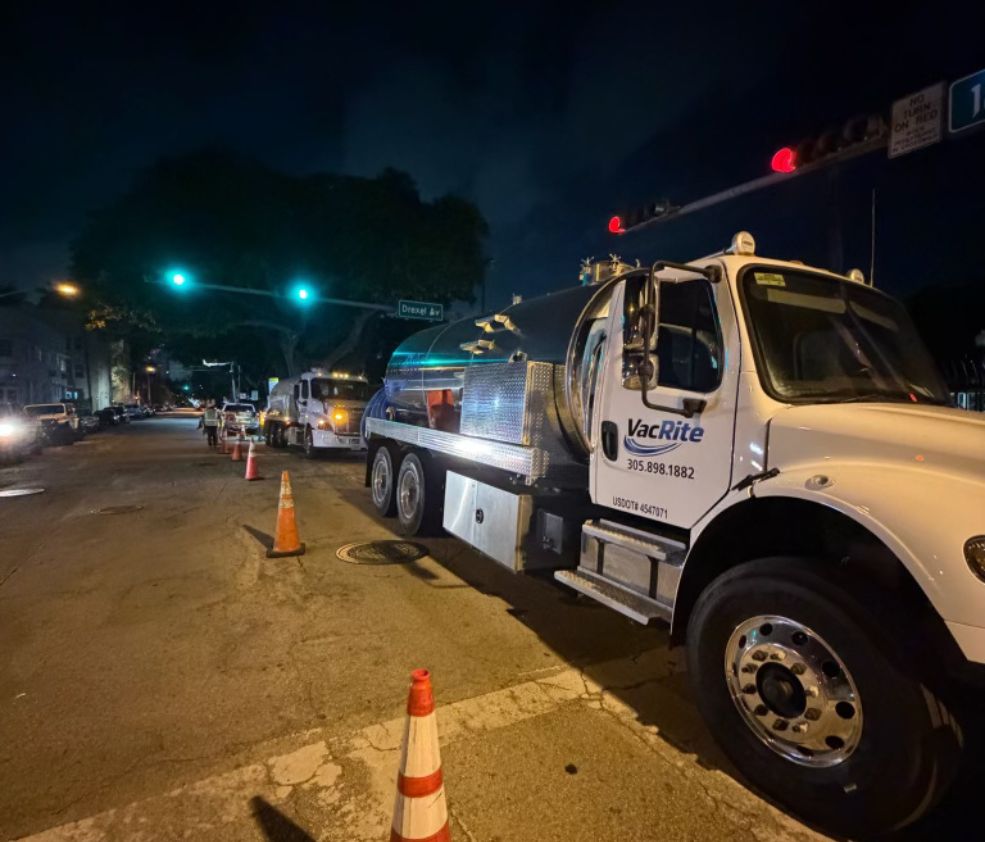
A great deal of finished-surface work runs after hours because that is the only honest way to do it, and we run around the clock every day of the year, so that is ordinary for us. It does bring its own problems. A vacuum blower is loud, and on a property with residential above or adjacent, a municipal noise ordinance is a real constraint with a real complaint mechanism behind it. Lighting has to come from somewhere and it has to point at the work rather than into somebody’s window. Security and access get arranged in advance, because a gate nobody can open at eleven at night is a wasted mobilization. And the finish line moves: everything has to be backfilled, compacted, restored and washed down before the lot opens, which means the work window is shorter than the hours between closing and opening. We would rather scope a two-night job honestly than promise one night and hand back a lot with cones in it.
What is under a commercial property, and why nobody has a record
The one-call ticket covers member-owned facilities in the public way. Past the meter, on private property, it covers almost nothing that is actually in your way. Irrigation mains and zone valves. Site lighting circuits, which on an older center are direct buried and shallower than anyone expects. Pool, fountain and cooling tower lines. A grease waste line from a restaurant space to an interceptor out in the lot. Storm structures and the leads between them. Old laterals to a building that got demolished. A South Florida shopping center or condo campus has usually been added onto three or four times since it was built, and each addition left something behind that is on nobody’s drawing. This is where the method earns its keep on private ground, because it fails safe. When the wand finds an unrecorded line, the line is undamaged and you have a decision to make rather than a repair to organize and a tenant to explain it to.
Cores, plugs and a surface that does not tell the story
How the surface gets opened decides what the property looks like afterward. Asphalt and concrete get cored so the plug comes out intact and goes back in after the hole is backfilled and compacted in lifts, leaving a seam instead of a patch. Pavers get lifted and reset rather than broken, and on a hardscape worth protecting the sand setting bed gets kept. Turf and landscape recover on their own when the footprint stays small and nothing was piled on them. Proper compaction is not a formality here either, because a poorly backfilled hole in a parking lot telegraphs through as a depression after two rainy seasons and by then it is somebody’s warranty conversation. Where a property has its own restoration standard, or a municipality has one for work in a right of way fronting the site, send us the language and the work is built to it. Restoration is part of our scope rather than a trade that follows us, and we carry the bonding and insurance a property manager has to see before anyone opens pavement on their asset. The surface is what people judge, and it is the last thing we touch before we leave.
Worth knowing
Tell us what is over the target before we scope the day. Asphalt, stamped concrete, pavers, tile and finished landscape are five different restoration problems, and the one under your dig decides how the surface gets opened, what gets protected, and how much of the night belongs to putting it back rather than to digging.

Ask any contractor where what they pump out actually goes. It is a fair question, and the answer tells you a lot.
VacRite
Other industries work
The other side of the company
Most of our customers only ever need one half of what we do. It is worth knowing the other half exists.
Something failed tonight. Somebody answers.
Struck line, blocked kitchen drain, a basin backing up in the middle of a storm. We run every day of the year, and the phone reaches a person rather than a queue. This company is first responder owned, and the emergency side of it works the way that suggests.
Questions we get asked
Can you work after hours so we do not disrupt tenants?
Yes, and on occupied retail, restaurant and hotel property it is usually the right answer. We run around the clock every day of the year. Confirm gate and security access in advance, because a gate nobody can open at eleven is a wasted trip.
Will there be a spoil pile in our parking lot?
No. Everything goes up the hose into the tank and leaves with the truck. That is most of why this method suits occupied property, along with the opening being small enough to core rather than saw cut.
What does the pavement look like when you are done?
A seam rather than a patch. The surface is cored, the plug is kept and reset after the hole is backfilled and compacted in lifts. Pavers get lifted and reset instead of broken.
What about the utilities that are not on the 811 ticket?
On private property that is most of what is in your way: irrigation, site lighting, pool and fountain lines, grease waste lines, old laterals. The method fails safe, so when the wand finds one it is undamaged and you get a decision instead of a repair.
How much parking will we lose and for how long?
Less than a machine dig and for a shorter time, because there is no stockpile and no plated open hole waiting on a patch. Tell us which spaces and aisles cannot close and the truck gets positioned around that.
Is the noise going to be a problem at night?
A vacuum blower is loud, and where there is residential above or next door there is usually a noise ordinance with a complaint mechanism behind it. Say so up front and the loud portion gets planned into the least sensitive hours.
Do you handle the restoration or does that fall to our contractor?
We do it unless you tell us otherwise. Backfill, compaction, plug reset and washdown are part of the work. If your paving or landscape trade is following behind us, that is fine, we just need to know before the day.
We run commercial hydro excavation across South Florida, including Miami, Fort Lauderdale, West Palm Beach, and the rest of the region. See every city we cover or look at the trucks on the job.
Tell us what the job is
Tell us about the commercial hydro excavation job. Where it is, what is around it, and when you need it.
Two trades, one call. We own the trucks, hold the permits, and put our own people on the job.
VacRite, Miami
info@vacriteservices.com
Open 24/7/365
USDOT 4547071