
Daylighting
Opening the ground to bring a buried utility into daylight so it can be seen, measured and worked around with certainty.
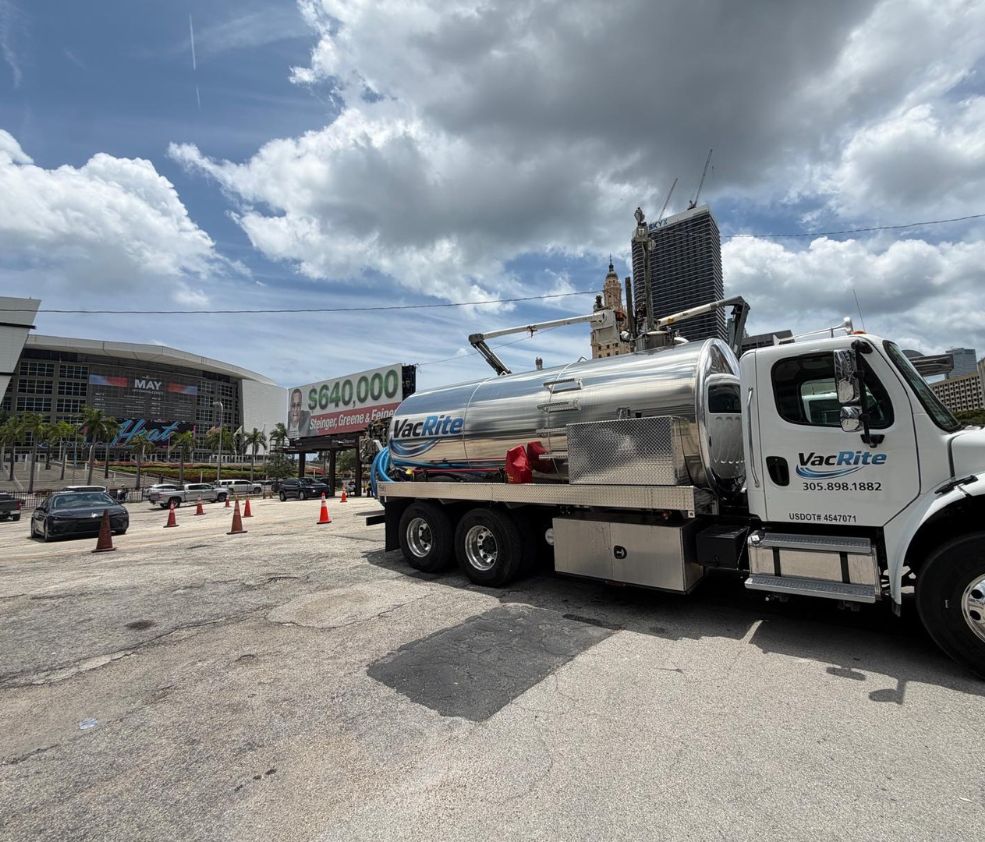
Design engineers, survey crews, utility owners and contractors who need the real position of a line before committing to a route.
How a job runs, step by step
Work from the marks
Locate marks give the approximate horizontal position. They do not give depth, and they are not always exact. Daylighting resolves both.
Open a controlled window
Water and vacuum open the ground directly over the target with a footprint no larger than needed.
Expose and record
The line gets uncovered, cleaned off, measured for depth and offset, identified by size and material, and photographed.
Hand off the data
You get the actual position, not the assumed one, in time to change the drawing rather than the schedule.
Why locate marks are not enough
A locate mark is a horizontal projection on the surface. It says a line is somewhere under that paint. It does not tell you how deep, whether it is one line or three stacked, whether it has been relocated since the last as-built, or whether the as-built was right in the first place. Daylighting answers those questions before a trench crew answers them the expensive way. It is worth remembering how a mark gets made. Somebody walks the corridor with a locator, reads a signal from a line that may or may not be the one they think they are tracing, and sprays paint on the surface above where the signal peaks. That is honest work and it is genuinely useful, but it produces a two dimensional answer to a three dimensional question. The paint carries no depth at all. Two lines running one above the other read as a single mark. An abandoned facility left in the ground reads as nothing, and neither does a private line past the meter, because the ticket does not cover it.
Records that were right once
The other thing daylighting corrects is a paper problem. As-builts go stale quietly. A service gets relocated during a road widening and nobody redlines the drawing. A line is abandoned in place and a new one laid alongside it, and twenty years later the file still shows one line where there are two. Depths change without anyone touching the pipe, because grade got raised for a parking lot or scoured away in a swale. Around here you can add fill placed over the years across low ground that was wetland before it was a subdivision. None of that is anybody’s fault and all of it is your problem the moment you commit a trench line to a drawing that was accurate in 1994. A test hole settles it in a morning.
Daylighting on a design job
The best time to daylight is early, while the route is still a line on a drawing. A handful of exposures along a proposed alignment can move a route around a conflict for far less disruption than discovering the conflict mid-installation. Engineers who use it once tend to keep using it. The economics are not subtle. Moving a proposed alignment three feet on a drawing costs an afternoon of somebody’s drafting time. Discovering the same conflict with a trench crew, a pipe crew and an inspector standing in the street costs a stopped job, a redesign under pressure, a change order and whatever the schedule slip is worth to your owner. Daylighting during design also gets you real depths for the crossings, which is what lets a bore plan be a plan rather than an intention. Utility owners tend to be far more agreeable about a route revision proposed in the design phase than about one proposed with their line already exposed and a crew waiting.
What the record actually contains
The hole is the means. The record is the deliverable, and it should survive being read by somebody who was never on site. Every exposure gets depth to top of the facility measured from the existing surface, outside diameter, material, and the condition of any coating or wrap where it is visible. Direction of run gets noted, along with anything else found in the same window, because stacked and adjacent facilities are the finding that changes a design most often. Position gets tied to whatever reference you work from: a station and offset, a survey point, a curb line, a building corner. Photographs go with it, including one with a tape in the hole so the depth is more than a number in a table. Send us your reference framework before the day and the record comes back in a form you can put straight into a drawing instead of translating.
A window on a run, or holes at points
How much ground gets opened is a real decision and it should be made deliberately. A discrete test hole answers a question at one point, which is what you want at a bore crossing or a proposed structure. Opening a longer window along a run answers a different question: where the line actually goes between the points, whether it changes depth, whether it bends where the drawing shows it straight. Congested downtown corridors and old utility easements are where longer exposures earn their keep, because that is where the surprises live. A longer window also means more surface disturbed, more traffic control and more restoration, and in a travel lane it usually means a permit and a night work window. Around here the water table adds a clock to it, since an open excavation in coastal ground takes water and the vac truck has to keep coming back to it. Tell us what you need to know rather than how many holes you want, and we will tell you which shape of exposure answers it.
Worth knowing
Daylighting and potholing describe overlapping work and different people use the words differently. Daylighting usually means opening a longer window to see a run; potholing usually means a discrete test hole. Tell us what you need to know and we will tell you which one that is.

Ask any contractor where what they pump out actually goes. It is a fair question, and the answer tells you a lot.
VacRite
Other excavation work
The other side of the company
Most of our customers only ever need one half of what we do. It is worth knowing the other half exists.
Something failed tonight. Somebody answers.
Struck line, blocked kitchen drain, a basin backing up in the middle of a storm. We run every day of the year, and the phone reaches a person rather than a queue. This company is first responder owned, and the emergency side of it works the way that suggests.
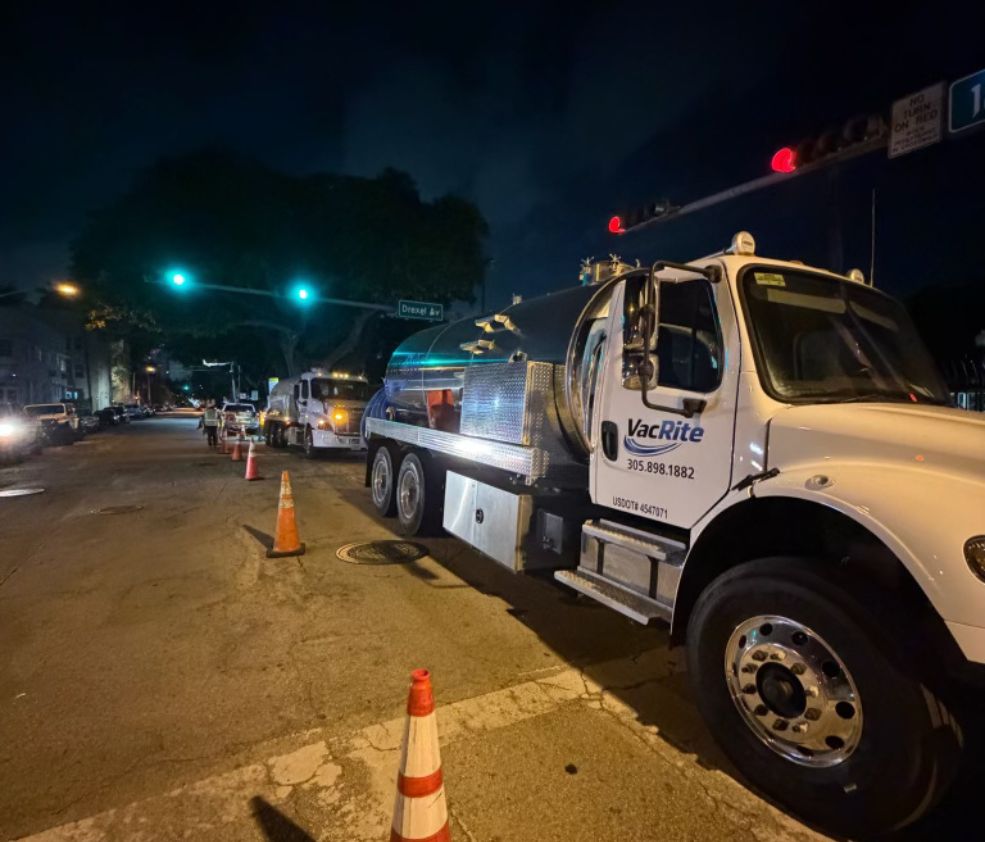
Questions we get asked
What is the difference between daylighting and potholing?
Mostly scope. Potholing is a discrete test hole at one point. Daylighting often means opening a longer section to see a run of utility. The technique is the same and the words get used loosely across the industry.
Do you provide documentation of what you find?
Yes. Depth, offset, size, material and condition, with photos. That record is usually the whole reason the hole exists.
How many exposures does a job usually need?
It depends on the length of the alignment and how much conflicts. Straight runs in known corridors need fewer; congested downtown crossings need more. We would rather talk through the alignment than guess.
Can you daylight under a road without closing it?
Often, with the right traffic control and a work window. Roadway jobs commonly run at night for exactly that reason.
Is the utility at risk while it is exposed?
It is uncovered but undamaged, and it gets backfilled the same visit unless you have asked us to leave it open for other trades. Anything left open gets protected.
Why can we not rely on the 811 marks and the as-builts?
Because neither one carries depth. The paint is a horizontal approximation put down by somebody reading a signal, and two lines stacked one over the other come back as one mark. As-builts go stale on their own, since services get relocated during road work and rarely get redlined. Both are useful starting points. Neither is a measurement, and a bore plan needs a measurement.
Can you daylight during the design phase, before we are on site?
That is the best time to do it. A few exposures along a proposed alignment let you move a route around a conflict on paper, which costs an afternoon of drafting. Finding the same conflict with a crew in the street costs a stopped job and a redesign under pressure. Send us the alignment and we will talk through where the exposures earn their keep.
We run daylighting across South Florida, including Miami, Fort Lauderdale, West Palm Beach, and the rest of the region. See every city we cover or look at the trucks on the job.
Tell us what the job is
Tell us about the daylighting job. Where it is, what is around it, and when you need it.
Two trades, one call. We own the trucks, hold the permits, and put our own people on the job.
VacRite, Miami
info@vacriteservices.com
Open 24/7/365
USDOT 4547071