
Preventive Maintenance Programs
A standing schedule for the traps, lines and drainage on your property, so problems get found on a routine visit instead of during service hours.
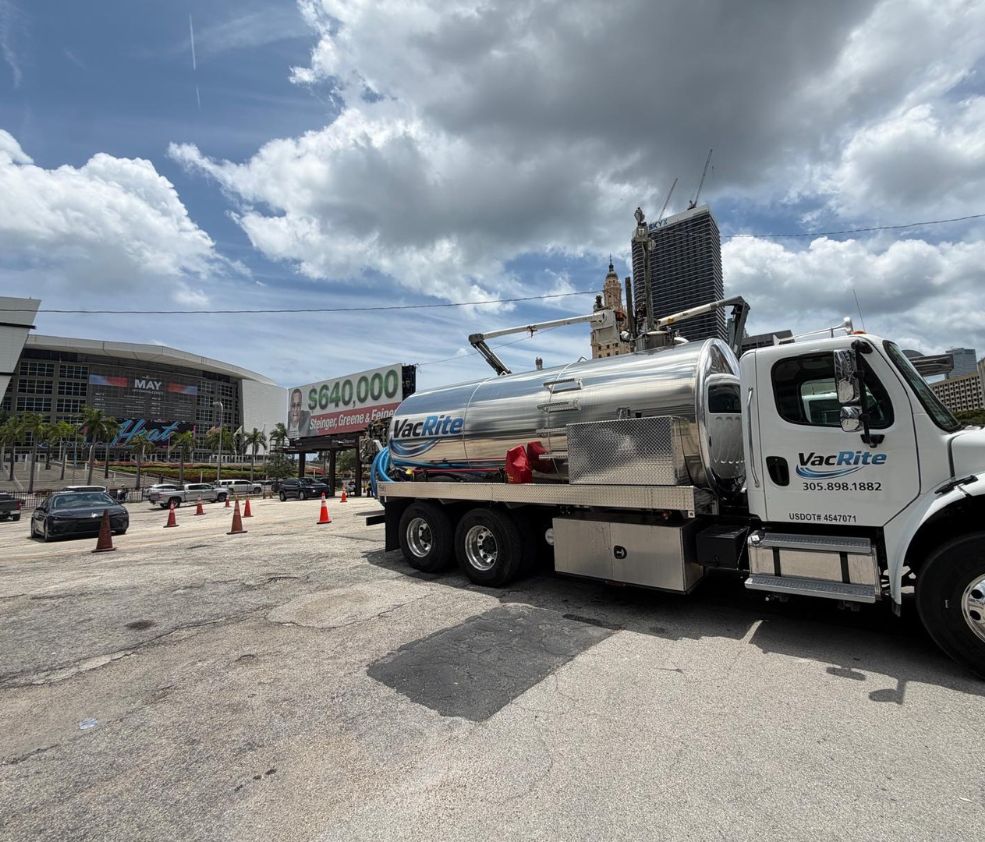
Restaurant groups, supermarkets, hotels, property managers and institutions who would rather budget maintenance than absorb emergencies.
How a job runs, step by step
Walk the site and inventory it
Traps, lines, basins, access points. Written down, so the program does not depend on anyone’s memory.
Set intervals from real loading
Intervals come from what your equipment actually does, watched over a few services, not from a default.
Inspect at every visit
Baffles, tees, flow restrictors, inlet and outlet condition, structure. Small failures get caught while they are still small.
Report and adjust
You get a record and a recommendation. If the interval is wrong in either direction, it changes.
What preventive maintenance is actually preventing
Not the cleaning. The cleaning is going to happen either way. What it prevents is the unscheduled version: a blocked line during dinner service, a failed inspection, a backup into a dish pit, a basin that floods a parking lot during the first real storm of the season. Those events cost more than the maintenance, and they always arrive at the worst possible moment.
The inspection is the part people undervalue
A missing baffle, a cracked wall, a failed flow restrictor, a slowly settling basin structure. None of these announce themselves. They get found because somebody is there regularly and looking. By the time a failure is obvious from inside the building, it has usually been developing for a long time. A trap with a broken baffle keeps looking perfectly normal from the lid while it passes grease into your lateral every single day, and the first hard evidence is a blocked line during dinner service. A basin settling out of grade drains a little worse each season until the year it does not drain at all. Regular eyes on the hardware turn both of those into scheduled work with a date on it.
Where the intervals actually come from
Grease traps have a written standard: service at 25 percent of capacity or every ninety days, whichever comes first, because past a quarter full a trap stops separating and starts passing FOG into the lateral. That is the ceiling, not the answer. The answer is what your trap does. A heavy fryer kitchen may hit a quarter in six weeks and a low-volume operation with an oversized interceptor may take five months, and the only way to find out is to measure across the first few services and adjust. Drainage works the same way. A basin at the low point of a sandy lot with heavy landscaping loads several times faster than one at the top of the grade, so cleaning them on an identical cycle wastes visits on some and starves the one that matters. Intervals set from records beat intervals set from a default, every time.
The Miami calendar is not optional
Two seasonal facts shape every program down here. The rainy season arrives as intense afternoon storms rather than steady rain, so drainage work belongs in the spring while basins are dry and the schedule is open, not in September when every property in three counties is calling the same week. And a lot of kitchens have their own calendar: schools go quiet for a summer, stadium and venue kitchens run hard on event days and not at all between them, seasonal restaurants swing hard with the tourist months. A program built around those calendars puts the visits where the loading actually is, which is the difference between a schedule that gets followed and one that gets rescheduled until it lapses.
One company for the trap, the line and the drain
The reason this works as a program rather than a set of separate arrangements is that the problems are connected. A trap on the wrong interval becomes a grease-blocked kitchen line. A kitchen line that gets snaked instead of jetted becomes a blocked line again, sooner. Sediment in a catch basin becomes standing water in the lot and eventually a failed structure. With a master plumber on staff, the trap service, the jetting, the basin cleaning and the structural replacement all come from the same roster under the same paperwork, so a line that keeps blocking gets diagnosed as a plumbing problem rather than pumped again on a shorter interval. One record set, one point of contact, and nobody pointing at another vendor when something goes wrong at eleven at night.
Worth knowing
A program is only worth having if the reports get read. Decide who at your organization receives them and actually looks.

Ask any contractor where what they pump out actually goes. It is a fair question, and the answer tells you a lot.
VacRite
Other drainage work
The other side of the company
Most of our customers only ever need one half of what we do. It is worth knowing the other half exists.
Something failed tonight. Somebody answers.
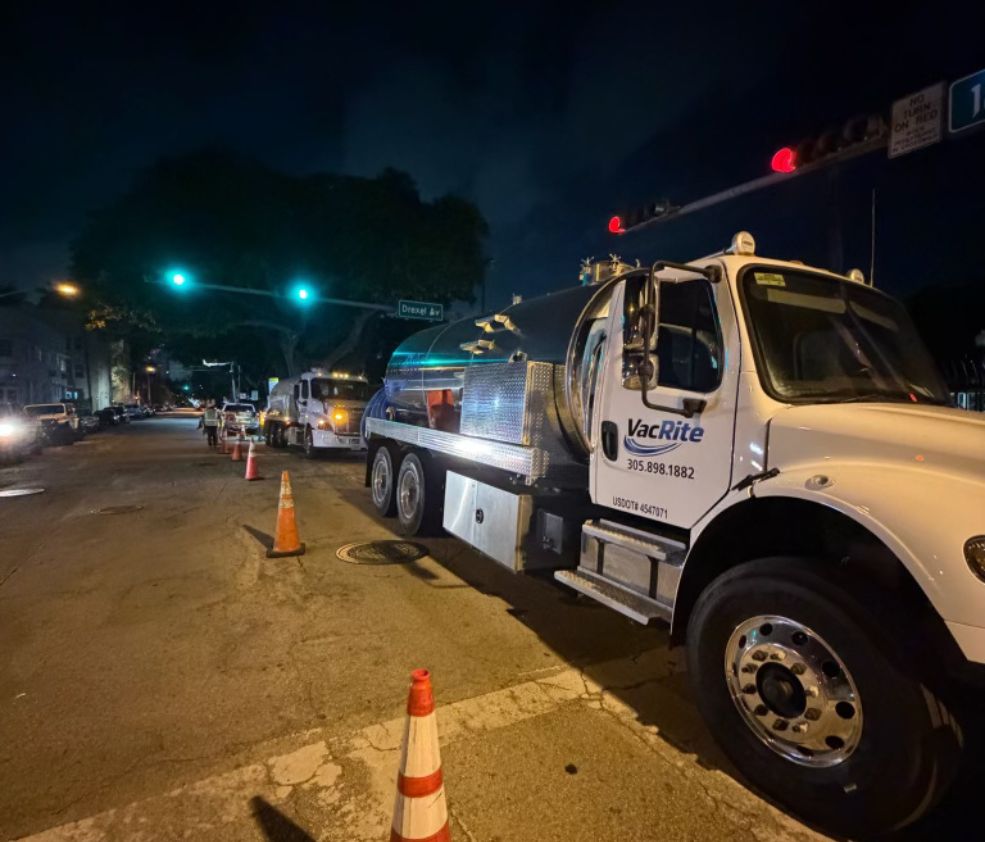
Struck line, blocked kitchen drain, a basin backing up in the middle of a storm. We run every day of the year, and the phone reaches a person rather than a queue. This company is first responder owned, and the emergency side of it works the way that suggests.
Questions we get asked
What does a program cover?
Whichever combination of grease traps, kitchen lines, catch basins and drainage your property has, on a schedule with inspection and reporting at each visit.
How are intervals decided?
From actual loading, watched over the first few services, rather than a blanket default. Intervals get adjusted when the evidence says to.
Do we get reminders?
Yes. Scheduled reminders are part of the arrangement, so nothing depends on somebody remembering.
Can a program cover several sites?
Yes, and consistency across a portfolio is one of the main reasons to run one.
What happens if something fails between visits?
Call us. We run around the clock, and being on a program means we already know your site.
Does a program include the compliance documentation?
Yes. Manifests, before and after photos and disposal records for every trap service, plus inspection notes and a per-structure history on the drainage side. That file is what an inspector asks for and what tells you whether your intervals are right.
Do we have to put every service on the program?
No. Plenty of properties start with the traps because that is where the compliance pressure is, then add kitchen lines and catch basins once they see the reporting. Covering everything on one schedule is easier to run, but it is a preference rather than a requirement.
We run preventive maintenance programs across South Florida, including Miami, Fort Lauderdale, West Palm Beach, and the rest of the region. See every city we cover or look at the trucks on the job.
Tell us what the job is
Tell us about the preventive maintenance programs job. Where it is, what is around it, and when you need it.
Two trades, one call. We own the trucks, hold the permits, and put our own people on the job.
VacRite, Miami
info@vacriteservices.com
Open 24/7/365
USDOT 4547071