
Trap pumping sized to Hialeah’s bakery volume
Bakeries and cafeterias here fill a grease trap faster than a sit-down restaurant does. We pump the whole box, floor included, on an interval that matches what your ovens and fryers actually put out.

Why a Hialeah bakery trap runs ahead of the calendar
Few parts of Miami-Dade have as many bakeries, cafeterias and ventanitas per block as Hialeah, and most of our trap work here runs along Palm Avenue and West 49th Street. These kitchens open early and cook all day, and that volume lands in the trap.
Heavier and faster than a dining room
A sit-down restaurant sends grease to its trap in two rushes, lunch and dinner, with quiet hours in between for the box to settle. A bakery does not give it that break. Shortening, butter and batter residue come down steadily from early morning, the grease cap builds thick, and solids stack on the floor quicker than most owners expect. Put that kind of trap on a quarterly schedule and it will be over the line well before the truck shows up.
So the interval here comes from what your box shows at each visit, and for a busy bakery it usually lands well short of a quarter. It also stays put. Customers here are locals buying breakfast and lunch near home, so no tourist season pushes volume up in winter and drops it in August. Once we find the right interval for a Palm Avenue bakery, it tends to hold from January through December, and we move it only when the numbers say to.
How a Hialeah pump-out runs
Most of the bakeries we service here sit mid-block on older commercial streets, with customer parking out front and the trap in a rear service area. Getting there usually means a driveway not much wider than the truck, so we look at the approach before the first visit and plan where the truck will stop. Our drivers hold CDLs, and backing a tanker down a tight driveway without touching a wall is part of that job. Palm Avenue and West 49th jam up at rush hour, so Hialeah stops get set early, before that traffic builds, or after close when the kitchen is dark. The work itself follows the same order every time.
Walk the driveway first
On a first visit the driver checks the rear access before the truck commits to it: width, low wires, pallets stacked by the back door, a car sitting over the cover. If the approach will not take the truck, we find where hose can reach from instead and note it for next time.
Measure before pumping
Before anything comes out, the crew checks how thick the grease cap is and how deep the solids sit on the floor. On a bakery trap those two numbers tell us more than the calendar does, and they get written down so the next visit has something to compare against.
Empty it to the floor
Cap, water and the heavy bottom layer all come out, and a bakery trap usually carries more of that bottom layer than people expect. Walls and baffles get scraped. We are not done until the floor of the box is showing, because anything left there shortens the next interval.
Paperwork for the county file
The load rides to an approved facility under our haulers permit and dumping permit. You get a manifest showing what came out, how much and where it went, with before and after photos. Keep it with your records, because that is the file an inspector from the county will ask to see.
Who is actually hauling your grease
In this trade it is common for the truck at your back door to belong to a company hired by the company you called. That is how a manifest ends up carrying a name nobody in the kitchen has heard of. We own our trucks. The driver backing down your driveway works for us and holds a CDL, and the load leaves under a haulers permit and a dumping permit in our own name. If anyone ever asks who handled your waste, there is one company to answer for it, and it is us.
When the trap itself is the problem
Pumping gives the crew a clear look inside the box, and sometimes what they find is a cracked baffle or an outlet tee that has rotted off. We keep a master plumber on staff, so that repair does not become a second company and a second visit. You get photos of what we found alongside the manifest, and the decision stays yours.
A standing schedule also builds a record. Every visit adds a cap reading and a solids depth to the same file, so when a bakery adds a fryer or takes on catering, the change shows in the numbers before it shows up as water on the kitchen floor. That early warning is a big part of what regular pumping is for.
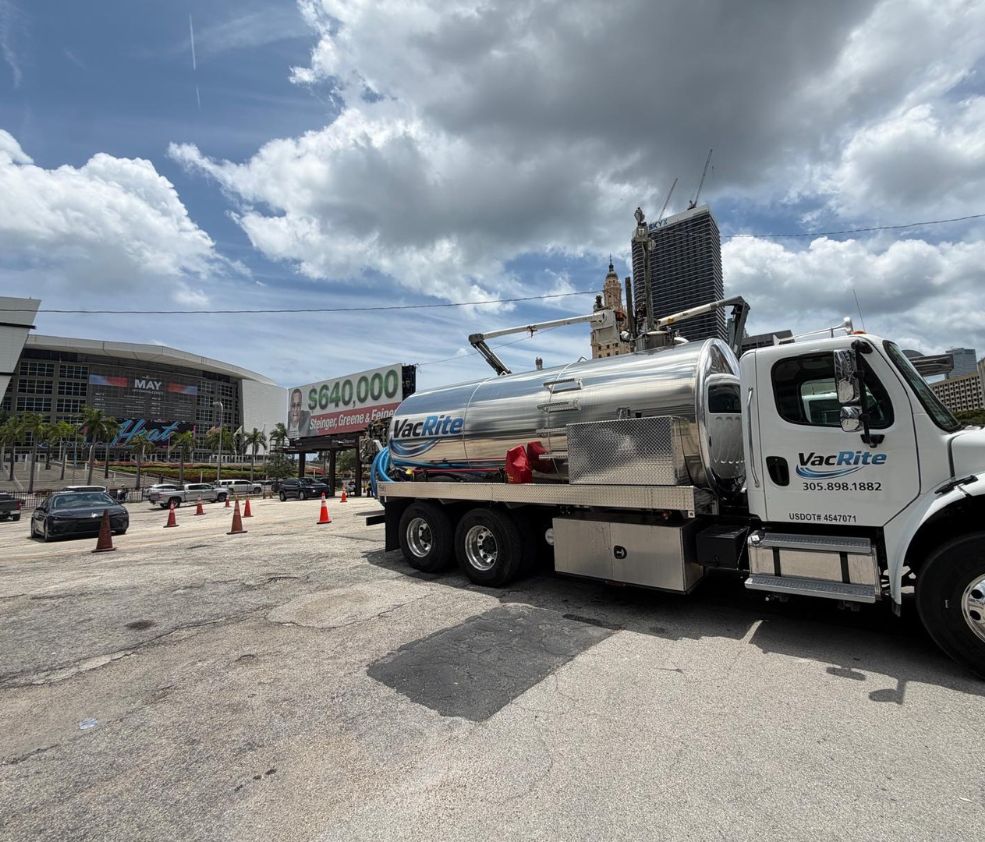
We set a bakery trap’s interval from its own readings, not from a number printed on a form.
VacRite
What else shows up behind a Hialeah bakery
A trap that has been running over the line usually leaves something downstream. Grease that rode out through the outlet cools in the pipe behind the building, and the drain can keep running slow even after the trap is back on schedule. That is a jetting job, and it is worth doing once the interval is fixed so the line starts clean.
Fryer oil is the other one. If your bakery or cafeteria also fries, oil that finds its way to a floor drain lands in the same trap we just emptied. A collection container at the back door, picked up on the same visit as the pump-out, keeps it out.
Then there is the ground itself. Some older buildings in Hialeah have buried lines nobody ever mapped, and those need finding before a shovel goes in. Paved lots fill their catch basins with grit too. Both belong to the other half of our company, run off the same yard in Miami. If something else on the property is bothering you, bring it up on the call.
The full rundown on grease trap pumping lives on its own page, and everything we run in Hialeah is on the city page. Tell us about the job or see the trucks on it.
Other work we run in Hialeah
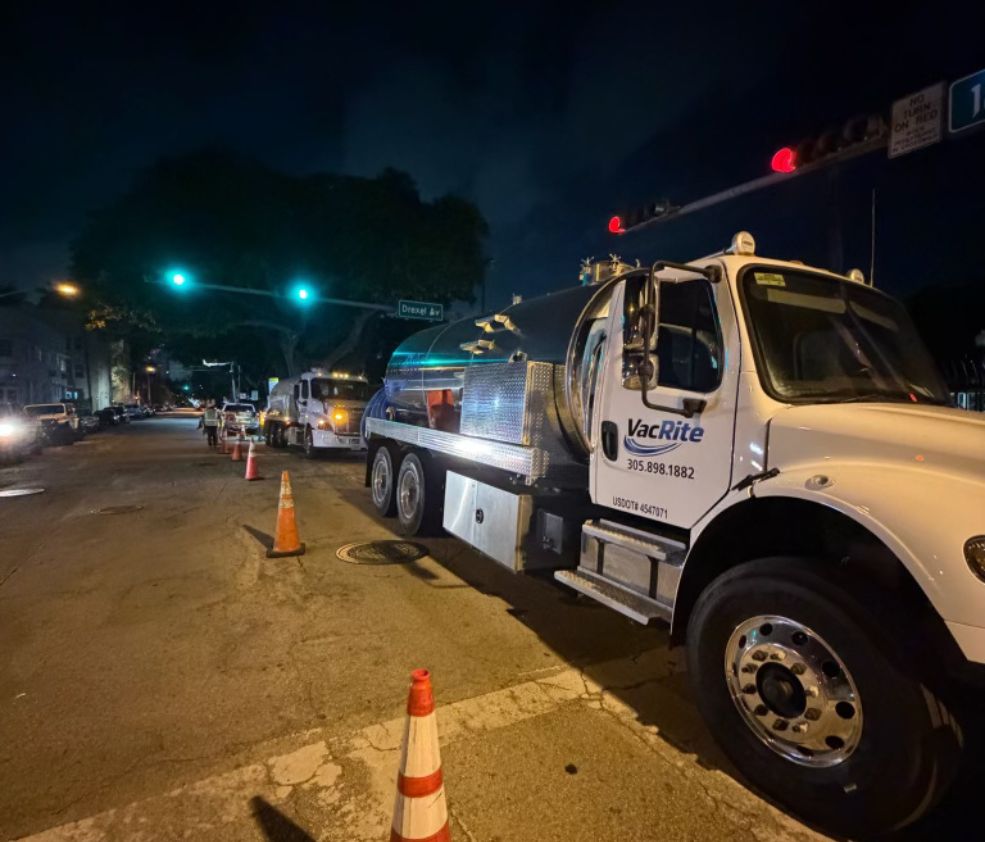
Something failed tonight in Hialeah. Somebody answers.
Struck line, blocked kitchen drain, a basin backing up in the middle of a storm. We run every day of the year, and the phone reaches a person rather than a queue. This company is first responder owned, and the emergency side of it works the way that suggests.
Questions we get asked
How often does a Hialeah bakery trap need pumping?
It depends on the size of the box and what the kitchen puts through it, and we set it from what the first few visits show. For a busy bakery it usually comes out shorter than a quarter, and it tends to stay steady all year.
Our trap is at the end of a narrow driveway. Can your truck get back there?
Usually, yes. Plenty of the bakeries we service in Hialeah are set up exactly like that. The driver looks at the approach on the first visit, and if the truck cannot reach the covers, we find a spot on the lot or the street where the hose can reach them.
Can you pump before Palm Avenue traffic gets bad?
Yes. We run around the clock, so early morning and after close are both normal for us. On Palm Avenue and West 49th we would rather be in and out before rush hour than sit in it with a loaded tanker. Tell us when your kitchen is quiet.
What paperwork comes with each pump-out?
Every pump-out comes with a manifest listing when we were there, how much came out and which approved facility took it, plus photos of the box before and after. Those are the records the county asks for, so keep them together where you can find them.
Does a bakery trap really fill faster than a restaurant’s?
In our experience, yes. A restaurant loads its trap in bursts around meal times. A bakery or cafeteria loads it steadily from opening to close, so the box never gets a quiet stretch and the grease cap and solids build up quicker.
What if the pump-out turns up a broken part?
We photograph it and tell you before we leave. A cracked baffle or a rotted outlet tee is something our master plumber can deal with, so the repair does not mean finding another company and waiting on a second schedule.
Tell us what the job is
Tell us where the bakery is and when the kitchen goes quiet, and we will put a truck on your trap.
Two trades, one call. We own the trucks, hold the permits, and put our own people on the job.
VacRite, Miami
info@vacriteservices.com
Open 24/7/365
USDOT 4547071