
Fryer oil pickup for Hialeah’s all-day kitchens
Ventanitas, cafeterias and bakeries here keep fryers going from morning into the evening. We collect the used oil on a steady schedule, so it leaves in our truck and never reaches your grease trap.
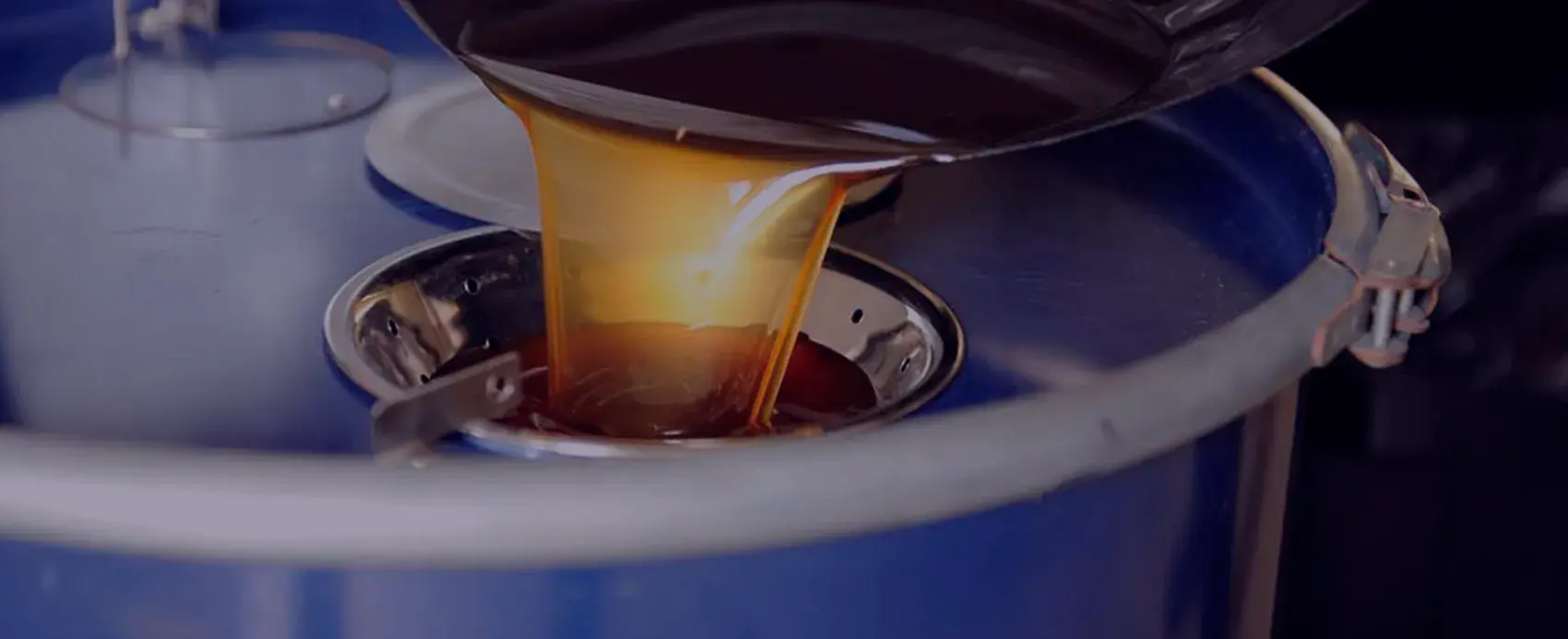
Hialeah fries all day, and the oil has to go somewhere
Along Palm Avenue and West 49th Street, the kitchens we work run fryers from breakfast well into the evening. A ventanita does not shut its fry station between rushes, and a cafeteria keeps a hot line going through lunch and past it. That adds up to a lot of spent oil every week, from businesses that sit a few doors apart.
Oil in a drum stays out of the trap
Every gallon that goes into a collection container is a gallon that never reaches the grease trap. That is the whole reason this service belongs next to the pumping we already do in Hialeah. A kitchen here already loads its trap hard. Add fryer oil poured down a floor drain at the end of the night and the grease cap thickens fast. The interval shrinks with it, and the line behind the building picks up whatever the trap could not hold.
Volume here is also steady. The people eating at these counters live in Hialeah, so the fryers do not go quiet in summer the way they can in tourist towns. That makes the pickup schedule easy to set and easy to keep. Once we know how fast your container fills, the interval tends to stay where we put it. Busy weeks still happen, and when a container fills early, call and we will fit a pickup in.
One visit for the drum and the trap
When it makes sense, we time the oil pickup to land on the same visit as the trap pump-out. For a Hialeah kitchen with one narrow driveway, that means one visit down it instead of two companies taking turns blocking the back on different days. It also puts one crew in front of both halves of your grease problem at the same time.
What the trap tells us about the drum
When the oil container on a property fills slowly but the trap keeps coming up heavy, the numbers point one way. Somewhere between the fryer and the drum, oil is going down a drain, often at the end of a late shift when nobody wants to walk a hot pot out back. Because the same company sees both, we catch that pattern and tell you, and a quick word with the kitchen crew usually fixes it before it becomes a blocked line.
A small kitchen has no use for separate vendors and separate paperwork on what is really one grease stream. One number for the trap and the oil, with the line behind them covered too, is easier to keep straight when you are busy running a counter. We hold the haulers permit for both, so neither stream passes through a third company. Our drivers hold CDLs and know both jobs.
Oil that goes in the drum is oil we never have to pump out of your trap.
VacRite
Setting up pickup at a Hialeah back door
Space is the problem on most of these blocks. A mid-block bakery or cafeteria usually has parking out front and a small rear service area behind it, reached by a driveway the truck barely fits down. The container has to fit there too, next to the dumpster and the back door, without blocking either one. Hose has to reach it from wherever the truck can park. We work out placement before the first pickup, and on properties where we already pump the trap, we have seen the layout before. Here is how a collection runs once that is settled.
Pick the spot
The container goes where the fry cook can reach it without carrying hot oil through the kitchen, and where our hose can reach it from the truck. In a cramped rear service area that sometimes means moving a dumpster a few feet or clearing a corner that has collected junk.
Match pickups to the fryers
How often we come depends on how many fryers you run and how often you change the oil. A ventanita changing oil daily fills a container much faster than a bakery with one small fryer. The first few pickups show us the real rate, and the schedule follows it.
Pump it out clean
Oil comes out of the container through the hose and into the truck. Nothing gets poured, tipped or carried. If a drip lands on the pad, we wipe it up before leaving, because a greasy pad by a back door is how somebody on the kitchen crew ends up on the ground.
Records with the rest
The oil travels under our haulers permit to an approved facility, and you get a collection record for each pickup. If we also service your trap, those records sit in the same file as the pumping manifests, so everything the county might ask about is in one folder.
Other grease work on the same Hialeah lot
The trap is the obvious neighbor to this service. Most kitchens that need oil collection also run a trap that needs pumping, and in Hialeah that trap usually fills faster than owners plan for. If yours has never been pumped to the floor, or the interval came off a form rather than from the box, that is where we would start.
Behind the trap is the kitchen line. Older sections of Hialeah still drain through pipe that went in a long time ago, and old pipe holds onto grease that slipped past a full trap. A line that runs slow after a busy weekend usually needs jetting, and the jetting holds better once the oil stops going down the drain.
Past the kitchen, some properties have catch basins in the lot or a buried line that needs locating before a repair. That is the excavation side of the company, and it runs out of the same yard under the same phone number. If you are already calling about oil, ask about the rest while you have us on the line.
If you want the general picture first, read about used cooking oil collection across South Florida, or go back to the Hialeah page. When you are ready, send us the address and look at the equipment that will show up.
Other work we run in Hialeah
Something failed tonight in Hialeah. Somebody answers.
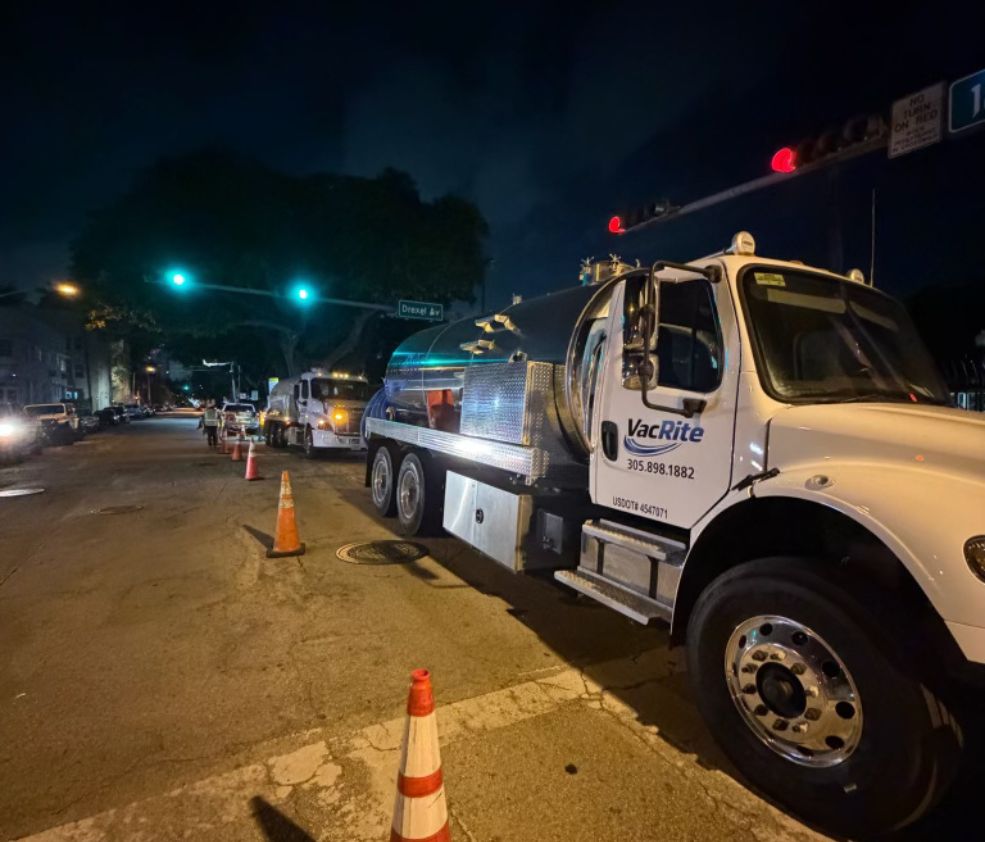
Struck line, blocked kitchen drain, a basin backing up in the middle of a storm. We run every day of the year, and the phone reaches a person rather than a queue. This company is first responder owned, and the emergency side of it works the way that suggests.
Questions we get asked
How often will you pick up oil from a Hialeah ventanita?
As often as your fryers fill the container, which at a busy counter can be a lot. The first few pickups show how fast it fills, and the schedule gets set so the container is emptied before it runs over. Volume here holds steady, so it rarely needs changing.
Our back area is tiny. Where does the container go?
We look at it in person before the first pickup. The container needs a hard, level spot close to the fry station, clear of the back door and the dumpster, with room for our hose to get to it. Small spaces usually have one.
Can the oil pickup happen the same day you pump our trap?
Yes, whenever the two schedules line up. They do not always run on the same interval, so not every visit covers both. When they fall together, you get one visit down your driveway and one set of records for your file.
Why does oil collection matter if we already pump the trap?
Because the trap was never meant to take fryer oil. Oil poured down a drain overloads it, pushes grease out into the line behind the building, and cuts your interval short. Keeping oil in a container keeps the pumping schedule you already have from falling apart.
Who hauls the oil, and where does it end up?
We do, in our own truck with a CDL driver, under our haulers permit. It goes to an approved facility that takes used cooking oil, and you get a record of every pickup. Nobody else touches it between your back door and there.
The container filled up early. What should we do?
Call us. A full container on a busy fry day is when somebody pours the overflow into a mop sink or a floor drain. We run around the clock, and if it keeps filling early, the schedule was set wrong and we fix it.
Tell us what the job is
Count your fryers and describe the back of the property, and the pickup schedule gets built from that.
Two trades, one call. We own the trucks, hold the permits, and put our own people on the job.
VacRite, Miami
info@vacriteservices.com
Open 24/7/365
USDOT 4547071