
Clear yard drains along Hialeah’s industrial belt
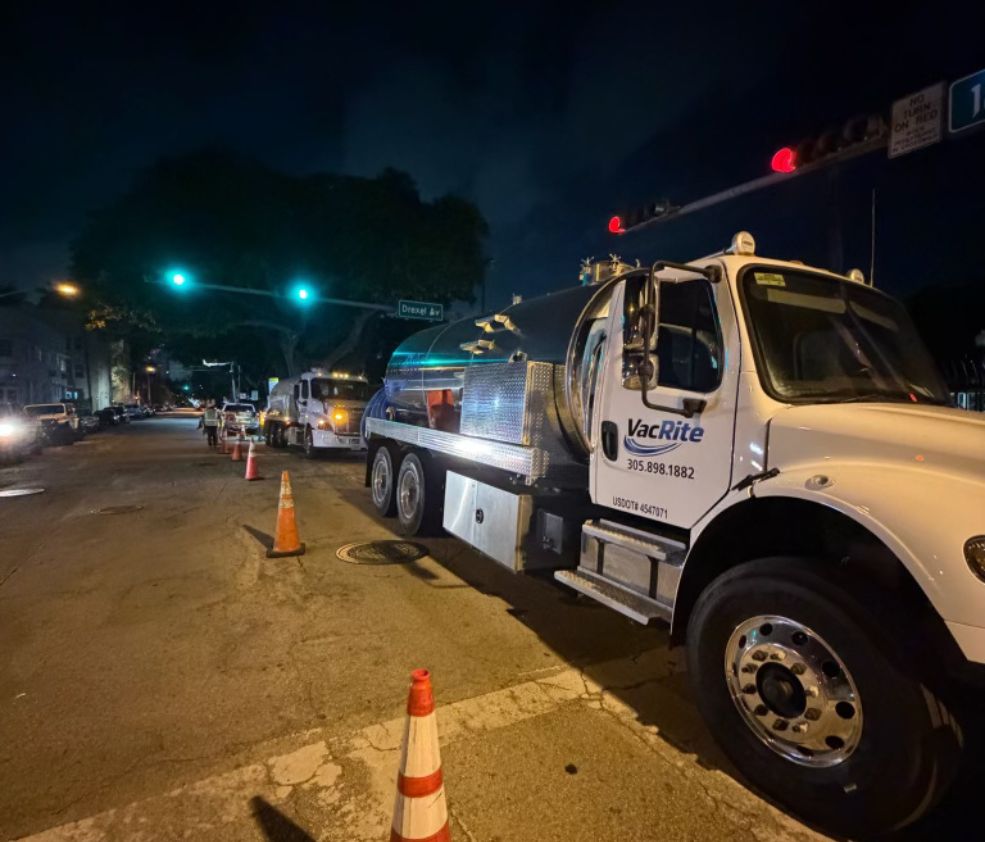
Warehouse yards off Okeechobee Road carry a lot of pavement and a lot of runoff. We vacuum those basins down to the floor of the sump and haul every load off on our own trucks.

Why Okeechobee Road yards flood first
The warehouse side of Hialeah is almost all pavement. Paved yards, loading aprons, and hardly a strip of grass anywhere to take up water. When a summer storm rolls through, all of that runoff heads for the same few grates, and those yard basins load up quicker than any others we pump on this route.
What ends up in the sump
Runoff off a working yard is not clean. It carries grit worn off the pavement by forklifts and trailers, and it carries cardboard, which is everywhere a warehouse ships and receives. Wet cardboard mats down over the grate or slumps into the sump and turns into pulp. Mixed with grit, it sets up like a plug. A basin can look fine from the surface and be two-thirds full underneath.
So the timing matters more here than on a retail lot with landscaping around it. The spring dry stretch is when we want to be in these yards, with the grates up and the truck parked on the apron for as long as it takes. Once the rain is coming every afternoon, a basin that was already half packed is a pond by the loading dock. Standing water there stops trucks from backing in.
How we work a Hialeah yard
Industrial Hialeah is good truck country. The streets on the Okeechobee side are wide and the yards have room to spare. Loading docks there were built for rigs bigger than a vacuum tanker. What slows us down there is the rail crossings. A train through the belt can hold a truck for a while, so when a customer has basins on several properties we group those stops into one day and keep the route from crossing back and forth. A yard with a dozen grates still gets one visit.
Walk the yard first
Before a hose goes down we find every grate on the property, including the ones under a parked trailer or a pallet stack. Loading aprons tend to have a basin at the low point by the dock, and that one usually carries the heaviest load of grit.
Break up the mat
Cardboard and grit packed together will not come up a vacuum hose in one pull. The crew breaks the layer loose with water and a probe, then pulls the water, pulp and sediment into the tank until the sump floor shows. If it stops short, the basin is not done.
Prove the outlet runs
An empty sump with a blocked outlet still floods the apron. We run water through and watch it leave. If it backs up, the jetter goes into the pipe toward the next structure. On a yard this flat, a partial restriction shows up as a slow drain the day after rain.
Haul it before the weather
Everything we pull leaves the property in our tank and goes to an approved facility under our haulers permit. The site manager gets a record of what came out. Hurricane season is when industrial clients ask for exactly that: the material gone before a storm arrives.
Getting ahead of a storm on an industrial lot
When a storm shows up on the forecast, every warehouse manager on Okeechobee Road has the same thought about the yard. Clear the drains and get the loose stuff off the property. We hear that call every hurricane season, and we take it, but a basin cleaned in the two days before landfall is a basin cleaned in a hurry, with half the county asking for the same thing. Some years that works out. Other years the truck is already three sites deep by the time your call comes in.
A standing schedule beats a scramble
The yards that come through a storm in the best shape tend to be the ones on a schedule. We clean them in the dry months, look again partway into the season, and come back after a big blow if the grates took a load of debris. That third visit is usually quick, because there were not months of sand sitting under it.
The inspection is part of the visit. With the grate off and the sump empty we can see whether the frame is sound and whether the walls are cracking. A cracked frame on a yard where loaded trailers roll over the grate all day gets worse fast, and we would rather point it out in April than find the grate sunk in October.
A yard drain packed with cardboard and grit looks fine right up until the first big afternoon storm.
VacRite
What else a warehouse yard tends to need
A basin cleaning is often the first time anyone has had a close look at the drainage on an older Okeechobee Road property, and it turns up other work. One is a pipe between structures that needs more than a quick pass with the jetter. Grit that made it past a full sump settles in that pipe, and on a flat yard it has nowhere to go. That is a line jetting job, and the same crew runs it.
Sometimes the trouble is the structure. A collapsed outlet pipe has to be dug out before anyone can fix it, and on a yard with a long working history an old site drawing is a poor guide to what is buried beside it. We can locate those lines and expose them with water and vacuum ahead of the repair, which is the other half of this company.
If there is a kitchen on the property, its grease trap is work we pump as well. One phone number covers the yard drains and whatever is buried under them.
Our catch basin cleaning page covers the method in more depth, and the Hialeah overview lists the other work we do here. Give us the details, or see what the crew runs.
Other work we run in Hialeah
Something failed tonight in Hialeah. Somebody answers.
Struck line, blocked kitchen drain, a basin backing up in the middle of a storm. We run every day of the year, and the phone reaches a person rather than a queue. This company is first responder owned, and the emergency side of it works the way that suggests.
Questions we get asked
When should Hialeah warehouse yards have their catch basins cleaned?
Before the rainy season starts, while the yard is dry and the truck can sit on the apron without anyone working around standing water. Busy yards off Okeechobee Road often want a second look partway through the season and another after a named storm.
Can you clean basins while the warehouse is operating?
Usually, yes. We work around the dock schedule and move the truck when a trailer needs to back in. Tell us which doors are busiest and when, and we will start at the quiet end of the yard. Most yards on that side of Hialeah have room for it.
What do you do with the cardboard and grit you pull out?
It goes into our tank with the water and rides to an approved disposal facility under our haulers permit and dumping permit. You get a record of the service. Nothing gets left on the property in bags or piled beside the grate.
Will a train crossing delay my service?
It can, which is why we plan around it. Stops in the industrial belt get grouped so the truck is not crossing the tracks back and forth all day, and a site with several grates gets finished in one visit instead of being left for a second trip.
Our yard floods by the dock after every storm. Is that the basin?
Often, but not always. A packed sump is the first suspect. If the basin is clean and the water still sits, the outlet pipe is restricted or the grade around the grate has settled. We check the pipe on the same visit and tell you which it is.
Do you cover more than one property on the same day?
Yes, and on the Okeechobee side it is the better way to run it. If you manage several warehouses, or share a yard with neighbors who need the same work, give us all the addresses at once and we will build one route.
Tell us what the job is
Count the grates and note which side of the tracks you are on, and we will route a truck to you.
Two trades, one call. We own the trucks, hold the permits, and put our own people on the job.
VacRite, Miami
info@vacriteservices.com
Open 24/7/365
USDOT 4547071