
Parkland
Excavation, grease and drainage work in Parkland, off our own trucks and answered around the clock.
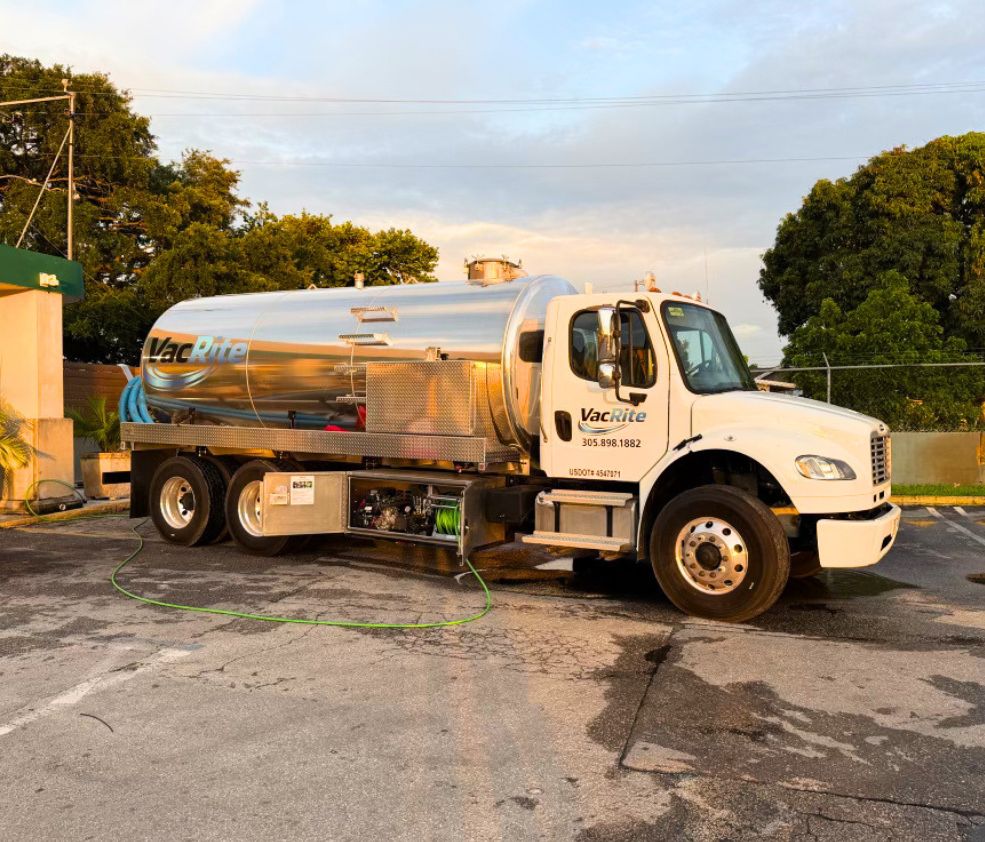
Working in Parkland
We work Parkland regularly, mostly around the Sawgrass Expressway edge, University Drive, Holmberg Road and the Loxahatchee Road corridor on the northern boundary.
Master-planned residential on the Everglades edge behind the Sawgrass Expressway, where the land was drained on purpose and stays usable because a district keeps it that way. The water table sits very high against the western boundary, the communities are built around lakes and preserve buffers, and the underground service is better recorded than in older parts of the county because it all went in at once.
Who calls us here
Homeowner associations and community development districts responsible for engineered community drainage, plus a modest commercial and school food service load.
What we run in Parkland
Parkland is almost entirely residential, which makes drainage the dominant work by a wide margin. The communities were engineered with lakes, control structures, inlets and outfalls that are supposed to move water off the ground on purpose, and behind the Sawgrass on the Everglades edge there is not much margin if one of them stops doing its job. We vacuum and jet that inventory on schedule for boards and district managers, and we hand back a record they can put in front of owners. The excavation side benefits from the planning: because everything went in at once, the utility records here are unusually good, so contractors use us to verify what the drawing claims before they trust it. That is potholing in very wet ground where a hole starts filling itself. Grease work is limited to schools and the small commercial footprint.
Getting a truck in
This is polite, arranged, permission-first work. Nearly every job sits inside a managed community with rules about heavy vehicles, hours and where a truck may stage, so the visit gets cleared with the association or the district before the truck leaves the yard and the gate has us on a list. Drainage structures sit on easements between homes and along lake banks, approached across sod that will not hold a loaded tanker, so we work from the nearest firm surface and let the hose do the traveling. Streets are wide and quiet, but landscaping and canopy are heavy and well kept, so clearance gets checked. Near the western boundary the shoulders are soft and we keep the weight on pavement.
Through the year
The rainy season governs everything on the Everglades edge, and the preparation happens well before it. Boards and districts schedule the structure cleaning through the dry months and again in the run-up to hurricane season, because a system this dependent on engineered flow has to be open before the water arrives, not after. Canal levels are managed down ahead of a big rain event, which changes what is workable. Afterward there is a stretch of clearing debris out of inlets and lake structures. School food service tracks the academic calendar with a summer gap that is the right window for the scheduled work.
Parkland sits in Broward County, and everything on this page runs out of our yard in Miami. See the rest of Broward or look at the trucks working.
One call covers both halves of the job in Parkland
Ask most contractors in this city to pump a trap and daylight a service line in the same week and you are hiring two companies, coordinating two schedules and chasing two sets of paperwork. We built this one so that is a single call.
Take a blocked kitchen line. Clearing it is a jetting job. Finding out why it keeps blocking can mean exposing the lateral, and if that lateral runs under a finished surface next to other buried services, the digging is the careful part. One call, one crew, and nobody pointing at the other guy.
The same logic runs the other way. A restaurant with a line that keeps blocking has a jetting problem and a trap interval problem, and treating either one alone means doing it again in a few months. Because the crew that clears the line is the crew that services the trap, the conversation covers both instead of stopping at the edge of somebody’s scope.
What you get in writing
Every environmental service in Parkland generates a manifest showing what came out and where it went, before and after photographs, and disposal records from an approved facility. That file is what an inspector asks for, and it is the reason the haulers permit and the dumping permit matter rather than being background detail.
On the excavation side the deliverable is different but the principle is the same. An exposed utility gets measured for depth and offset, identified by size and material, and photographed, so the drawing can be corrected before a trench crew corrects it the expensive way. Everything we run is available across this area, and telling us the job is the fastest way to find out which part of it you actually need.
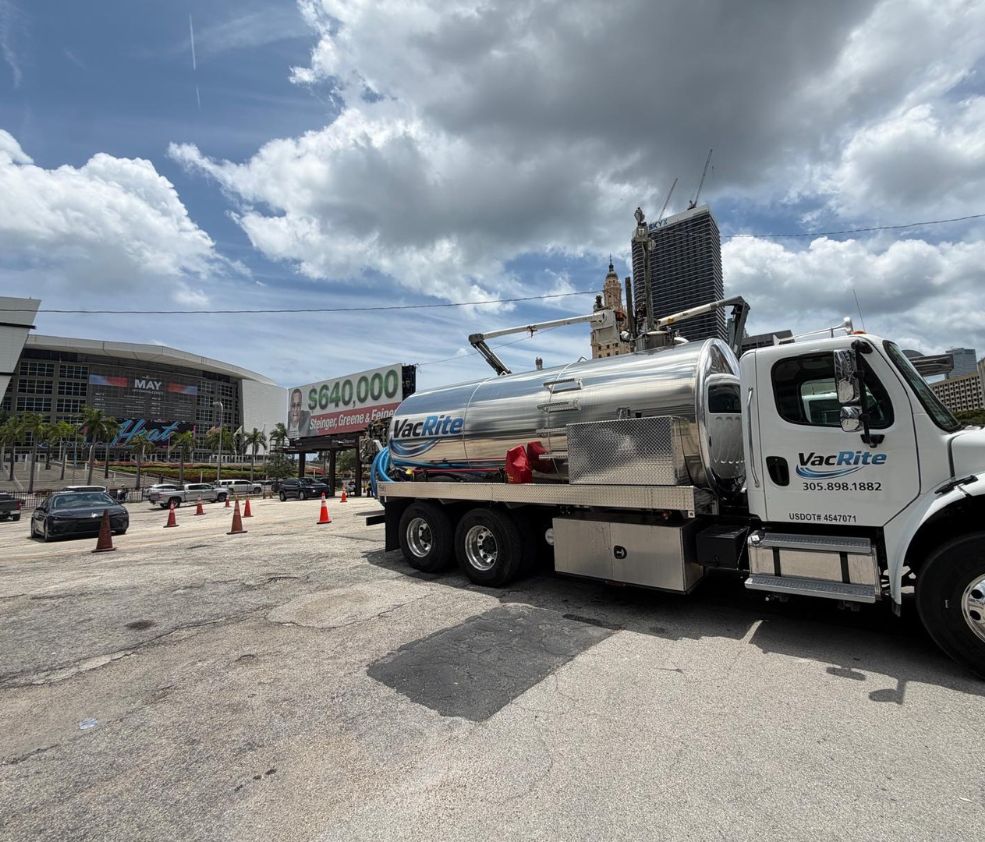
What we run in Parkland
Both halves of the company work this city. Excavation on one side, grease and drainage on the other, one phone number for both.
Also close by
We are usually working somewhere in this corner of Broward already.
Something failed tonight in Parkland. Somebody answers.
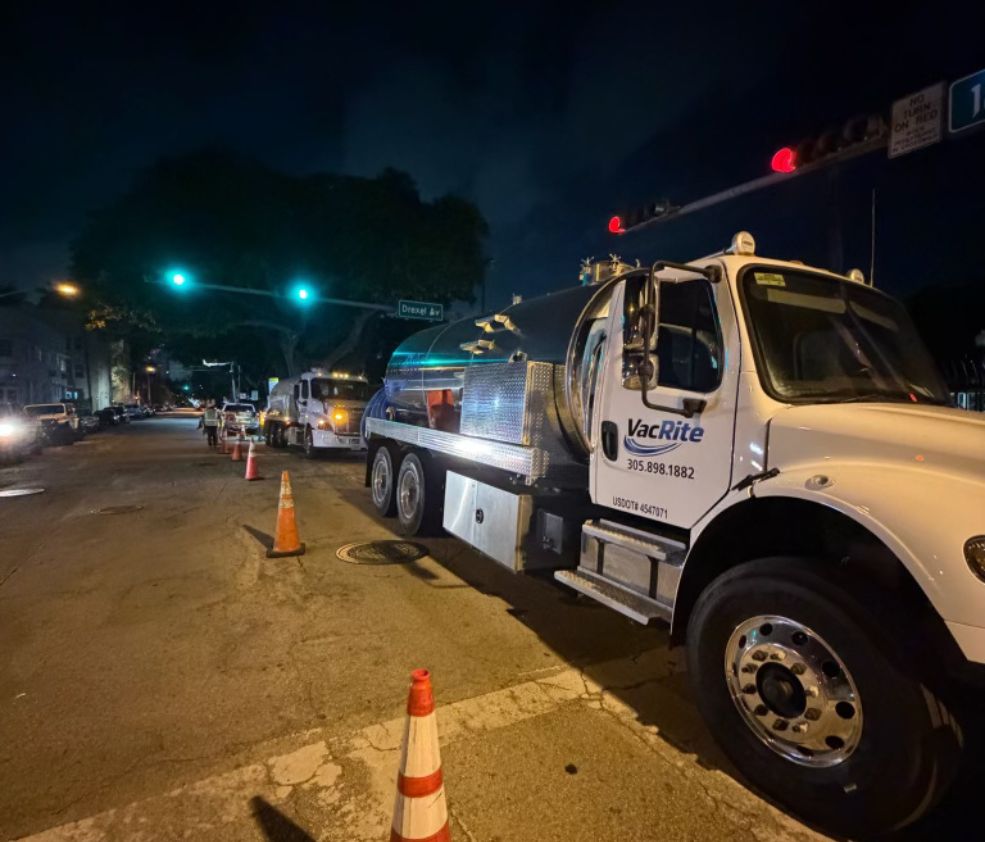
Struck line, blocked kitchen drain, a basin backing up in the middle of a storm. We run every day of the year, and the phone reaches a person rather than a queue. This company is first responder owned, and the emergency side of it works the way that suggests.
Questions we get asked
Do you charge extra to come out to Parkland?
Parkland is inside the area we run. Tell us the job and we will tell you plainly whether it makes sense for us to be the ones doing it.
How fast can you get a truck to Parkland?
Depends what is already running and where you are. Call and you will get a real answer rather than a maybe. We run every day of the year.
Do you service both restaurants and construction sites in Parkland?
Both. Grease traps and cooking oil on one side, excavation and utility work on the other, out of the same yard.
Do you work nights here?
Regularly. Most kitchen work in Parkland happens after close, and a lot of utility work has to happen off-peak.
What paperwork do we get?
Manifests, disposal records and photos on the environmental side, and measured, photographed utility records on the excavation side.
Tell us what the job is
Tell us where in Parkland the job is and what is going on.
Two trades, one call. We own the trucks, hold the permits, and put our own people on the job.
VacRite, Miami
info@vacriteservices.com
Open 24/7/365
USDOT 4547071